62% of Americans Love Japanese Food. That Number Is Rewriting Chain Menus
Japanese food scores a 62% affinity rating, and 55% of global-cuisine orders at full-service restaurants are Asian. Operators at CIA's Worlds of Flavor explained how they're adapting.
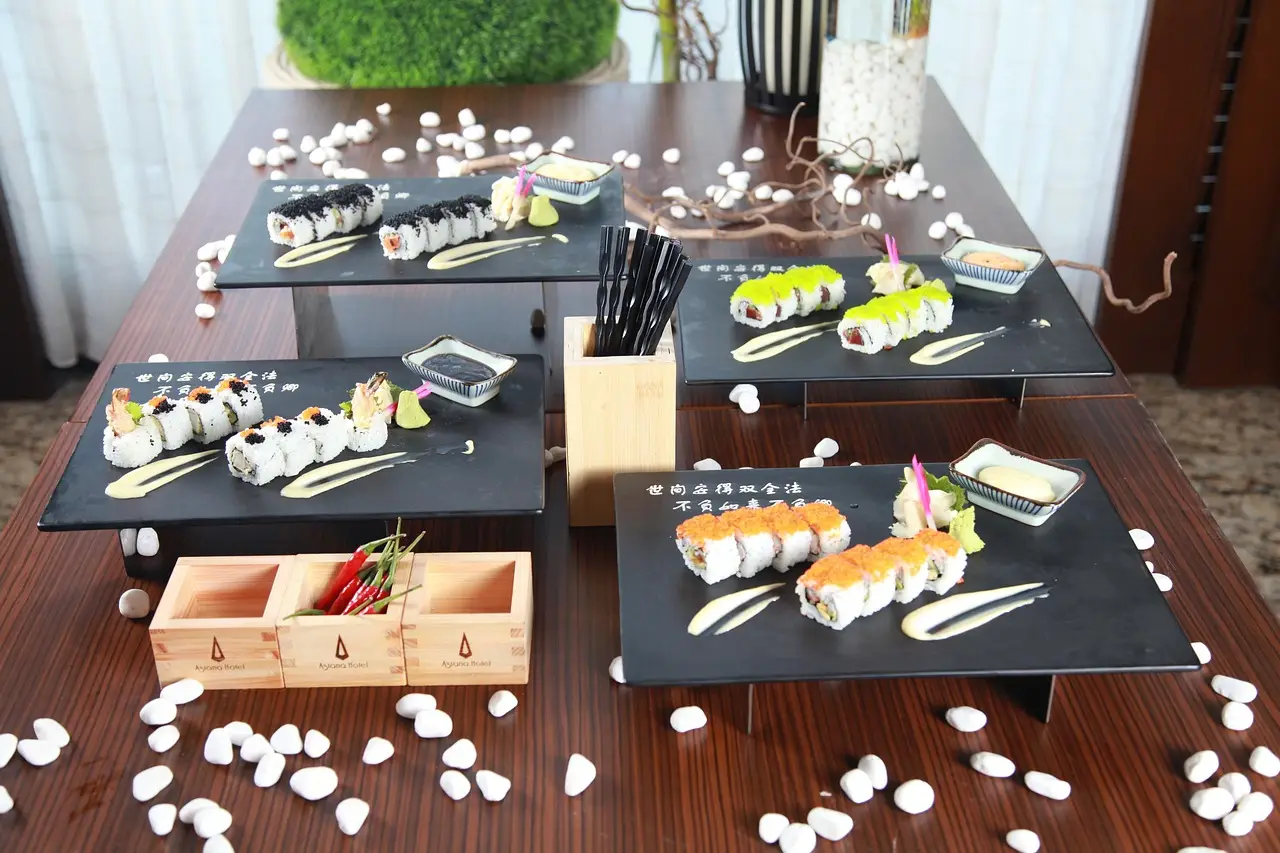
Sixty-two percent of American consumers say they love or like Japanese food — the single strongest affinity score for any "non-mainstream" cuisine in Technomic's survey, and a number that's quietly reshaping how operators build menus, source ingredients and tell supplier stories.
The data came early and often at the Culinary Institute of America's recent Worlds of Flavor conference, themed "Asia on our Menus: East by Southeast," which explored the cuisines of Japan, South Korea, Thailand, Vietnam and Singapore. Lizzie Bartlett, senior director of menu research & insights at Technomic, laid out the hierarchy: Japanese at 62%, Thai at 46%, Korean at 42%, Vietnamese at 36%, with Filipino and Indonesian trailing at 28% and 24%, respectively.
How big is the global-food order?
Bigger every year. Asian cuisines are the most-ordered type of global food in the country — 55% of consumers who ordered global cuisines in 2025 chose Asian at full-service restaurants, and 51% did so at limited-service concepts. Latin-American cuisines rank second, at 40% full-service and 38% limited-service.
The overall appetite is climbing too. In 2022, 32% of foodservice consumers said they'd ordered global food; by 2025 that figure reached 38%. Among diners aged 18 to 34, it jumps to 53% — meaning more than half of the youngest spending cohort is already ordering outside the mainstream, and operators who ignore it are pricing themselves out of a growth segment.
What does this change for operators?
For Ryan Yates, senior executive chef at the University of California at Santa Cruz, the shift is daily reality. His campus draws international students who arrive expecting the flavors they know. His answer isn't replication — it's sourcing. "We really focus on the authenticity behind the craft and respecting the ingredients wherever we possibly can," he said, describing a menu-engineering approach that adapts global flavors to what local suppliers can actually deliver, then leans into telling those suppliers' stories on the plate.
Denis Dello Stritto, culinary executive director and senior executive chef of Central Market — the upscale division of H-E-B supermarkets — faces a different constraint: a broad Texas customer base that arrives at varied points on the food journey. "I'm always looking for the 'new next,'" he said, "but we meet customers wherever they are on their food journey." Push authenticity too hard too fast, and it backfires. "That's not meeting them. That's imposing something."
Trevor MacKenzie, managing director of Exquisite Global, which operates more than 40 Thai restaurants worldwide under the Mango Tree brand, has tested that principle across borders. When the concept entered Japan, he found half the market disliked cilantro, a Thai staple. Palates shifted. "Now in Japan some of our food is spicier than in Bangkok," he said — though he's careful to note the broader Japanese spice tolerance didn't change, just his customer base's. "There's an evolution," he said. The lesson translates directly to U.S. operators: calibrate heat and ingredients to the guests you actually have, then let the menu evolve with them.
What's the 'new next'?
The panelists each placed a bet. Dello Stritto sees Korean as the current riser, with Filipino cuisine just around the corner. MacKenzie points to regional Thai food and the cuisines of Central Asia. Yates takes a cross-pollination view — North African spices, for example, can layer a smokiness onto dishes that Asian menus don't currently carry. "There's all different ways of playing with this food," he said.
The backdrop matters: the Technomic Top 500 showed another tough year for chain restaurants in 2025 as consumers pulled back on dining, even as coffee, snacks and chicken segments thrived. In that environment, the 38% of consumers actively ordering global food — and the 53% under 35 — represent one of the few demand curves still pointing up. Expect the approachable-adaptation playbook, not strict authenticity, to be the growth strategy operators scale next.
More from Daniel Okafor
Show full bio
Correspondent covering companies, deals and strategy in Restaurant and hotel operations at The Pass Brief.
790 articles