Marriott: 95% of APAC Hotels (Ex-China) Rank Local Cuisine as Top Trend
Marriott's Future of Food 2027 report finds 95% of APAC ex-China hotels rank authentic local cuisine as the top dining trend, with 99-minute fine dining, AI operations, and a regional plant-forward rollout reshaping hotel F&B economics.
Ninety-five percent of Marriott International properties in Asia Pacific excluding China identify authentic local signature dishes as the strongest dining trend in their markets, outweighing value for money in guest decision-making, according to the company's Future of Food 2027 report released Tuesday.
The survey-based report draws on conversations with chefs, hospitality experts, and regional influencers, plus operating data from Marriott properties across APAC ex-China. It identifies three structural shifts shaping hotel F&B: spatial flexibility, local menu sourcing, and compressed fine dining formats.
What does the data say about local cuisine?
Four in five properties have introduced new local ingredients over the past year, from Kyoto vegetables in Japan to Kampot sea salt in Cambodia-inspired menus and indigenous spices across Southeast Asia. Demand runs hottest in India (71%) and Indonesia (67%) for local signature cuisine.
At Hearth at The Ritz-Carlton, Perth, a signature dish built around Wagin duck showcases Western Australian produce. The trend extends to beverages: nearly three-quarters of properties now feature local ingredients more frequently on drink menus.
"Across Asia Pacific, we're witnessing a shift toward intimate, locally-rooted experiences, where smaller, intentional spaces replace traditional formal dining models," said Petr Raba, vice president of food and beverage, Marriott International, Asia Pacific excluding China. "Hotels are becoming cultural storytellers, embedding regional talent, locally sourced ingredients and authentic connection into every aspect of the dining experience to create spaces that feel distinctly of their place."
How are dining rooms changing?
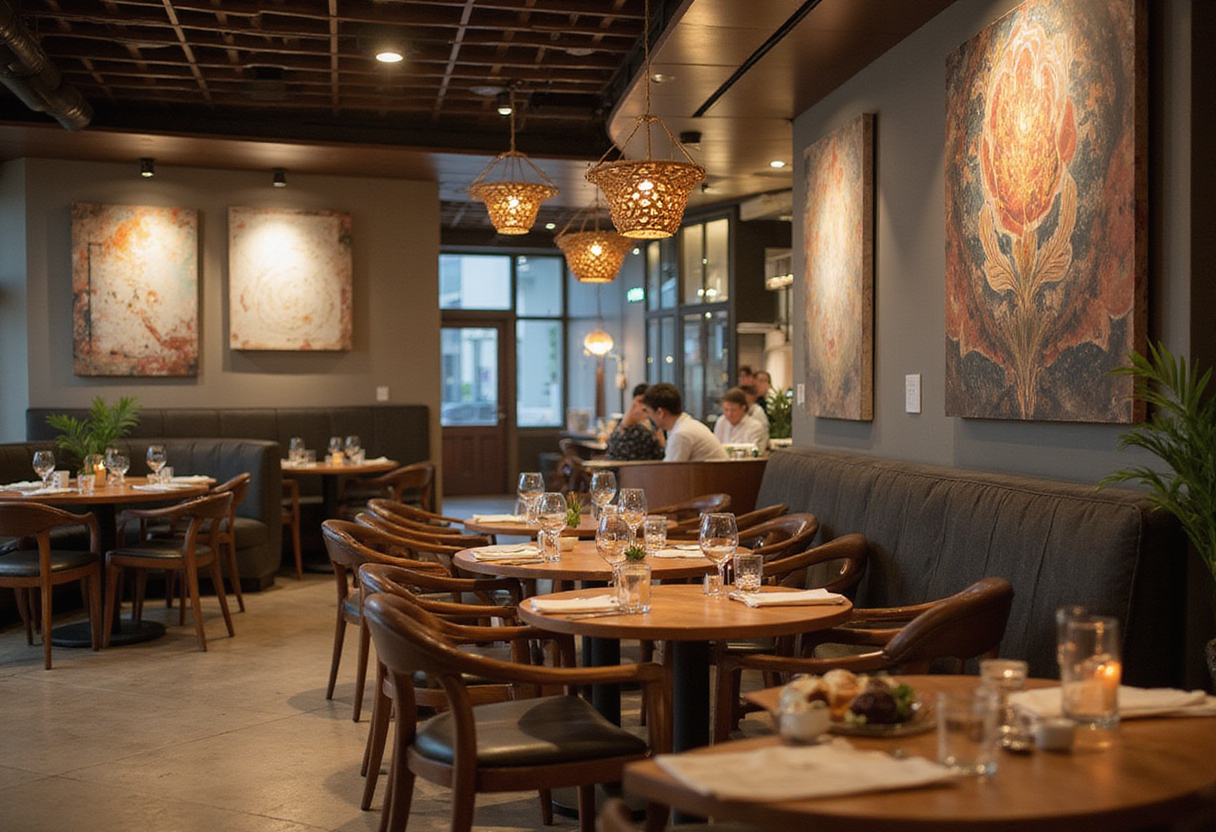
Nearly half of surveyed properties report growing demand for casual venues such as lounges, bars, and outdoor settings. Emerging concepts lean into 40- to 60-seat footprints with distinct identities. In Vietnam, 71% of surveyed properties report growth in bar and lounge dining.
AI is already running in the back of house. Every restaurant and bar surveyed in Thailand uses AI in operations, covering menu development, marketing, staffing, and guest insights.
Is fine dining getting shorter?
Marriott labels the shift "99-Minute Fine Dining": up to five courses delivered in under two hours, replacing tasting menus with ten-plus courses that historically stretched past four. The format compresses labor per cover while lifting table turns.
Operator data from the report:
- 58% of properties report average fine dining experiences running 1.5 to 2 hours.
- Singapore: 85% of restaurants post a 1.5-hour average.
- South Korea: one in five establishments have already cut course counts.
- Philippines: 30% of fine dining restaurants added à la carte menus.
- Australia: fewer courses, shorter service, and a pivot toward "wow moments" over course quantity.
What other trends did the report surface?
Wellness menus have scaled. Ninety-seven percent of surveyed properties serve dishes associated with health and longevity, with wellness extending into mini-bars and turndown rituals.
Non-alcoholic programs are picking up volume. Forty-two percent of Marriott restaurants and bars surveyed reported increased sales of non-alcoholic beverages, driven by premium spirit alternatives and alcohol-free pairings.
Marriott will roll out its APEC Plant-Forward Program across the region in 2027, positioning the company among the first major global hotel groups to integrate plant-forward dining permanently into its operating foundation.
What this means for operators
The data point the report links most directly to margins is the shift away from value-metric guest decision-making toward destination authenticity—a lever where local sourcing can compress food cost while premium pricing holds on signature plates. Compressed fine dining slashes labor hours per cover. Permanent plant-forward integration rewrites the protein line item across thousands of units.
Marriott International, based in Bethesda, Maryland, franchises, operates, and licenses more than 10,000 properties across 148 countries and territories as of June 30, 2026.
As 2027 menu planning cycles begin, the APAC ex-China properties to benchmark are those already running a 1.5-hour fine dining average and full-stack AI across the back of house—the rest of the regional field is moving in the same direction.
More from Marcus Bennett
Show full bio
Market editor covering media and advertising at The Pass Brief.
243 articles