Smalls Sliders adds in-line and end-cap formats for 2027
Smalls Sliders will introduce in-line and end-cap prototypes in 2027, giving its 64-unit brand more ways to fit retail, shopping-center and commercial-corridor sites.

Smalls Sliders has grown to 64 units and will introduce two new formats in 2027, expanding beyond its modular shipping-container restaurants. The Baton Rouge, Louisiana-founded quick-service franchise brand unveiled in-line and end-cap prototypes designed to widen the real estate available for franchise growth.
Its familiar “Smorange” containers, known as “cans,” remain central to the concept. Most of the 64 locations occupy bright orange modular shipping containers measuring about 800 square feet, paired with a tight menu of small burgers, waffle fries and shakes.
What changes beyond the 800-square-foot “can”?
Smalls was founded in 2019, and its unusually compact restaurants have become part of the brand’s identity. The announcement does not replace the can format; it adds layouts designed for retail spaces, shopping centers and commercial corridors that may not accommodate the freestanding module.
Founder Brandon Landry said: “Our Can build has always been a major part of what makes Smalls special, but we’ve never believed there’s only one way to bring the Smalls experience to a community.” He added: “These new formats allow us to think bigger about where Smalls can go, while staying true to the simplicity that makes the concept work.”
What does this change for franchisees?
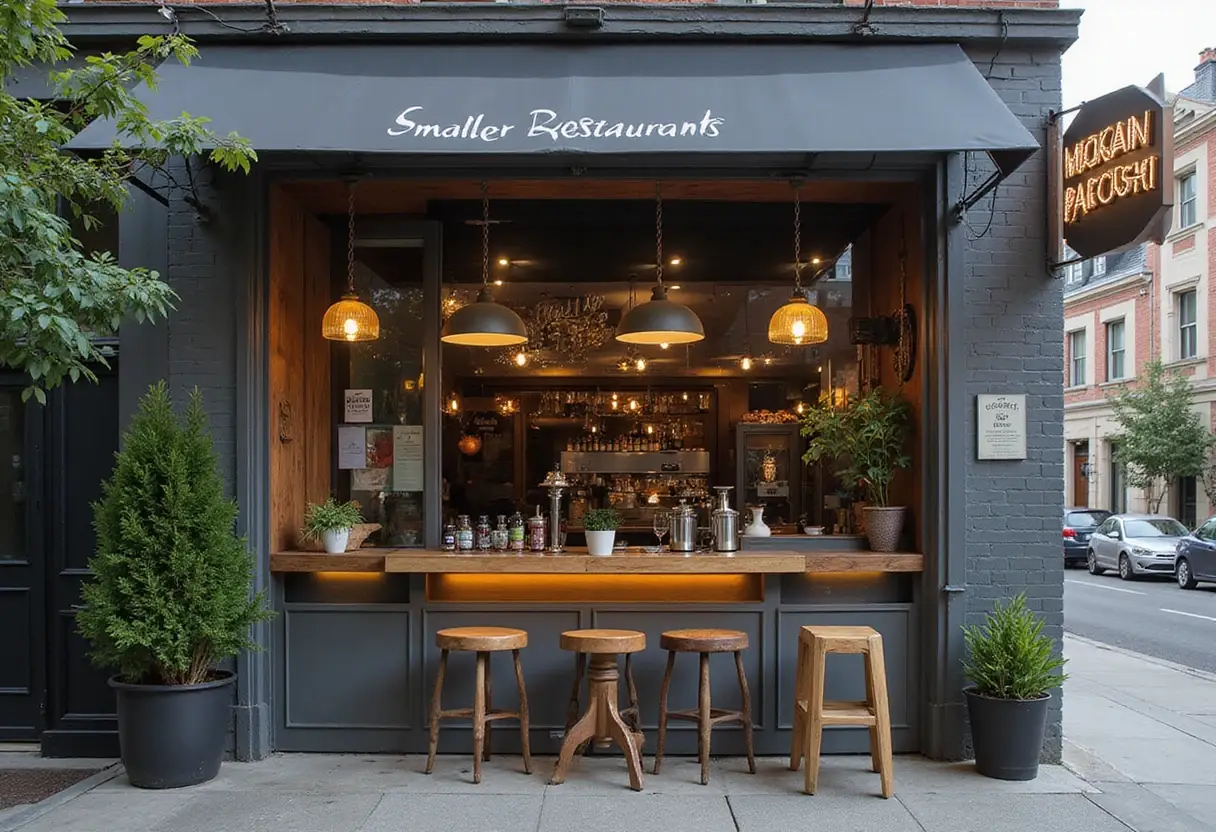
The practical change is access to more eligible sites. An in-line restaurant sits within a conventional row of storefronts, while an end-cap unit occupies the terminal position of a retail building. Those configurations could bring Smalls into properties where a freestanding container may not fit.
The announcement extends the format system rather than the stated menu. Smalls disclosed no new products, sourcing arrangements or prices for either prototype. It also did not provide a company-operated versus franchised breakdown of its 64 locations, leaving prospective franchisees without a clear view of ownership mix.
Why does the menu matter to the real estate decision?
Smalls’ 800-square-foot can and deliberately limited menu work as one operating package. A tight list can simplify ordering, kitchen work and inventory management, although Smalls published no cost-of-goods, labor or throughput figures to quantify those benefits. The new formats preserve the menu emphasis, so the economic test is whether familiar execution can transfer into different retail footprints.
The announcement changes the building format, not the stated food program. Smalls disclosed no expected build costs, occupancy expense, average check, franchise fee or projected return for either option. Without those inputs, franchisees cannot determine whether a broader retail site brings enough demand to offset a different real estate and operating structure.
Sourcing and pricing remain equally unresolved. Smalls provided no supplier terms, menu-price assumptions or food-cost percentages for the prototypes. The company therefore has not shown whether the formats improve unit economics; it has widened the potential location pipeline while leaving the central operator questions for franchisees and future development deals.
What is known about the expansion’s backing?
Smalls’ disclosed investors include private-equity firm 10 Point Capital and former NFL player Drew Brees. The announcement does not assign either investor a specific role in the 2027 rollout or identify how much capital the new formats require. The brand’s growth from its 2019 founding to 64 units provides scale, but it does not establish profitability.
Separately, Technomic’s Top 500 analysis reported that chain restaurant sales slowed again in 2025 as consumers cut back on dining, while coffee, beverages, snacks and chicken thrived. Smalls provided no 2025 sales or category results, so that broader trend cannot be read as a measure of the slider chain’s performance.
If Smalls can carry its menu discipline and simplicity into those sites, the 2027 rollout could turn real estate flexibility into a larger franchise channel. Pricing, build costs and unit returns will determine whether that channel is economically viable.
More from Olivia Hart
Show full bio
Staff writer covering regulation, policy and their impact on Restaurant and hotel operations at The Pass Brief.
788 articles