Icebergs' Unchanged 'Iceburger' and Joji's $39 Meal Show Burger Economics
Icebergs' Iceburger keeps the same bun for seven years; Joji sells about 100 burgers a week in July on a $39 happy-hour bundle. The economics of elevation.
At Sydney's Icebergs Dining Room and Bar above Bondi Beach, the bar-menu burger has kept the same bun for seven years, the same supplier-built patty for nearly a decade, and a secret sauce recipe that has never changed. That consistency, not complication, is the operator's core argument for how a burger earns its place at the top of the market.
Head Chef Antonio Colonna says the venue treats the burger with the same discipline as any high-ticket dish. "If the produce is outstanding, you're already halfway there. It shouldn't be a shortcut or a casual option," Colonna told Hospitality. "For many years, almost decades, we've always had our 'Iceburger' on the menu, we haven't changed any produce, and we still like to cook with the same techniques we used during the first year."
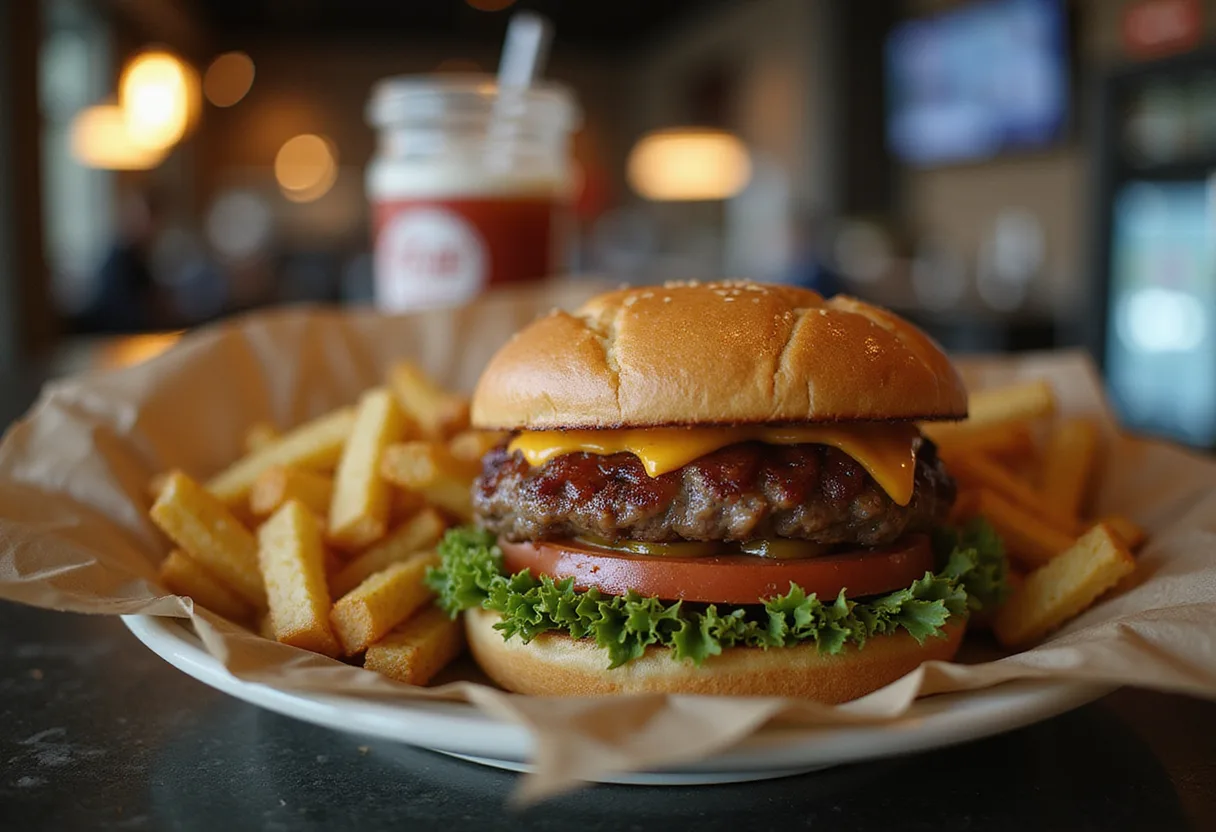
The build is straightforward: Angus beef patty, cheese, lettuce, tomato, onion and sauce. The execution is not. The patty is a mix of Angus beef cooked over coal, which Colonna says delivers smokiness and texture that gas or flat-top cooking can't match. "It's not just the produce itself, it's the technique, and produce that makes this a fantastic product," he says.
Why a cheap burger belongs on an expensive menu
The Iceburger sits well below the venue's premium items — the bar menu runs to a potato cruller with N25 Oscietra caviar and cultured cream, and a daily reef fish crudo with native tamarind, oyster leaf, daikon and finger lime. That price ladder is deliberate. The burger is an entry point to an iconic venue, and Colonna insists it gets no less attention than the caviar plate.
"Every dish that comes out from the kitchen is made to the same standard, with the same technique, and has the same respect for ingredients," he says. Regulars know they can order it in the restaurant even though it's technically a bar-menu item.
What does supplier loyalty buy an operator?
For Icebergs, the answer is longevity and consistency. Colonna describes suppliers as "basically, they're our friends," and says nearly every dish starts with a conversation about what suppliers can offer in season. The patty itself stays unchanged out of what he calls mutual respect for that collaboration. "Something successful like this, you wouldn't like to change."
Even the small details are locked in: spring onion instead of white or red onion, because it's "sweeter and not as aggressive," and a bun that hasn't changed in seven years. "That flavour in every bite is the same. For us that is important, it's a non-negotiable," says Colonna.
The bun as a pricing lever
Darren O'Brien, Innovation Manager at Tip Top Bakery, argues the bun is where operators can justify premium pricing. "A standard burger can become more distinctive when the bun adds softness, structure, visual appeal, and flavour balance," he says. "Operators who upgrade their bun to a premium option are creating a stronger case for premium pricing, which is particularly important in a market where customers are still spending carefully and assessing value with every order."
Tip Top's range — milk style, brioche style, potato bun and gourmet bun — is engineered so the bun's flavour enhances rather than overpowers the rest of the build.
The same logic applies to dairy. Zoey Saunders, General Manager and Vice President of Marketing and Food Service at Saputo, says cheese delivers flavour, indulgence and visual impact, and cites the number behind it: "Natural cheese helps enhance taste with 90 per cent of consumers stating taste as the most important attribute." High-moisture slices such as CHEER Aussie Jack, which melt well and peel cleanly, are built for the classic burger experience.
Joji's $39 burger-and-martini bundle
In the Sydney CBD, Jōji has taken a different route to the same economics. Its weekday happy hour introduced The Adulting Meal: a $39 bundle pairing a Jōji Burger or Ebi Burger with fries and a martini 'your way'.
Executive Chef Erik Ortolani says the hybrid bar-restaurant concept needed comfort food alongside premium sushi and sashimi. "You do need those more premium offerings, like beef or sushi and sashimi, but you also need some kind of comfort food that goes with drinks," he says. The result is comfort food built on Australian premium ingredients with subtle Japanese elements — "nothing forced."
The Jōji burger stacks a smashed Wagyu patty with wagyu bolognese, potato bread, Kewpie mayo, American cheese and bread-and-butter pickles, cooked on a hibachi for charcoal flavour. The Ebi burger is the lighter, more refined option: Moreton Bay bug and prawns leaning into a Japanese perspective.
Ortolani deliberately capped the lineup at two burgers. "It's always a really fine line; you want to give options to customers but also you don't want to give too many choices."
What does it change for operators?
The bundle has proven itself in the trough months. "We've had a really good response, even in the quietest months. July is traditionally one of the quietest times of the year, especially for a rooftop restaurant. But we sold about 100 Jōji burgers per week," says Ortolani, who notes the happy hour has been "really pumping" for the past five months — a surprise for a venue whose menu development focuses elsewhere.
It's also operationally sustainable. "Not the hardest thing to execute consistently," he says, though the hibachi demands attention to sear and doneness, and the rich build — bolognese plus charcoal-seared patty on moist potato bread — depends on the bread holding it together.
The takeaway for operators in a value-scrutinising market: a burger engineered with fixed suppliers, a premium bun, quality cheese and a disciplined cooking technique can work both as an entry point at a luxury venue and as an off-peak traffic driver — without changing the fundamentals every year. Icebergs hasn't touched its recipe in nearly a decade, and both venues suggest that's exactly the point.
More from Daniel Okafor
Show full bio
Correspondent covering companies, deals and strategy in Restaurant and hotel operations at The Pass Brief.
590 articles