Florence Knight's Tokyo Picks: Five Tiny Counters, One Big Lesson
Florence Knight, fresh off opening London's Lunette with a 30-cover cap, shares five small Tokyo restaurants she admires for doing one thing exceptionally well.
Florence Knight has capped her first solo restaurant, Lunette, at 30 covers — and that same small-scale, one-thing-done-perfectly philosophy shapes her list of favorite restaurants in Japan.
Lunette sits on the top floor of the newly opened St. Clement Hotel in Temple, on the River Thames. It's the first opening from Nick Jones since he stepped down from his executive role at Soho House, and Knight — previously of Polpetto and Sessions Art Club — runs the kitchen as the resident restaurant.
She's been in the weeds since launch. "I'm so in the thick of it that it's kind of like anything good bounces off me," she said. "I have to just keep going at the moment, but I think every time I've done anything, it's been terrifying."
What does control look like at Lunette?
Knight built the space from scratch with developer Mark Wadhwa — kitchen design, uniforms, Alexander Kirbeby glassware, table settings, the lot. The dining room sits inside a Brutalist building framed with crescent-shaped lunette windows, with west-facing views across London.
"It was a chance to regain a bit of control, I suppose, and I love what I do, so I'm very lucky," she said. She set the cover count herself: "Saying I won't do more than 30 covers."
The menu doesn't offer choices — it tells you what you're eating. "Every element, from the beginning to the middle to the soft bits and the light bits, and then the crunchy bits, has been considered for the guest," Knight said. Dishes include squid with marigold, guinea fowl, cock crab and a chocolate and Feuilletine tart.
Family touches surface too: grapes on the menu and a salted cream came from her children, inspired by a shared love of Heytea.
Why Japan, and why these five?
Knight recently traveled to Japan with her family. "What I love about these places is their dedication to doing one thing exceptionally well," she said. "They're all small, intimate spaces where there's an extraordinary level of precision, care and attention to detail."
Her picks, all in Tokyo:
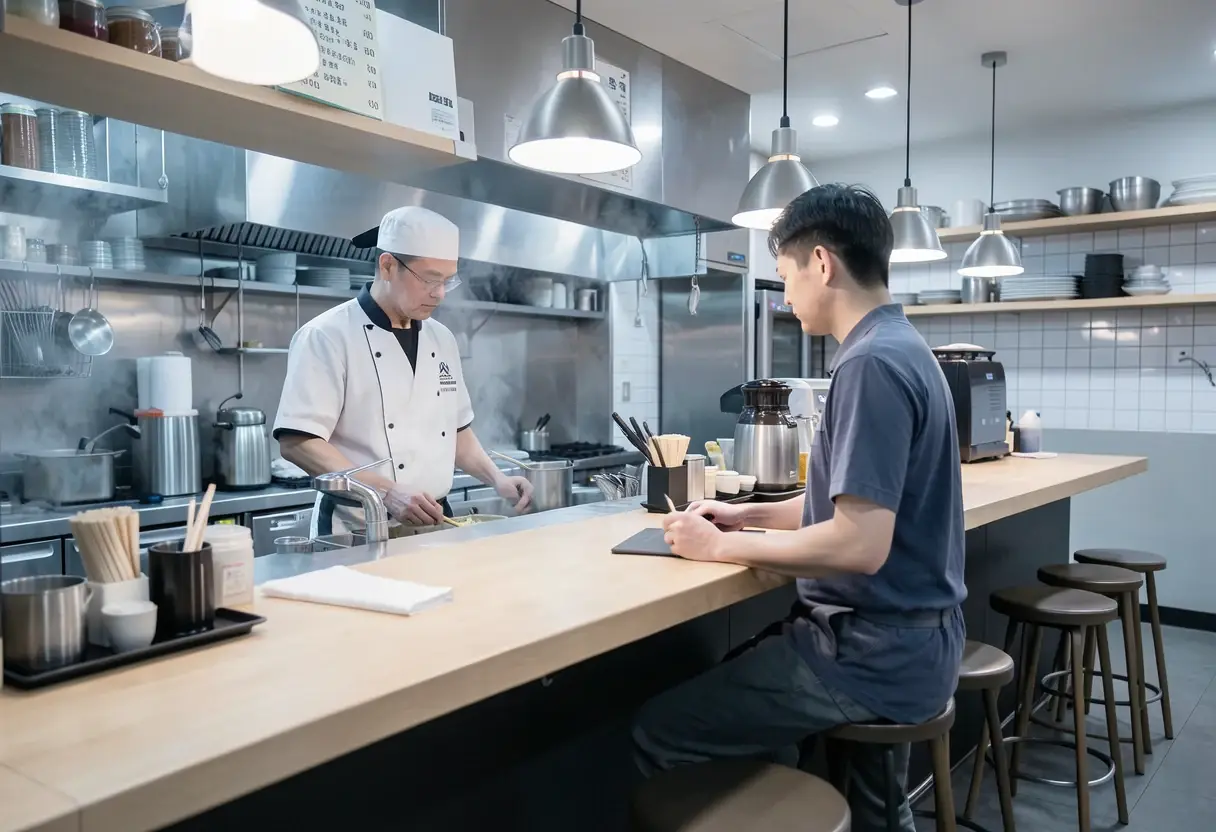
- Tori no Ana (Ikebukuro) — ramen. A hole-in-the-wall counter with a horseshoe bar around the chef and a constant queue, even in rain. It specializes in a rich, near-creamy chicken broth, ordered via a small computer screen.
- Noda (Jingumae, Shibuya) — fine-dining tasting menu. A 15-course experience Knight took her whole family to, calling it "challenging" but "worth it." Non-alcoholic pairings are made tableside — grapes crushed in front of you, including a non-alcoholic sake blended with whey.
- Tonkatsu Nanaido (Jingumae, Shibuya) — tonkatsu. About eight seats, open only on certain days, machine ordering, and always a queue. Crisp breadcrumbs, succulent pork, perfectly cooked rice. "The fact that they just take one thing and perfect it is something I think is so inspirational," she said.
- Kabuki (Misuji, Taito) — hot chocolate. Dark interiors, dark glassware, no photos and no phones allowed, up a set of little wooden stairs. "They do the most incredible hot chocolate."
- Baba Ten (Shimoochiai, Shinjuku) — tempura. A small, unpretentious spot Knight calls a must for tempura, the kind of inside recommendation she found essential in an overwhelming food city.
She adds a practical note for travelers: Japan doesn't allow carrying takeaway items in your hand on the street — which, she points out, is why there's no rubbish anywhere.
Knight's takeaway for operators is a model that scales down rather than up: fewer covers, a fixed menu, obsessive control of detail. Lunette is the London version of that thinking; her Tokyo list is where it comes from.
More from Olivia Hart
Show full bio
Staff writer covering regulation, policy and their impact on Restaurant and hotel operations at The Pass Brief.
692 articles