Chili-Honey Launches Hit 61% CAGR as Suppliers Engineer the Next Sweet Heat
Agrana, Kalsec, and OSF Flavors are engineering sweet-heat flavors beyond hot honey, with mango-chili leading and a 61% CAGR signaling the shift from novelty to platform.
Chili-infused honey product launches grew at a 61% compound annual rate over the past five years, and three of the largest flavor suppliers serving restaurant chains are now engineering what comes after hot honey.
Kalsec, Agrana, and OSF Flavors — interviewed jointly by Food Ingredients First — described a shift from novelty to platform. "Hot honey helped introduce many consumers to the concept, but now they're looking for what's next," said Joey Gwisdalla, Kalsec senior market research specialist, and Melissa Laupp, the company's director of marketing, in a written exchange.
What changed from hot honey to swicy 2.0?
The new brief from flavor developers is layered heat, not higher heat. Consumers want "more interesting flavor experiences," not "more burn," Gwisdalla and Laupp said, because fruit's sweetness, acidity, and juiciness make capsaicin feel approachable.
OSF Flavors' managing director for Asia, Pierre Battu, frames it as architecture. "A successful swicy profile has more architecture: an approachable first impression, a recognizable flavor identity, followed by heat that builds without overwhelming the profile." Swicy, in his telling, "is the interaction of sweetness, aromatic character, and trigeminal heat, and the sequencing of those sensations is important."
The numbers back the direction. Innova Market Insights reports one in four consumers finds fruit-and-spice combinations appealing in sweet categories such as desserts, cakes, pastries, and juices. Hot honey skews Western — particularly the U.S. and U.K. — while Agrana's global innovation portfolio manager Roswitha Mandl sees the fastest product momentum in ice cream, frozen desserts, and beverages.
Which sweet-heat applications are operators watching?
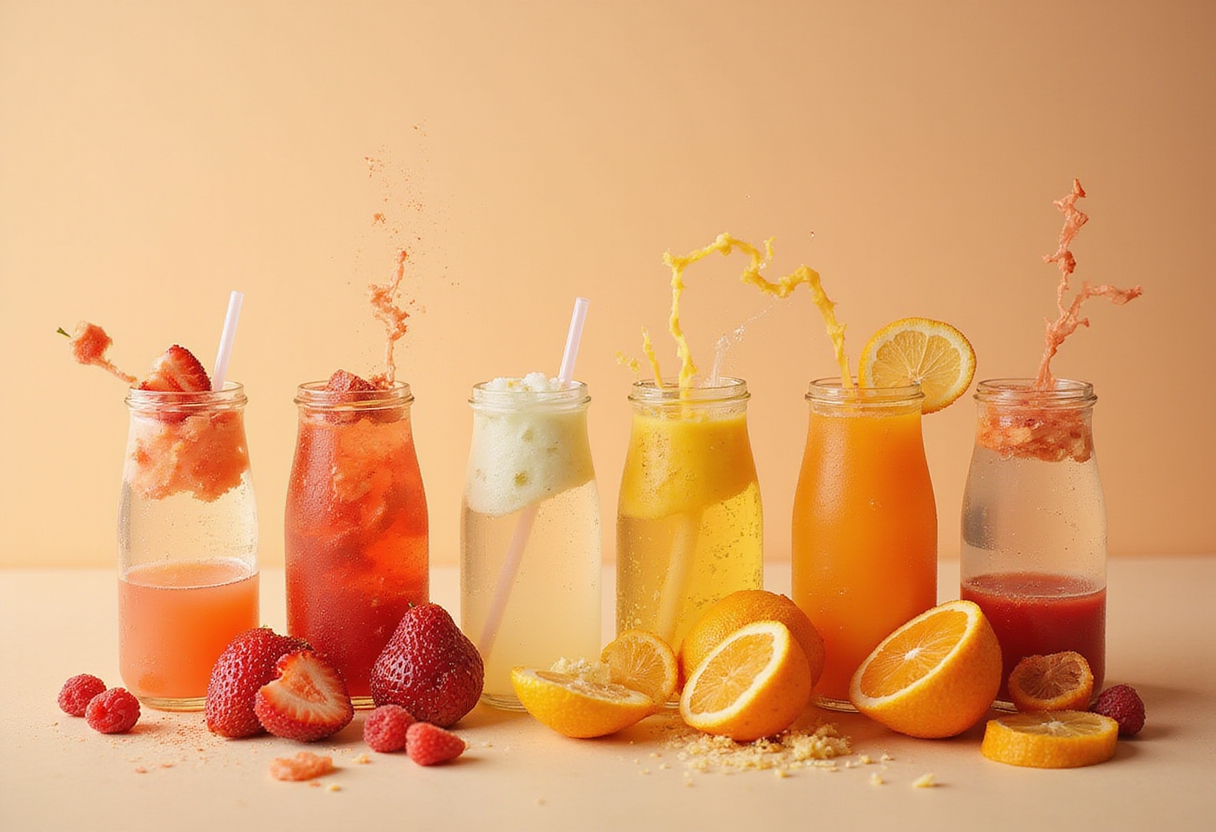
Mango-chili leads the field, with pineapple, peach, and lime-chili gaining traction, according to Mandl. Creamy, cooling formats — ice cream and frozen desserts especially — deliver the cleanest contrast for operators trying to add a swicy SKU without retooling the line.
Savory is closing in. OSF's Spicy Soy BBQ and Swicy Corn concepts show how the platform extends beyond fruit into roasted and umami directions. "The objective is not simply sweetness followed by heat, but a progression from sweet and roasted notes into savory depth and a spicy finish," Battu said.
Agrana's recent launches include Chocolate & Sweet Chili for layered dairy desserts, Grapefruit Ginger for dairy and beverages, and Gorgonzola & Pink Pepper for cream-cheese spreads — each designed to slot into existing operator categories rather than spawn new ones.
How are suppliers solving the formulation problem?
Stability, not novelty, is the engineering headache. Mandl flagged discoloration, heat perception, base interactions, and microbiological safety as the recurring R&D friction when combining fruit preparations with chili, ginger, and pepper.
Kalsec's answer is its Zero Degree pepper line, which separates pepper character from pungency. That independence "gives formulators flexibility to build fruit-forward profiles such as mango-habanero or pineapple-jalapeño while independently dialing heat up or down," Gwisdalla and Laupp said.
Fat, protein, viscosity, acidity, salt, temperature, and processing all alter flavor and heat perception, Battu added. "The same system can perform differently in a snack, sauce, or prepared food." Extrusion, frying, baking, retort, or extended heat treatment can distort aromatic compounds while leaving pungency unaffected — a mismatch that drives reformulation cycles for restaurant brands running multiple SKUs through different cook steps.
What's next for restaurant menus?
Suppliers are converging on the same R&D question heading into 2026 line reviews. "The interesting question for R&D will increasingly be not 'How hot can we make it?' but 'How can we control the complete sensory journey, first aroma, first taste, heat development, and finish to create something distinctive and repeatable?'" Battu said.
Kalsec's research pairs the data with geography: the Middle East, Africa, and Southeast Asia are flagged for tamarind-chili, sambal with tropical fruit, and date-inspired sweet-heat work. Korean gochujang paired with mango or pineapple and Mexican chile-lime formats remain the dominant cross-category templates, with calamansi, yuzu, sambal, and rujak rising on the savory side.
For operators, the menu takeaway is that sweet heat has matured into a flavor architecture with measurable build, controlled finish, and category-agnostic applications — and suppliers expect beverages, confectionery, dairy, and frozen desserts to be the next battlegrounds alongside snacks and sauces.
More from Marcus Bennett
Show full bio
Market editor covering media and advertising at The Pass Brief.
243 articles