Whole Foods Market Issues Its Food and Beverage Trends Call for 2027
Whole Foods Market has forecast its top food and beverage trends for 2027, per The Shelby Report. The syndicated notice gives no named trends, no figures and no quotes.
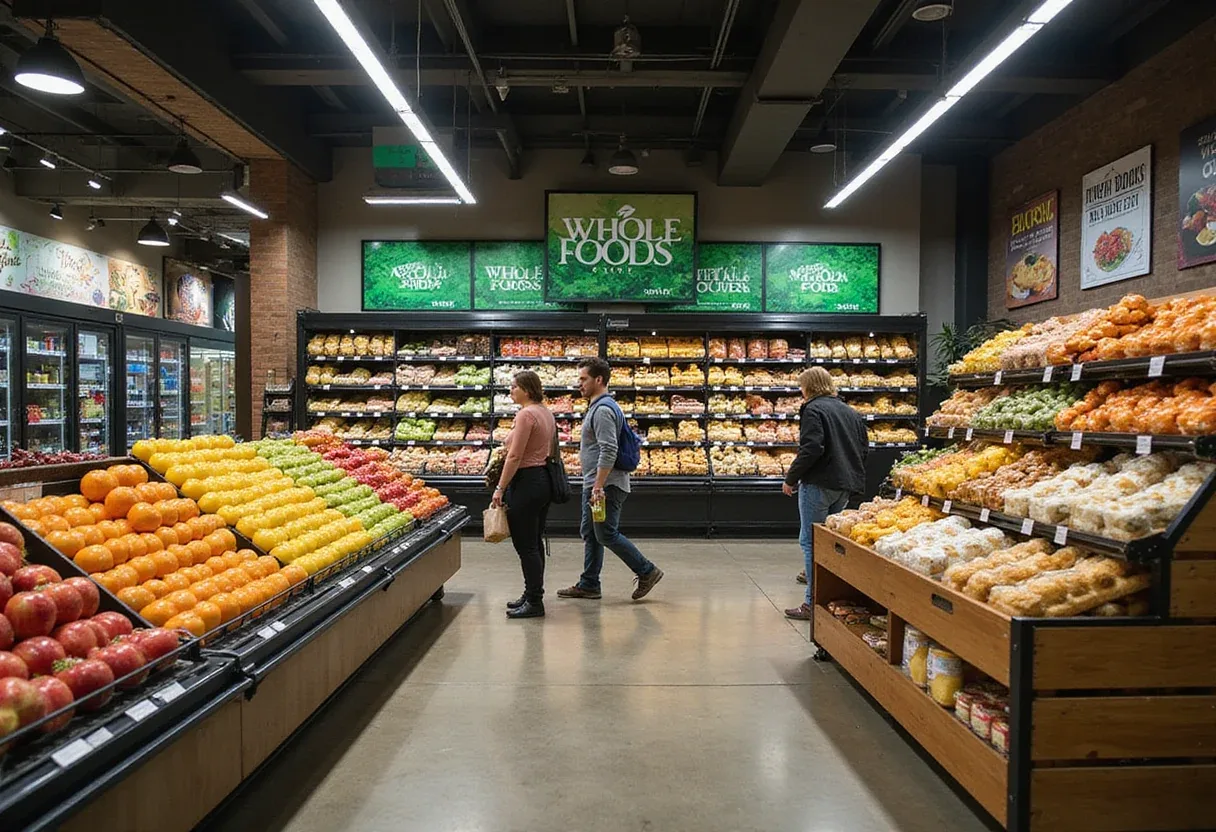
Whole Foods Market has released its annual prediction of top food and beverage trends for 2027, according to a report published by The Shelby Report. The announcement carries no unit counts, no sales figures and no named suppliers. That absence matters for any operator deciding whether to act on it.
The syndicated headline confirms only the existence of the forecast and its 2027 horizon. The Shelby Report is a grocery trade publication, so the primary audience is supermarket buyers rather than restaurant operators. Still, grocer trend lists routinely move upstream. They shape sourcing commitments, private-label development and, eventually, menu language at fast-casual chains.
What does a grocer trend list actually signal?
Whole Foods, owned by Amazon, has published these forecasts annually for roughly a decade. The lists are compiled by an internal council of foragers and buyers, not by an outside research firm. That gives them weight in one narrow area: what the buying team is already seeing in vendor pipelines.
Their weakness is equally narrow. The forecasts name no volumes, no price points and no timeline commitments. A restaurant operator reading one gets direction, not magnitude. Whether a named trend represents a 2 percent niche or a category-defining shift stays unsaid.
The 2027 date itself is notable. Most trend forecasts target the coming twelve months. A two-year horizon signals bets on ingredients and formats that need longer lead times: fermentation capacity, regenerative sourcing programs, novel crop approvals. Those are capital decisions, not menu tweaks.
What is not in the announcement?
The headline and report contain no specifics. There is no list of named trends in the accessible text. There are no quotations from Whole Foods executives. There is no indication of which predictions carry franchise-wide or chain-wide sourcing implications versus single-store experiments.
That gap cuts both ways. Skepticism is warranted; so is patience. The full release typically lands on the grocer's newsroom with item-level detail. Operators who wait for the primary document, rather than the syndicated summary, will get the version with named products and categories.
How should operators read it?
For restaurants, the working value of a Whole Foods forecast is procurement intelligence. When the grocer's buyers flag a category, specialty suppliers scale it, and wholesale prices for independent operators tend to follow within 12 to 18 months. Menu engineering teams can use the list as a screen: which flagged ingredients fit existing platforms without new equipment or labor load.
The risk is the opposite move. Chasing a two-year grocer forecast with near-term menu commitments ties limited-menu chains to unproven demand. Cost-of-goods exposure rises when a trendy ingredient has few suppliers. The prudent read treats the forecast as a watchlist, not a purchasing order.
The full 2027 list, with its named trends and categories, should surface in Whole Foods' own channels shortly. Operators will then be able to judge which predictions carry sourcing muscle behind them and which are, as in past years, a mix of the durable and the decorative.
More from Marcus Bennett
Show full bio
Market editor covering technology and product news in Restaurant and hotel operations at The Pass Brief.
435 articles