Tokenised real estate hit $41bn — and Dubai is testing it on hotels
Tokenised real-world assets reached about $41bn in November 2026. Dubai's registry-backed PRYPCO Mint sold its first tokenised property to 224 investors — and the land department sees an AED 60bn market by 2033.
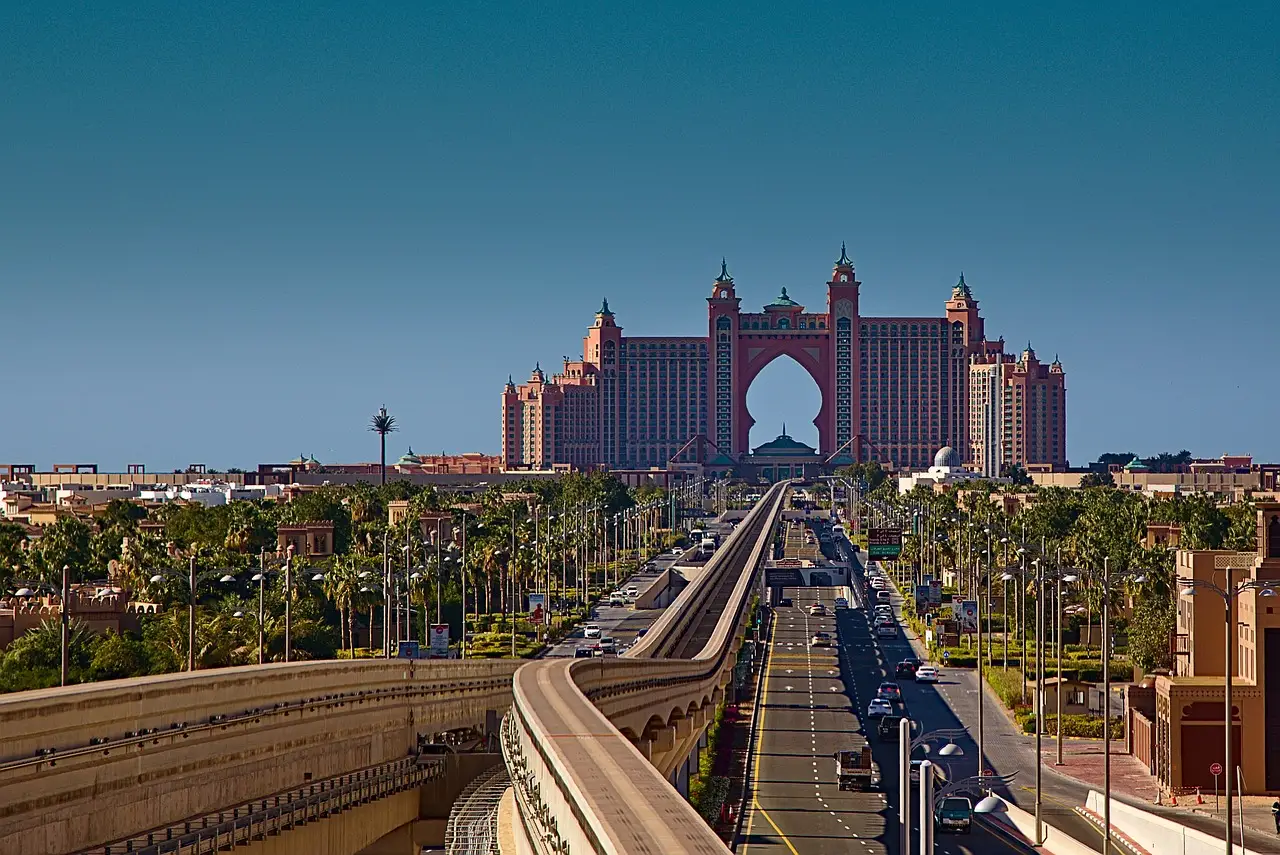
Tokenised real-world assets were worth about USD 41 billion in November 2026 — and the Gulf's live experiment in selling buildings in slices is now teaching hotel and mixed-use developers how to structure the option. Dubai's land registry-backed platform sold its first tokenised property to 224 investors on launch day. Roughly 70 per cent of them were new to Dubai property.
The contrast with what came before is stark. In January 2025, a large regional property group signed a deal to tokenise at least USD 1 billion of real estate and other assets with a tokenisation platform. In April, that platform's own token lost more than 90 per cent of its value in a single day. What failed was the speculative layer above the property, not the property itself.
Six weeks later came the success story. PRYPCO Mint, built with the Dubai Land Department, completed the 224-investor launch-day sale. Since February 2026 its tokens can be resold on a regulated marketplace, with each transfer synchronised to the land department's title records. The decisive difference: the land registry validated the second case, and the registry carries the investor's rights.
Dubai's virtual assets regulator already recognises tokens carrying rights over real assets. The land department expects a tokenisation market of AED 60 billion by 2033. Deloitte forecasts USD 4 trillion of tokenised real estate by 2035, though that count includes loans and funds; the property actually sitting on public ledgers today is measured in hundreds of millions.
What does tokenising actually change for a developer?
The mechanics are straightforward. A token is a digital record of a share in an asset's ownership or its cash flow, held and traded on a shared ledger. Investors in leisure real estate typically wear two hats at the design table: first the investor's — spotting a market gap no existing asset fills — then the developer's, deciding how much floor area goes to revenue-earning uses and what sits on the rooftop.
The finished scheme shows rooms, dining outlets, a spa, recreation and retail units, each its own income stream. Some earn contracted rent from tenants; others earn revenue day by day. Tokenisation is not funding at the start — the scheme is funded fully with equity and debt at t0. What it adds is a real option for later, at t1: the right, but not the obligation, to sell down shares of parts that have stabilised, or to wait for a better market.
The arithmetic works like this. Suppose a retail parade costs AED 100 million to deliver and, once stabilised, earns AED 8 million a year. At t1, with development risk gone, buyers capitalise that income at, say, 7 per cent: AED 8 million divided by 0.07 values it at about AED 114 million. Selling 30 per cent raises roughly AED 34 million against AED 30 million of cost — a mark-up of about 14 per cent. It rewards the risk carried between t0 and t1, and belongs to the capital that carried it. If the market is weak at t1, the option value vanishes or is diluted.
Rent or revenue — the pricing difference
A shop or an apartment pays rent: a largely fixed lease amount that behaves like a coupon. A hotel room, restaurant or spa earns revenue that changes daily and is shared with the operator and the costs before investors see any of it. A token on rent is priced like a bond. A token on a business is priced like a share — a claim on estimated profits.
By "a part" the analysis means anything with its own space and income line: the residential block, the retail parade, the banqueting centre, or the hotel as a whole. A hotel department such as food and beverage has its own revenue but shares much of its cost, which is why the operator's tests matter.
The five tests a tokenised part must pass
The seller always knows the asset better than the buyer — the lemons problem George Akerlof described. Buyers discount what they cannot audit. So the investor's task is removing the reasons for that discount. Five questions decide it:
- Attribution. Can that part's revenue be ring-fenced and reported alone? Clear measurement of each revenue centre is the foundation of any allocation.
- Cost control. Who allocates the shared costs — kitchens, laundry, engineering, sales serve every venue at once — and can investors audit the allocation?
- Priority. Where does the token sit against operator fees, debt service and the FF&E reserve? Base fees are earned on revenue, incentive fees on profit, and lenders are paid before equity. A token paid after all of them is the most junior claim; its assigned seniority sets its required yield between the cost of debt and the equity yield.
- Net cash flow. Is the token paid from net income? Each part's revenue should carry all costs allocated to it, distribution included, with the allocation audited. Only that net figure can be priced.
- Recognition. Does the land registry recognise the token holder's right, or only the platform's record of it? No operating excellence substitutes for recognition, because the registry is the validator.
A part that passes all five sells at a price reflecting its income. A part that fails any one sells at a discount large enough to wipe out the option entirely — in the retail parade example, 12.5 per cent is enough.
Why a token instead of a block sale?
A token reaches buyers a fund sale cannot. PRYPCO Mint's first issue averaged about AED 10,700 a ticket. It lets capital sell down in slices, and the pooled income behind such tokens works like a small, single-scheme REIT.
Two cautions temper that. Resale is thin: a study of US residential tokens by Laurens Swinkels found ownership changed hands about once a year. And in a hotel, the parts most likely to pass all five tests run almost like a tenancy — the car park, the pool and beach club, and a convention centre with its own kitchen.
Even if no token is ever issued, preparing each part for sale improves governance, because it forces income and costs to be reported part by part. Tokenisation will not rescue a weak asset or a vague cash flow; what it rewards is a scheme whose income can be proven, part by part, to a buyer who was never in the room when it was designed. The question for the design table, before the first drawing is final: which parts of this scheme will pass all five tests, and which never will?
More from Daniel Okafor
Show full bio
Correspondent covering companies, deals and strategy in Restaurant and hotel operations at The Pass Brief.
805 articles