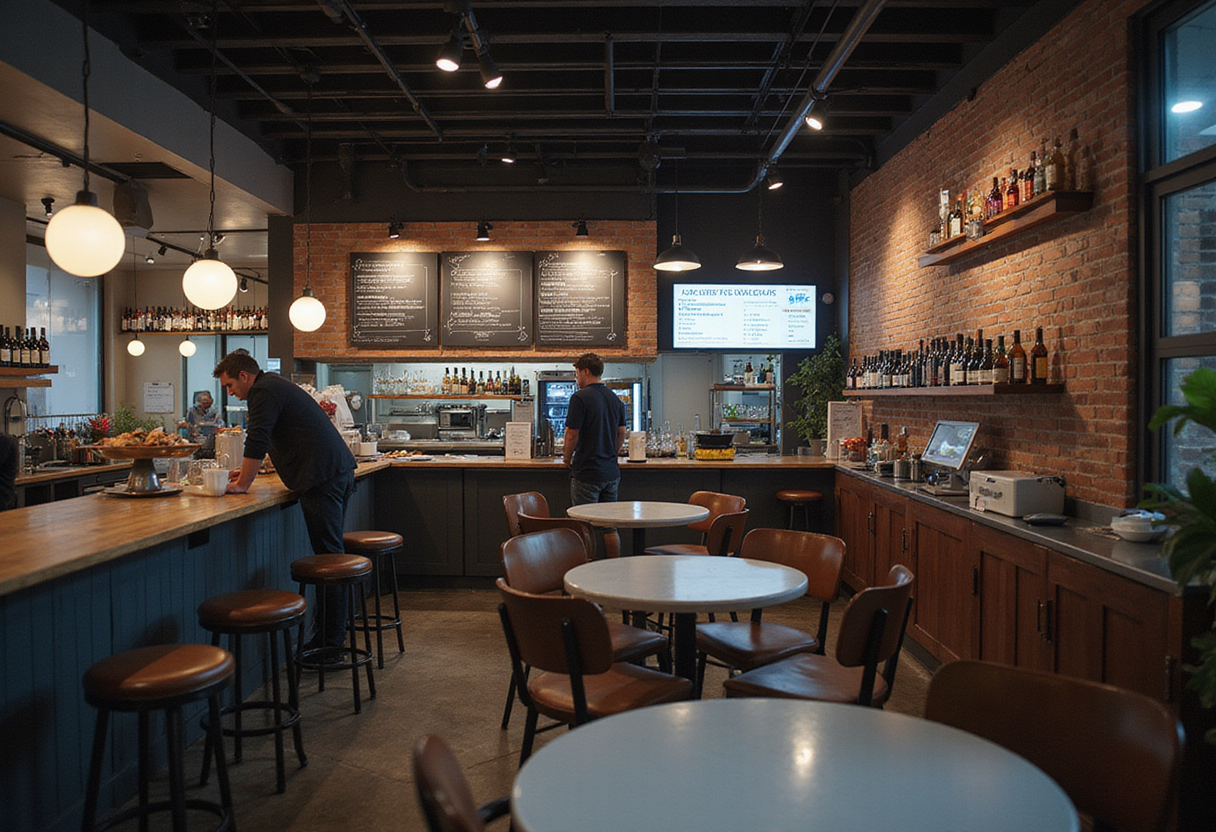
Restaurants Industry Projected to Hit $3.95 Trillion by 2030
The global restaurant industry is projected to reach $3,954.72 billion by 2030, per a forecast carried by The National Law Review, implying continued acceleration in topline growth even as operators manage compressed margins.

The global restaurant industry is on track to reach $3,954.72 billion in market value by 2030, according to a market outlook carried by The National Law Review.
That figure — roughly $4 trillion in nominal U.S. dollars — implies the segment will keep expanding above the rate of broader consumer spending through the remainder of the decade, even after the post-pandemic recovery already pulled 2023 and 2024 sales above prior peaks.
For operators, the headline number functions less as a precision forecast than as a directional anchor. Market-size projections of this magnitude typically combine reported industry revenue across quick-service, fast-casual, full-service and specialty concepts, then extend to a terminal year using assumed real growth, currency translation and category-mix shifts. The published summary does not disclose a base year, geographic split, or compound annual growth rate; readers evaluating the figure should weigh it accordingly.
The acceleration implied by the forecast carries several operational consequences for U.S. multi-unit operators.
First, capacity assumptions. If aggregate industry revenue is compounding at a rate consistent with mid-single-digit real growth, franchisors and equity-backed concepts need pipeline visibility on new units and remodels roughly 24 to 36 months ahead.
Second, labor planning. Growth at this scale against a flat-to-shrinking labor pool means minimum staffing density per unit will likely fall, or check averages will need to absorb wage pressure more aggressively than they have historically.
Third, vendor economics. Higher topline volumes give chains leverage in commodity contracts that smaller independents cannot replicate.
What the figure does not capture is segment-level profitability. Industry same-store traffic has been mixed, and full-service concepts in particular have seen labor costs climb faster than check averages in recent quarters. The gap between revenue and margin is where operating decisions actually occur.
What does the headline number leave out?
The $3.95 trillion projection also says little about regulatory drag. State minimum-wage escalations in California, New York and other large jurisdictions continue to pressure labor costs, while pending federal action on credit-card interchange would rebalance merchant economics if enacted. Food-safety enforcement at the state and county level has intensified, adding compliance overhead that rarely shows up in topline forecasts.
The published summary likewise does not distinguish company-operated from franchised revenue, a distinction that matters for margin attribution and for how investors underwrite the chains that will drive a meaningful share of incremental unit growth through 2030.
How should operators use this figure?
Operators planning capital expenditure, renovation cycles and franchise development budgets should treat the headline as one input among several. The trajectory it implies favors operators with disciplined unit growth, strong digital ordering and loyalty infrastructure, and the ability to pass through cost inflation without compressing traffic.
Forecast-watchers should expect the next cycle of revised industry sizing by the end of the year as 2025 actuals roll in and base-year assumptions reset.
More from Daniel Okafor
Show full bio
Correspondent covering consumer brands and retail at The Pass Brief.
216 articles