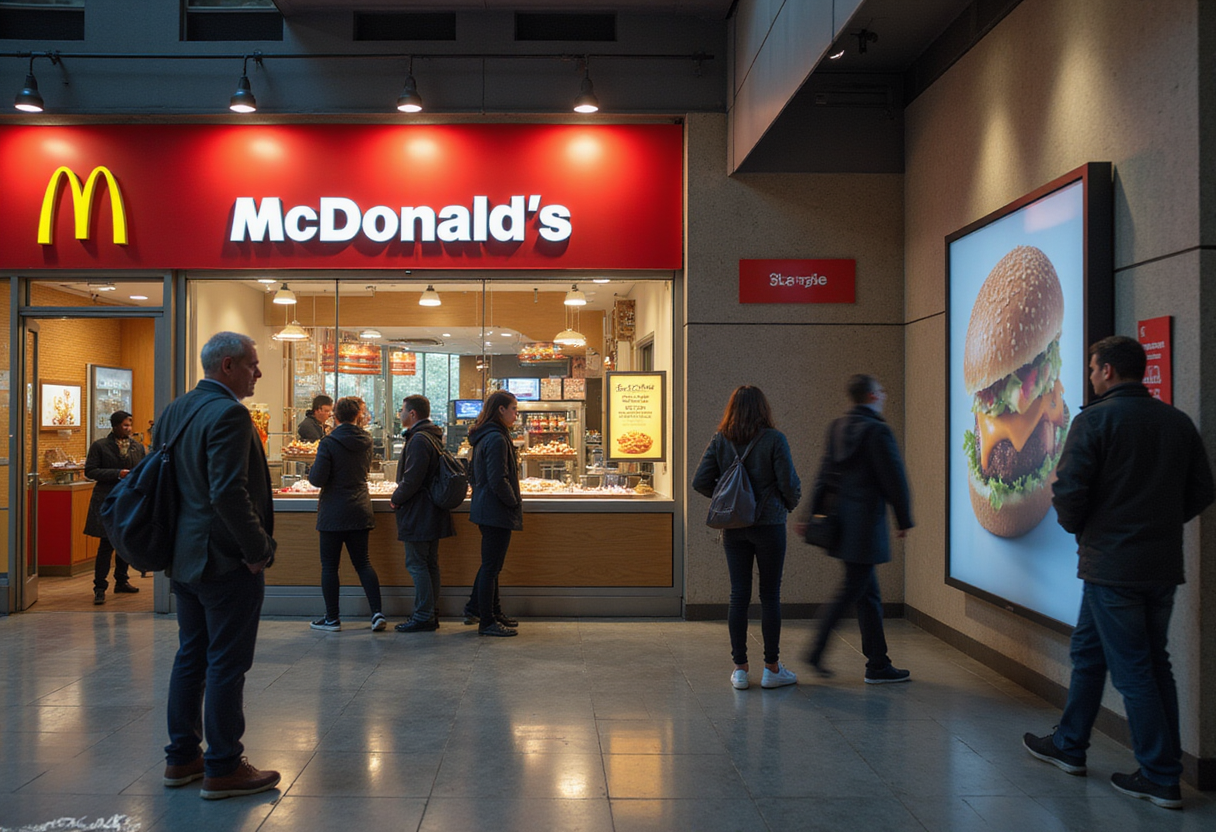
McDonald's $8.5B 'Next' Overhaul Puts Protein and Portion Control at the Center
McDonald's is committing $8.5 billion over a decade to a "McDonald's Next" overhaul that swaps the supersized playbook for grilled chicken, bowls, egg bites, and protein-flagged SKUs aimed at GLP-1 users and the roughly 60 million Americans seeking higher-protein diets.
McDonald's is committing $8.5 billion over a decade to reshape its core menu around smaller portions, higher protein counts, and the dietary patterns of GLP-1 drug users — a direct repudiation of the supersized era that built the brand.
The "McDonald's Next" plan, disclosed at the company's investor day in September 2026, runs through 2036 and touches restaurant equipment, employee training, and menu architecture across company-operated and franchised stores in the U.S. Chief Executive Chris Kempczinski framed the shift as a response to "where we think that consumer is going to be looking for in the future."
Development work already underway includes:
- Grilled chicken sandwiches and wraps
- Crispy chicken and burger bowls
- Egg bites positioned for morning daypart
- Protein "badges" on 17 menu items in the chain's app and kiosks, with more than 30 SKUs now carrying at least 15 grams of protein
The protein-tier callout system launched in April, and McDonald's USA President Skye Anderson told investors roughly 30 million Americans are taking GLP-1 medications, with another 60 million actively seeking higher-protein diets.
What does the data say about GLP-1 customers at restaurants?
Circana research shows GLP-1 users cut items per ticket by about 1% and shifted away from sides, snacks, and breads. The same study found 63% of GLP-1 users want more vegetables and 55% want more fruit on restaurant menus.
Circana Senior Vice President David Portalatin said: "With GLP-1 usage, the biggest change to restaurants won't be that consumers stop going out to eat, it will be how they go out to eat and what they order."
The research firm estimates GLP-1 households already made up 23% of U.S. households in 2025 and projects that share will reach 35% of all food and beverage units sold by 2030. The National Restaurant Association found GLP-1 users averaging 7.6 restaurant purchases in a survey week versus 5.1 for non-users, although nearly half said they dine out less often since starting the drugs.
Why is McDonald's able to move now?
The chain says 84% of households that include a GLP-1 user already visit McDonald's. The addressable base is the existing customer with a shifting basket, not a new acquisition problem.
That math lowers the menu-mix risk for franchisees, who would otherwise absorb the labor and equipment costs of remodels if protein-skewed items failed to attach.
Margin pressure is real. A 2026 paper in Food Policy found GLP-1 use raised consumers' willingness to pay for most protein products examined, an unusual tailwind in a category where beef and chicken input costs have already pushed operators toward leaner formulations.
How big is the protein tailwind beyond McDonald's walls?
Euromonitor reports high-protein foods, beverages, and supplements generated more than $3 trillion in global retail sales in 2025. The firm projects global protein demand will rise 11% between 2024 and 2029, sustained by GLP-1 users, older adults, and resistance-training consumers.
A July 2026 Gallup poll showed 11% of American adults now use GLP-1 drugs, supporting McDonald's 30-million-user estimate against an adult population of 269.8 million. SPINS Senior Director of Market Insights Scott Dicker said younger consumers "increasingly see function as something that can be incorporated into the products they're already consuming throughout the day."
What does the remodel cost on the operator side?
The $8.5 billion envelope spans equipment upgrades that improve holding times for grilled protein, layout changes that accommodate bowl assembly, and retraining for crew on lower-volume, higher-accuracy orders. Labor percentage and ticket averages will move in opposite directions if bowls and wraps replace the value-bundle fry-cart format.
Whether franchisees can recover the remodel investment depends on check average migration from extra-value meals toward entrée-and-water or entrées with vegetable sides. The 'Next' line items suggest McDonald's is betting the GLP-1 cohort is willing to pay more per ounce of protein than the legacy burger-and-fry customer paid per calorie.
How that trade works out across 13,500-plus U.S. stores will shape franchisee approval votes on the remodel package, and whether competitors from Wendy's to Taco Bell accelerate their own protein-first menu engineering in the next planning cycle.
More from Olivia Hart
Show full bio
Staff writer covering marketplaces and e-commerce at The Pass Brief.
231 articles