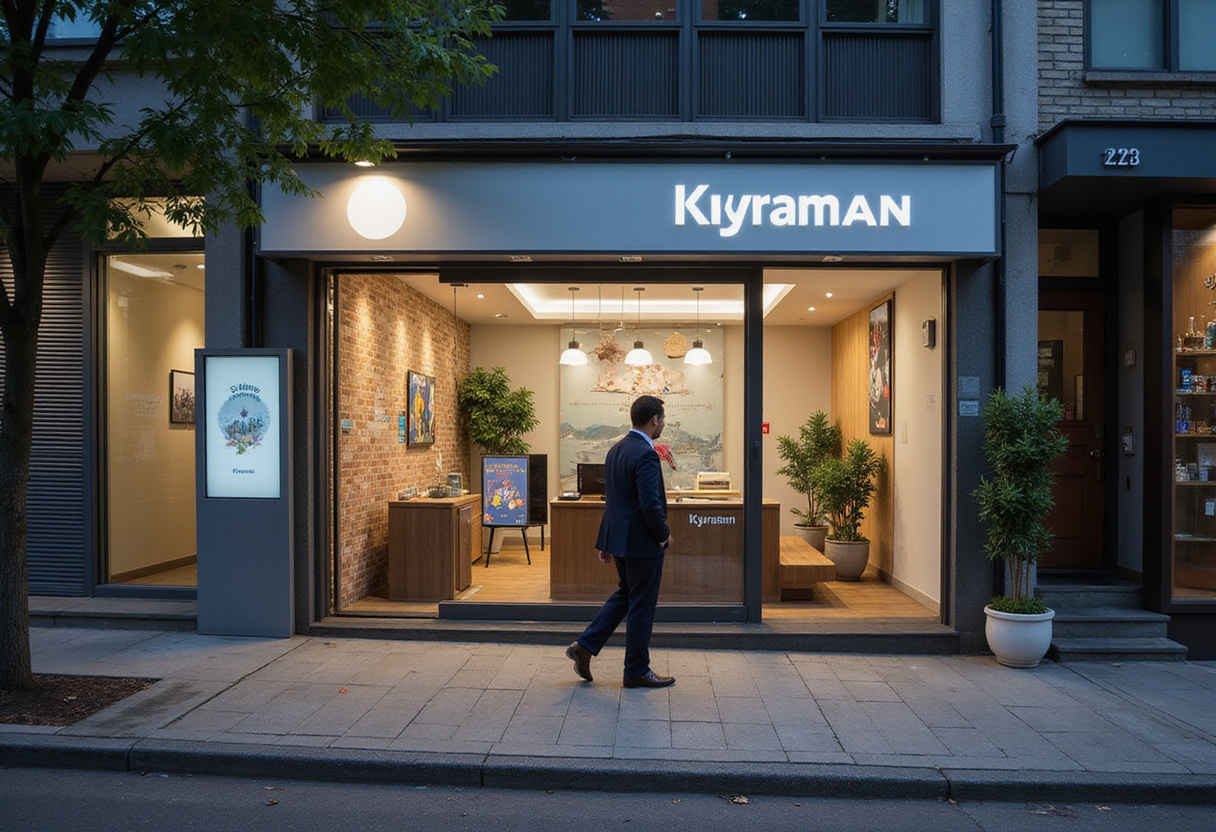
Kyuramen Opens Its First Co-Branded Fast-Casual Outlet
Kyuramen has opened its first co-branded fast-casual outlet, testing a shared-format model that could shape the ramen chain's expansion strategy.
Kyuramen has opened its first co-branded fast-casual outlet, marking a format shift for the ramen chain as it looks beyond its standalone restaurant model.
The opening puts Kyuramen into the growing ranks of Asian casual-dining brands experimenting with shared kitchens and dual-brand storefronts. Co-branding allows two chains to split real estate, labor, and back-of-house infrastructure in a single location — a structure that operators increasingly use to improve unit economics in high-rent markets.
Why does a ramen chain want a co-branded store?
For a concept like Kyuramen, the co-branded format serves as a test kitchen for menu breadth and daypart expansion without the cost of building a second standalone unit. Shared overhead spreads fixed costs — rent, utilities, management — across two revenue streams, which can move a location's break-even point materially.
The strategy is common among franchised fast-food systems, where parent companies or multi-unit franchisees pair complementary brands to lift sales per square foot. Details on which partner brand shares the new Kyuramen location, the ownership structure of the outlet, and the specific market were not disclosed in the announcement.
What it signals about the segment
Ramen and Asian noodle concepts have been scaling rapidly in U.S. fast casual, driven by favorable ingredient costs relative to protein-heavy menus and strong lunch-and-dinner demand. Kyuramen, known for its Japanese-style ramen served in a fast-casual format, has positioned itself in the mid-scale segment between instant-noodle QSR offerings and full-service Japanese restaurants.
A co-branded pilot typically precedes broader rollout decisions. If the format delivers stronger sales per square foot than a standalone Kyuramen unit, the chain could extend the model to additional markets or embed it into its franchise development pipeline.
The company has not yet announced timelines for further co-branded openings, and operators watching the experiment will be looking at whether the shared format holds service speed and food quality steady across both brands.
What comes next
The first outlet's performance — traffic, average check, and labor efficiency versus the standalone model — will determine whether Kyuramen treats co-branding as a one-off test or a core part of its growth strategy going forward.
More from Olivia Hart
Show full bio
Staff writer covering marketplaces and e-commerce at The Pass Brief.
231 articles