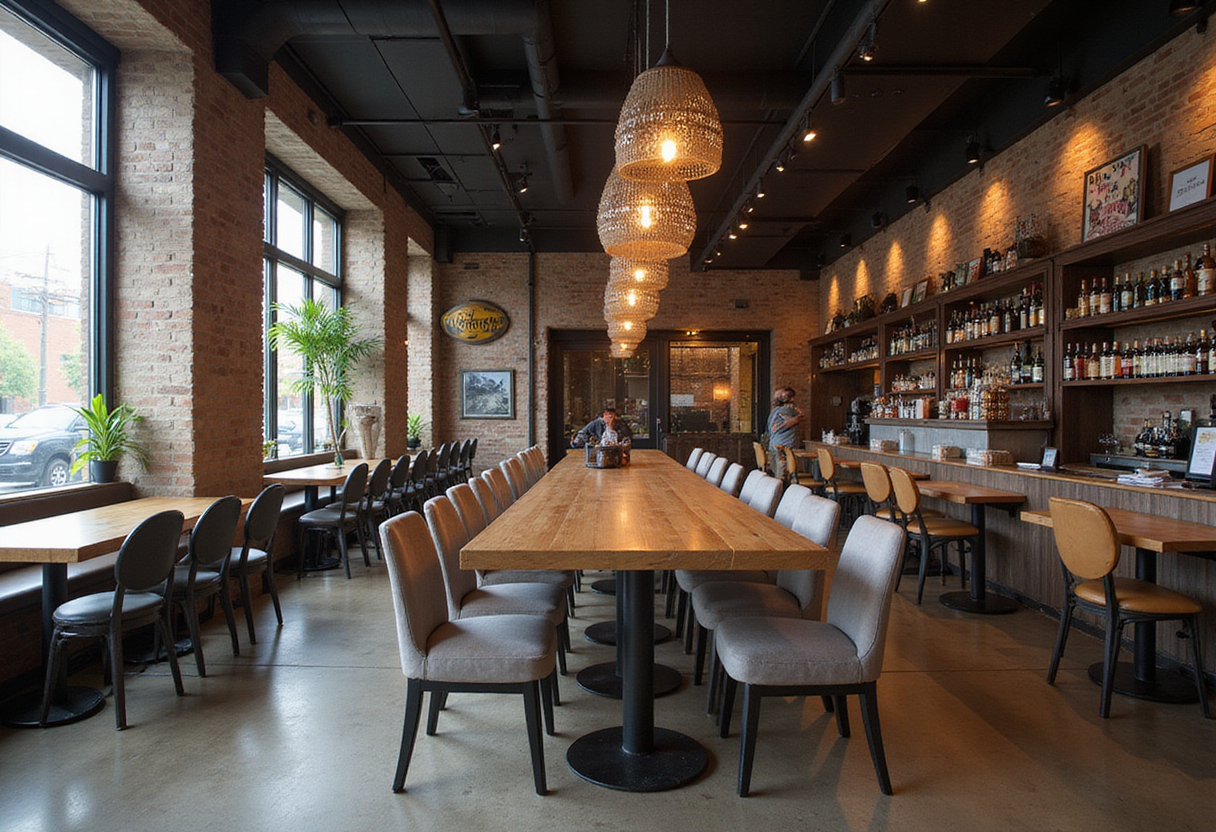
KFC's Open House Prototype: A Test Lab Aimed at Reviving Growth
KFC's Open House prototype, called a potential spark for the brand by Restaurant Business, rethinks store design around an open kitchen and could reshape future unit builds.
KFC has debuted a restaurant prototype called Open House, a format that Restaurant Business Magazine describes as potentially the spark the brand needs.
The name of the format signals its logic. An "open house" design removes barriers between the kitchen and the customer, and that physical change carries operational weight. For a chain of KFC's scale, a prototype is never just architecture — it is a template that determines future build costs, kitchen flow, staffing requirements and the speed of digital and drive-thru orders.
What does a prototype change for a chain this size?
Everything downstream. When a brand like KFC commits to a new store format, that design becomes the blueprint for the next wave of construction. Franchisees, who operate the bulk of KFC's locations in the United States, build to that specification. The prototype therefore functions as a capital-spending instruction: it tells owners what equipment to buy, how much square footage to finance and which revenue channels — dine-in, carryout, drive-thru, delivery, rapid pickup — the building is engineered to prioritize.
A visible, open kitchen also does menu work. When customers can watch chicken being prepared, the format supports the chain's core positioning around freshly breaded, on-premise cooking. That is a sourcing and preparation story told through design rather than advertising, and it comes at a moment when value competition across quick-service chicken has pushed chains to sharpen whatever proof of quality they can show at the counter.
Why the timing matters
Restaurant Business frames the prototype as a potential turning point for a brand that, like its competitors in fried chicken, faces pressure from both premium players and discount-led value wars. In that environment, a new format gives an operator two levers at once.
The first is unit economics. A redesign is the moment when labor paths, equipment placement and packaging stations are re-planned. If Open House shortens the distance between fryer and handoff, the savings show up in ticket times and labor efficiency — the levers operators control when they cannot control commodity costs.
The second is the experience premium. Chains have spent the past several years building formats around digital orders and minimal human contact. A design that instead invites customers into the kitchen's view is a deliberate counter-position, one aimed at the occasions when guests choose a restaurant rather than merely a transaction.
The questions the format must answer
A prototype earns adoption only through results. The practical tests are concrete:
- Whether build costs fit within the ranges franchisees will accept for new units and remodels
- Whether the open layout adds labor demands or reduces them once throughput is measured
- Whether the format lifts average check or visit frequency enough to justify the redesign
Restaurant Business's assessment — that Open House "just may be the spark the brand needs" — is a judgment about potential, not a verdict on performance. The format now moves into the phase that matters for a global chain: measurement against the metrics that decide whether it rolls out.
What comes next
Watch for two signals in the months ahead. One is disclosure from KFC and its parent about whether Open House informs the standard design for future builds. The other is franchisee response, since a format only scales if the operators who own most of the system see a payback. If those signals arrive, the prototype will have done what prototypes exist to do: convert an idea about hospitality into a set of numbers a builder can act on.
More from Elena Vasquez
Show full bio
News editor covering people, launches and day-to-day practice in Restaurant and hotel operations at The Pass Brief.
353 articles