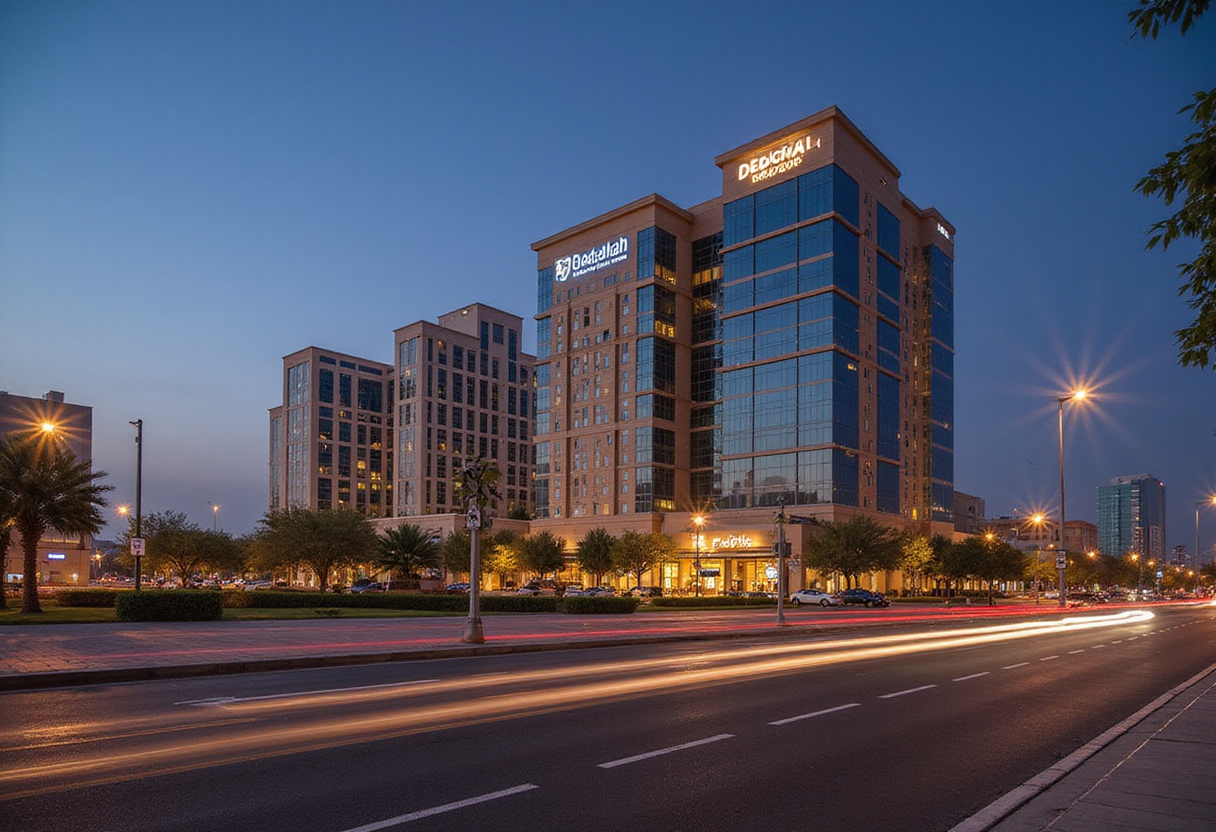
Jeddah hotels post 53.3% RevPAR jump in September as Gulf Cup fills rooms
Jeddah hotels posted a 53.3% RevPAR surge in September 2026, the strongest September performance since 2018. The Gulf Cup opening day drove 78.3% occupancy and SAR688.72 ADR.
Jeddah's hoteliers closed September with revenue per available room up 53.3% year-over-year, according to preliminary CoStar data — the strongest September performance the market has posted since 2018.
That 53.3% RevPAR surge is the headline figure operators will care about most. Average daily rate climbed 13.0% to SAR601.49 (about $160). Occupancy jumped 35.6% to 65.5%. RevPAR landed at SAR393.87, roughly $105 per available room. Translated: every key hotel in the market effectively earned more than half-again what it did last September per bookable room.
What drove the September surge?
One event: the 2026 Gulf Cup.
The tournament's opening day on September 23 pushed Jeddah to monthly highs across all three KPIs. Occupancy hit 78.3%. ADR reached SAR688.72 (about $184). RevPAR climbed to SAR539.08 (around $144).
For any hospitality operator, that's the kind of single-night spike that moves a full-month P&L. A 78.3% sold night at $184 ADR doesn't just fill rooms. It pulls food, beverage, parking, and spa revenue behind it — the ancillaries that turn a strong RevPAR into strong GOP.
How did the concert night compare?
Earlier in the month, the IN ACT IX Concert on September 11 delivered a softer but still meaningful bump. Occupancy reached 63.9%. ADR climbed to SAR625.44 (about $167). RevPAR landed at SAR399.89 (roughly $107).
Solid, not spectacular. The Gulf Cup opening day ran about 11 percentage points higher on occupancy and roughly SAR63 higher on ADR than the concert's peak night. Multi-night tournament demand compressed into one night does what single-event demand can't.
What's the broader operator math?
A 35.6% occupancy jump paired with a 13.0% ADR increase compounds into the 53.3% RevPAR surge. Event-driven occupancy nights at premium ADRs pull ancillary spend behind them — restaurants, parking, minibars — which is where hoteliers build their actual margins. Rate gains stick better when they coincide with demand the market cannot easily refuse.
The market's high occupancy isn't new. September 2026 marks Jeddah's highest September occupancy since 2018. That baseline matters: it wasn't a soft prior year getting lapped. Jeddah genuinely ran hotter than it has in eight Septembers.
How reliable is the data?
CoStar's hotel performance sample covers 95,000 properties and 12.2 million rooms worldwide. STR, the hospitality benchmarking arm that CoStar owns, generated the September figures. That sample size is what gives the data its operator-grade credibility — large enough to smooth out single-property volatility, granular enough to track one tournament's opening night across a single market.
For revenue managers benchmarking their own September, STR's dataset is the leading industry reference. Operating teams don't need to take the 53.3% RevPAR figure on faith. They can pull their own comp set and confirm.
Can Jeddah hold these gains?
The forward question is the harder one. Event-driven markets notoriously give back rate gains the month after a marquee fixture ends. Jeddah hoteliers will be watching October closely to see whether the Gulf Cup spike was a one-night miracle or the start of a sustained pricing reset.
The post-tournament pace will tell. Operators will be watching whether the September numbers anchor a reset or fade with the departing crowds.
For now, September belongs in every Jeddah revenue manager's pitch deck for the next planning cycle. The numbers say the Gulf Cup did its job — and then some.
More from Daniel Okafor
Show full bio
Correspondent covering companies, deals and strategy in Restaurant and hotel operations at The Pass Brief.
378 articles