German Restaurant VAT Cut Failed to Lower Menu Prices, Union Says
Germany's reduced VAT rate for restaurant meals has not produced the lower menu prices the policy was designed to deliver, the country's food and hospitality union said, charging operators absorbed the cut.
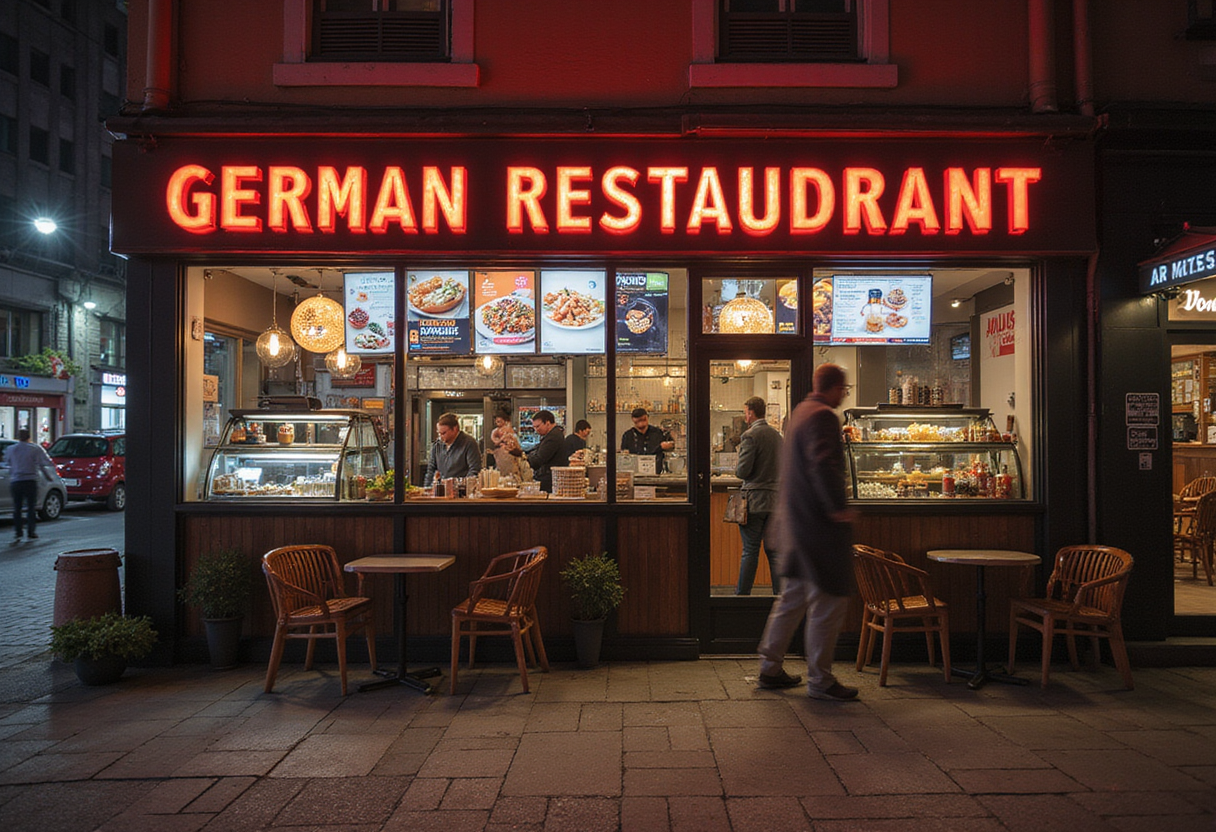
Germany's reduced VAT rate for restaurant meals has not produced the lower menu prices the policy was designed to deliver, the country's food and hospitality union said, charging that operators absorbed the rate reduction into already thin margins rather than pass it through to diners.
In a statement reported by Reuters, the union that represents Germany's food, beverage and hospitality workers alleged that the pass-through element of the VAT cut had not materialized. Restaurants received the relief, the union said, but customers did not see proportional price reductions on menu items.
The dispute over how VAT policy interacts with restaurant economics is a recurring operator-side question. A reduction in VAT, mechanically, expands gross margin per transaction by the size of the cut. Operators can respond in three ways:
- Hold menu prices and absorb the rate-driven margin expansion in-house.
- Pass part or all of the rate cut through to consumers through lower menu prices.
- Split the difference between operator margin and consumer relief.
The German union's position is that operators chose the first path.
What does the union want? The union's remedy, in framing consistent with its prior statements, centers on enforceable pass-through. A future iteration of the rate reduction should require documented reductions in consumer-facing prices, the union argued, so the relief reaches the table ticket rather than disappearing into operator margins.
Why might an operator hold the price? The choice to retain rather than pass through is defensible at the P&L level. European restaurant operators typically run gross margins in the low double digits, with food costs at 28-35% of sales and labor at 25-35%. Energy, occupancy, and capex consume most of what remains, leaving thin net margins. When input inflation remains live, a VAT-driven margin expansion functions as a hedge against the next cost shock rather than a windfall for guests.
Operators also face menu-printing and customer-perception friction. Once a VAT cut has been absorbed, raising prices becomes harder than holding them, particularly in a high-inflation environment when pricing power is fragile. The political framing of the rate change as consumer relief therefore diverges sharply from the operator view of it as a structural balance-sheet improvement.
What does this mean for other European markets? Germany's restaurant VAT rate sits below several comparable European rates. Other European markets have watched the German experiment as evidence of whether VAT reductions actually produce the consumer behavior the policy assumes. If the German union is right that operator margin capture defeats the public-policy objective, the finding sharpens the question for any European finance ministry weighing restaurant VAT as a fiscal lever.
What's next The union's findings place pressure on the German finance ministry and federal legislators ahead of the next scheduled review of the rate. Whether the rate stays at the reduced level, reverts to its prior level, or is recalibrated with a formal pass-through requirement will determine the next chapter of this debate. For operators, the immediate signal is that the political and labor-market visibility of rate-cut arithmetic will stay high, and that any future rate cut will arrive with a louder demand for visible consumer-side relief.
More from Rebecca Stone
Show full bio
Senior reporter covering media and advertising at The Pass Brief.
225 articles