Ford's Garage Bets on Grandma-Style Hospitality as Robots Loom
Ford's Garage built its hospitality training on a 'Greatest Generation' grandma model, as chains bet human service beats kiosks in the race for repeat diners.

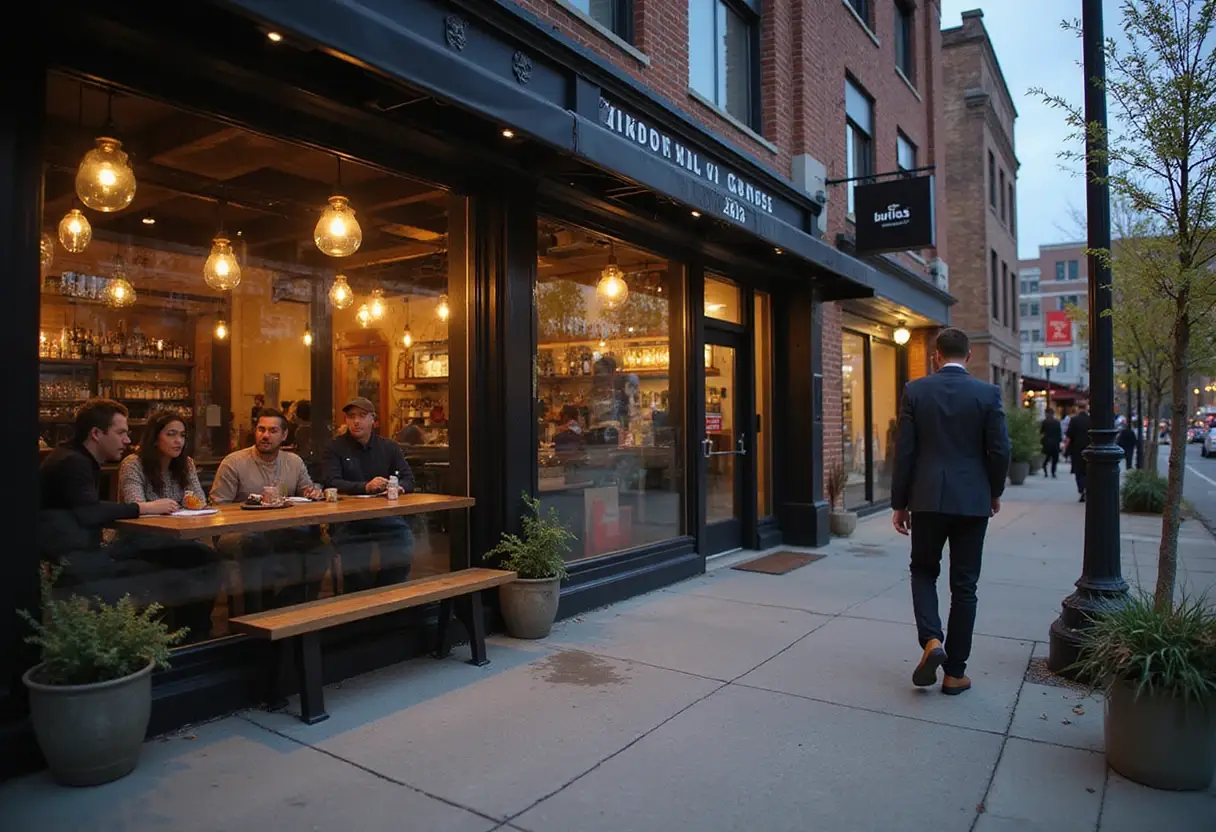
Ford's Garage, a 36-unit casual-dining chain headquartered in Michigan, has built its entire hospitality training program around one model: a "Greatest Generation" grandmother. As much of the industry pours money into kiosks, delivery apps and automated kitchens, a counter-trend of operators is betting that human service is the differentiator that actually drives repeat traffic.
President Billy Downs told Fox News Digital the program, called the "hospitality wheel," recreates the warmth he remembers from childhood visits to his grandmother.
"We designed a training program that was designed after what a 'Greatest Generation' grandma would have served their family," Downs said.
The point isn't decor. It's how guests feel. "I'll tell you this, she made you feel special, and that's what we want people to come out of this is feel special when they go to a Ford's Garage," he said. The chain, themed around 1920s service stations, pairs that philosophy with what Downs calls a unique environment — but the service standard carries the weight.
"We also know that we have a unique dining experience in terms of the environment, but we want to have that hospitality be really important and we want people to get connected when they come on in," Downs said.
Who else is moving this way?
The signals aren't isolated. Pizza Hut has brought back its classic red-roof dining design. Cracker Barrel took the opposite bet earlier this year — attempting to modernize its longtime look — and drew customer backlash for it. The lesson operators are reading: nostalgia resonates with consumers who grew up with these brands, and tampering with it carries real commercial risk.
Chef Joe Isidori, owner of Arthur & Sons, which operates locations in New York and Florida, frames the opportunity in sharper economic terms. As a third-generation New York City chef, he argues that younger diners already gravitate toward restaurants with real history and experiences that can't be mass-produced.
"What they'll never be able to replace is the nostalgic real-life experiences," Isidori said.
What does this change for pricing?
With diners growing choosier about where they spend money, Isidori says restaurants need to offer more than food to justify eating out at all. "If they're going to spend money, it's got to have an experience to it," he said. In his view, hospitality is a value proposition, not a garnish.
His forecast for the automated side of the industry is blunt. "Restaurants are really going to have a problem in 10 years," Isidori said. "I mean, the robots are coming."
His hedge is himself. "A robot can't do what Joe Isidori does," he said. "He can't walk, talk and act like me and actually cook like me."
For now, both camps are spending in opposite directions — one on machines, one on training programs modeled on grandmothers. As automation spreads and gets cheaper, the operators banking on human connection are effectively pricing service as the scarce asset the tech stack can't replicate.
More from Daniel Okafor
Show full bio
Correspondent covering companies, deals and strategy in Restaurant and hotel operations at The Pass Brief.
633 articles