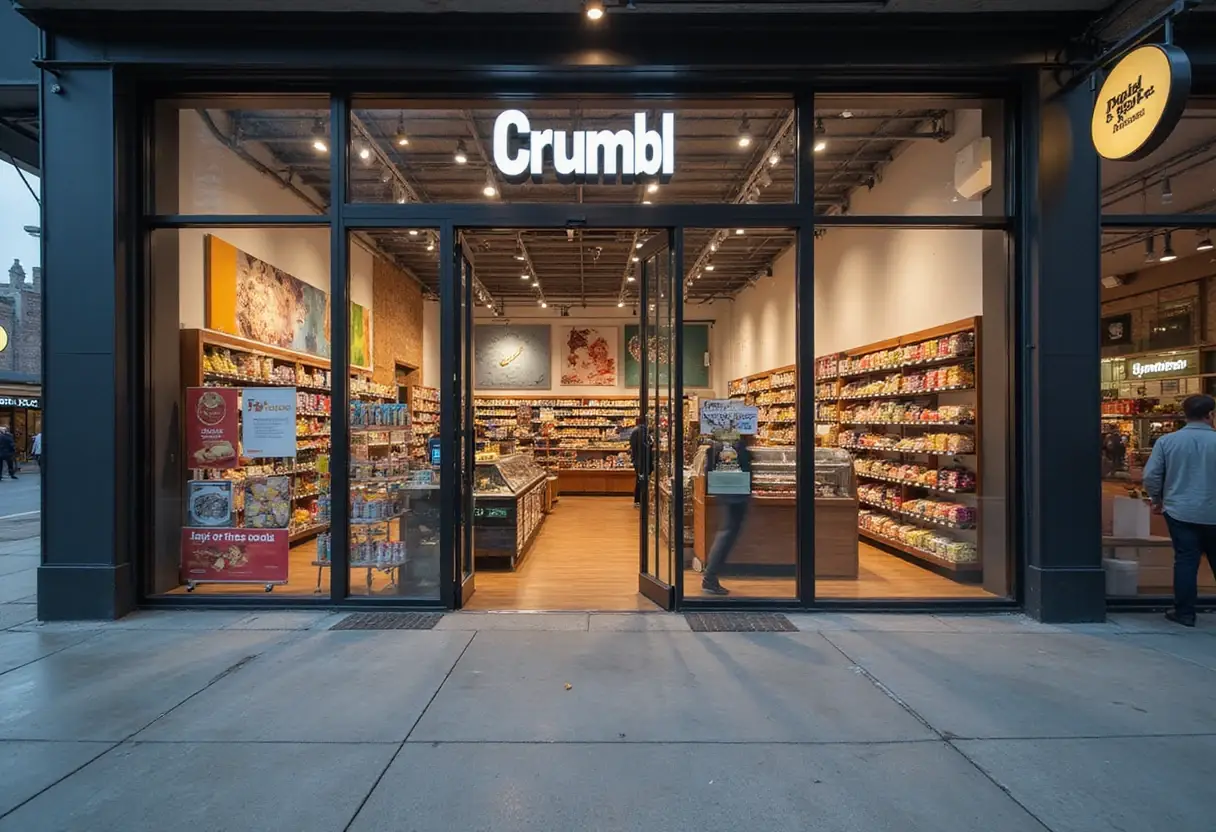
Crumbl Stores Average $1.14M as Viral Cookie Economics Sour
Crumbl's average unit sales fell 16% to $1.14M in 2025 while the chain passed 1,100 stores; Chip City closed all 22 locations after raising $17.5M.

Crumbl's average annual store sales fell roughly 16% in 2025, to $1.14 million, even as the cookie chain kept expanding past 1,100 locations by year's end. The figure, drawn from the company's franchise disclosure data, sits at the center of a broader reckoning in the viral-dessert segment: Chip City, which had raised $17.5 million in investment capital, abruptly closed its remaining 22 stores in early October.
The two brands built their growth on oversized cookies, rotating weekly flavors, and social media buzz that turned dessert purchases into shareable events. The same forces that fueled their rise, industry observers now argue, pushed expansion faster than the underlying unit economics could support.
The mechanism is straightforward, and it's a franchise-structure problem as much as a demand problem. A viral video can generate millions of views in days, and a popular product can draw lines for weeks. But the obligations that come with a restaurant — commercial leases, equipment financing, construction, staffing, franchise agreements — run for years. They outlast the buzz by a wide margin.
Why can a franchise system grow while its stores fail?
Because the risk doesn't sit at headquarters. New locations generate additional revenue and extend the brand's reach, while individual franchisees bear most of the financial risk of opening and operating stores. Unit growth can look impressive at corporate even as operators face falling sales, rising costs, and mounting debt.
Crumbl illustrates the pattern. Its rotating menu and cultivated social presence scaled the concept to more than 1,100 units by the end of 2025, yet average store sales slid about 16% that year. One Kentucky franchisee closed its store and filed for Chapter 7 bankruptcy, with liabilities including equipment financing and unpaid rent — a reminder that commercial obligations survive long after customers stop lining up.
Chip City's collapse followed a different route: financing difficulties, shifting consumer spending, and a dispute involving its former CEO. The circumstances differ, but both cases show how quickly ambitions built on a hot concept collide with financial reality.
What does this change for operators and investors?
The core issue is how businesses read early success. Social media supplies an abundance of seemingly compelling evidence that a concept works — views, followers, shares, opening-day crowds. Those are real signals of interest. They're much weaker evidence of enduring purchasing habits.
A customer willing to drive twenty miles and wait thirty minutes for a viral cookie may have no interest in repeating the trip a month later. The first purchase reflects curiosity. Sustained revenue requires habit, convenience, value, and satisfaction — the ordinary-Tuesday economics that no launch-day crowd can guarantee.
The practical questions come before signing the next development agreement:
- How many customers return without a new flavor announcement?
- What do store economics look like when traffic drops 20%?
- Can the concept survive on an average Tuesday's revenue rather than a grand opening's enthusiasm?
None of this makes social media a bad business tool. It can accelerate brand awareness and help emerging concepts compete against much larger established chains, and expansion makes sense when demand genuinely supports it. The trouble starts when management treats the extraordinary conditions of a successful launch as the baseline for an ordinary business.
There's also a market-correction angle. Consumers decide which businesses deserve continued patronage, and they can embrace an indulgence, enjoy the novelty, and eventually conclude a premium-priced cookie no longer earns a regular spot in their budgets. That correction is healthy for the marketplace, even when the fallout for businesses, employees, and franchise investors is painful.
The takeaway for operators heading into 2027: the speed of consumer attention has changed, but the fundamentals of restaurant economics haven't. A million views can sell an impressive number of cookies. They can't pay a ten-year lease.
More from Olivia Hart
Show full bio
Staff writer covering regulation, policy and their impact on Restaurant and hotel operations at The Pass Brief.
581 articles