Chip City Shuts All Remaining Cookie Shops, Ending 10-Year Run
Chip City has closed all remaining shops, including five on Long Island, three days after co-founder Peter Phillips sued the company alleging wage theft and breach of contract.
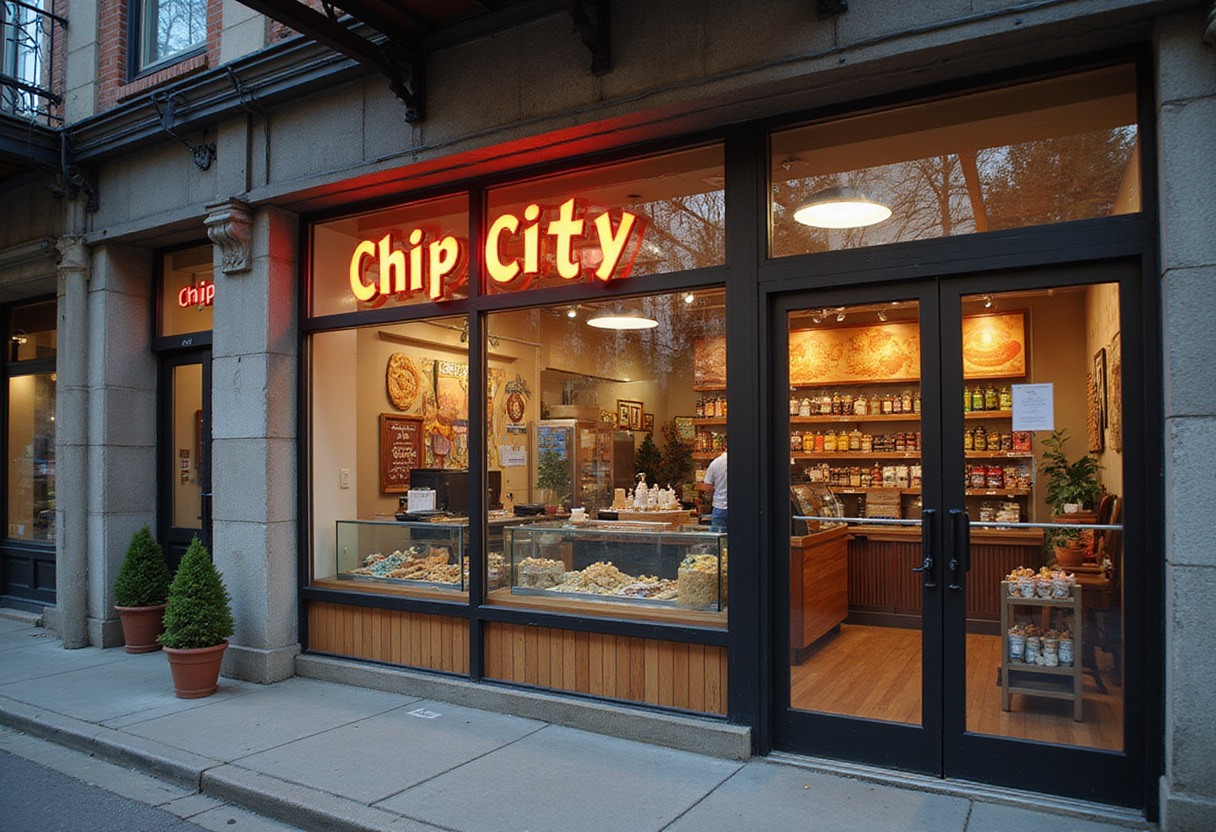
Chip City has closed its remaining cookie shops, including five on Long Island, the Queens-based company announced Friday, ending a 10-year run for a chain that grew to more than 50 stores across nine states.
The shutdown comes three days after co-founder Peter Phillips sued the company, its ownership entity PQUH Holdings LLC and two executives in the Supreme Court of the State of New York, alleging breach of contract, wage theft and unlawful retaliation.
"Despite extensive efforts to stabilize our business in the face of significant macroeconomic headwinds, we have made the very difficult decision to close all of our Chip City locations," the College Point-based company said in a statement Friday afternoon. "We are grateful to our dedicated employees and loyal customers who have supported us for the past 10 years."
How big was the footprint?
The chain, known for warm, overstuffed cookies with gooey fillings and 186 classic flavors rotating weekly, counted more than 50 stores across nine states as of April 2025, according to an article published that month by Square, the point-of-sale system owned by Block Inc. of Oakland, California.
The closures cap months of contraction:
- Chip City shut three Connecticut and three Virginia locations in September.
- As of Friday afternoon, its website listed 24 shops in New York City, Long Island, Texas and New Jersey — all now closed.
- Former Long Island shops included locations in Oceanside and Huntington beyond the five still listed.
Nobody answered the phones Friday afternoon at the five listed Long Island locations — East Northport, Garden City, Merrick, North Babylon and Wantagh (Woodbury is the fifth, per Newsday's listing). The company did not immediately respond to an inquiry about how many employees are affected.
Childhood friends Theodore Gailas and Peter Phillips founded Chip City in Astoria, Queens, in July 2017. The first Long Island shop opened in 2022 at the Brookvale shopping center in Oceanside.
What does the co-founder's lawsuit allege?
Phillips' complaint, filed Tuesday, targets PQUH Holdings LLC — which does business as Chip City — two executives, and Enlightened Hospitality Investments, which acquired a controlling stake in the company in March.
Under a restructuring agreement, Phillips allegedly agreed to step down as CEO and serve as an administrative consultant for nine months ending Dec. 2. His complaint says the deal guaranteed a prorated salary of $157,500 plus full family health and welfare insurance coverage.
Instead, the defendants cut off his direct-deposit payroll on Sept. 18, the complaint alleges. After Phillips served a formal notice of material breach and wage demand on Sept. 21, the defendants allegedly retaliated by submitting a job termination to Chip City's payroll processor, canceling his job status and scheduling termination of his family's health insurance.
The complaint further claims the defendants conditioned restoring his wages and benefits on two concessions:
- Surrendering four personally registered web domains: chipcitycookies.com, chipnewyorkcity.com, chipnewyorkcity.info and chipcity.com.
- Signing third-party borrower authorization documents on five store-level Small Business Administration loans on which he was personally exposed as a guarantor.
The defendants also allegedly threatened Phillips with more than $900,000 in counterclaims. Chip City did not immediately respond to a request for comment on the lawsuit.
Is the cookie category contracting broadly?
Chip City is not the only cookie concept under strain. Crumbl, the largest cookie chain in the country, has closed roughly 40 shops so far this year, leaving it just under 1,100 locations across the United States, Puerto Rico, Canada and Mexico.
"Chain cookie concepts have hit a rough patch after exploding in popularity coming out of the [COVID-19] pandemic, which I attribute mostly to consumers cooling on the fad, as well as an oversaturation in locations," said Kevin Schimpf, senior director of industry research at Technomic, a Chicago-based restaurant industry research firm.
With the sector's two largest players now shrinking their footprints, cookie chains face a market where unit growth has outstripped demand — and Enlightened Hospitality Investments must resolve both the litigation and the brand's wind-down in the months ahead.
More from Marcus Bennett
Show full bio
Market editor covering media and advertising at The Pass Brief.
243 articles