Chiang Mai Bookings Jump 84% as Asia-Pacific Autumn Demand Shifts to Second-Tier Cities
Chiang Mai bookings jumped 84.3% year-on-year as Asia-Pacific autumn demand spread to second-tier cities, with Japan taking 11 of the world's top 12 foliage spots, Trip.com data shows.
By Olivia Hart
Chiang Mai bookings surged 84.3% year-on-year this autumn, the fastest growth of any Asia-Pacific city in Trip.com Group's latest data, as travelers spread beyond the region's established hubs into secondary destinations.
Surabaya followed at +63.1%, Busan at +62.7%, Manila at +55.1% and Jakarta at +38.1%. Travelers from Mainland China drove much of that momentum across all five cities, with bookings concentrated around affordable, short-haul trips.
What does this change for regional operators? It signals demand is broadening. Hoteliers and restaurateurs in second-tier cities are capturing growth that once flowed almost entirely to gateway capitals, and the Chinese outbound market is the engine behind it.
Where is demand concentrating?
South Korea shows the same pattern of dispersion. Busan bookings rose 62.7% and Jeju City 31.4% year-on-year, while Seoul still added 37.1% — proof that secondary markets can grow fast without cannibalizing the capital.
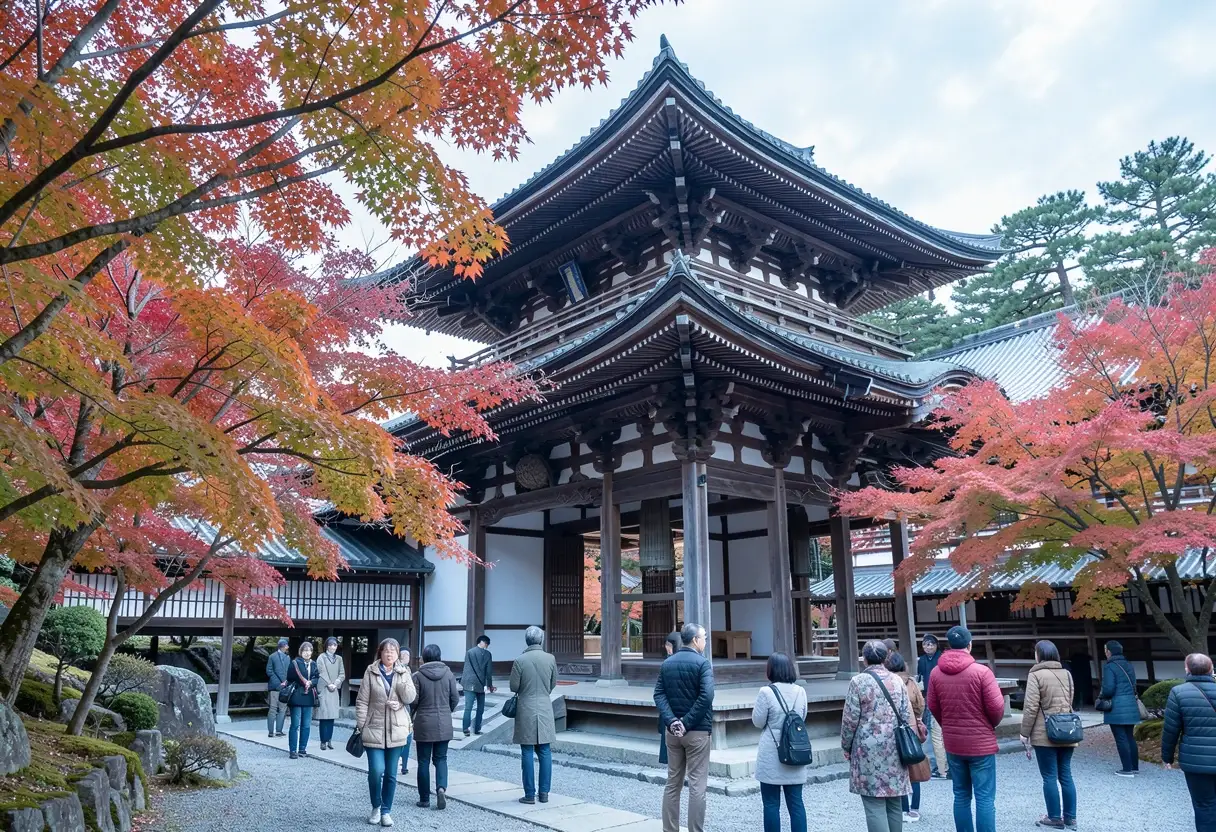
Japan, meanwhile, owns the seasonal market. Trip.Best's 2026 Global Top 50 Autumn Foliage Attractions gave Japan 11 of the world's top 12 spots. Kyoto's Arashiyama ranked first globally, followed by Kiyomizu-dera Temple and Tōfuku-ji Temple. Tokyo's Shinjuku Gyoen National Garden and Osaka Castle Park completed the top five. For operators in those markets, autumn foliage is now a reliably quantifiable demand event, not just a marketing theme.
Who is booking — and for how long?
Gen Z posted double-digit year-on-year growth in flight bookings, the strongest of any generation. Boomers and Gen X also recorded double-digit gains. Millennials remained the single largest segment, accounting for nearly half of all hotel and flight bookings.
Stay length is creeping up too. Average hotel stays in Mainland China edged slightly past two nights, and 62.7% of bookings there covered two or more cities. That multi-city pattern matters for food-and-beverage operators: longer, multi-stop itineraries spread spend across more neighborhoods and more meal occasions than a single-destination city break.
How are travelers finding these places?
Discovery is happening inside the app, at scale. Autumn-viewing posts on Trip.Moments, Trip.com's traveler community platform, jumped 203% year-on-year and 242% month-on-month to 2,497 in September. Comments climbed 616% year-on-year and 1,404% month-on-month to 12,457. Daily comments peaked at 1,415 on October 6, so the surge carried well past the September peak.
Trip.com is now shortening the path from browsing to booking with its AI-powered Trip Discovery Agent. The tool, which replaces manual destination searching and comparison, rolls out in stages and helps travelers discover and compare places whether they're exploring open-endedly or narrowing choices. It's initially available in English and Traditional Chinese, accessed by pulling down on the app's Home or Trips page. Trip.com covers the cost as a built-in app feature.
The through-line: demand is dispersing geographically, skewing younger, lengthening stays and being shaped earlier in the funnel by content and AI discovery. If the trend holds, autumn 2026 will reward operators in secondary cities who invest in visibility on those platforms before the foliage season starts.
More from Olivia Hart
Show full bio
Staff writer covering regulation, policy and their impact on Restaurant and hotel operations at The Pass Brief.
558 articles