95.5% of Japanese Households Feel Price Hikes as Dining Out Declines
BigGo Finance reports 95.5% of Japanese households feel price increases, with grocery outlays rising while restaurant spending falls. The reading lacks methodology, sample size and date.
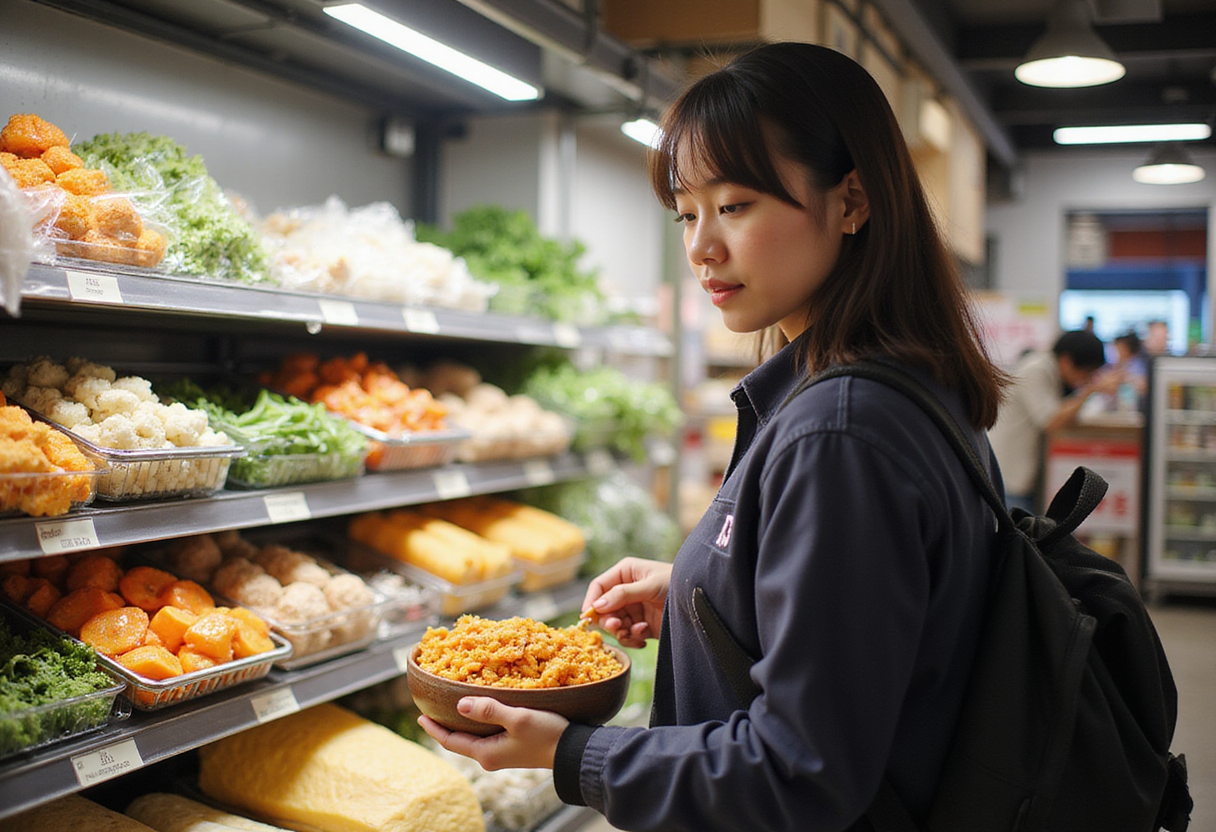
A consumer survey from BigGo Finance found that 95.5% of Japanese households reported feeling price increases, with grocery outlays climbing while spending at restaurants declined. The single composite figure, drawn from a sentiment snapshot, points to a reordering of the household food budget that operators in Japan will need to price against.
The headline carries a number but no detail on sample size, survey date or geographic spread. BigGo Finance has not disclosed methodology, panel construction or margin of error. Any operator reading the 95.5% as a national temperature should treat it as directional rather than definitive.
What the survey does show, by direction, is a split in where the household food yen goes. Grocery spending is climbing as shoppers absorb retail inflation across proteins, dairy and packaged staples. Dining-out spend is decreasing in parallel. The pattern is consistent with consumers trading down within their food budget and redirecting discretionary calories toward home preparation.
For restaurant operators, that distinction is the only part of the data set that matters at the unit level. A softening check average at dinner is a different problem from a guest-count decline at lunch. Each calls for a different lever. The headline obscures more than it reveals by collapsing both into "dining out declines."
What does the headline actually tell operators?
It tells operators that the consumer-pressure channel runs through perception first. A 95.5% awareness figure implies near-universal recognition that prices have moved. Awareness is not behavior. The same household that reports price increases may still dine out several nights a week if the venue matches its value calculation.
What it does not tell operators is the venue mix. The headline does not separate casual dining from convenience-store prepared food, which competes with quick-service operators for the same yen. It does not break out Tokyo from regional prefectures. It does not distinguish weekday lunch from weekend dinner. The reading reads as national but functions as a single composite.
How should operators read a 95.5% pressure signal?
Operators should start with their own point-of-sale files, not the headline. Three questions follow from the directional finding:
- Is the cover count softening at weekday lunch, weekend dinner, or both?
- Is the check average drifting down within category, or are guests trading down to lower-priced menu items?
- Is the average ticket holding steady while attachments such as beverages and desserts are dropping?
Each answer points to a different menu-engineering response. The headline cannot supply that granularity.
What the survey does not say
A caveat follows every claim the headline invites. The figure is a household-level perception of price increases, not a measured rate of inflation. It does not state which categories moved most. It does not identify whether the pressure concentrates in metropolitan Tokyo or in regional markets where chain density is thinner.
Restaurant economics in Japan already operate on compressed margins. A pullback in casual and mid-tier dining compresses those margins within two quarters, depending on fixed-cost absorption at the unit level.
The forward question for the next two quarters is whether the food-at-home gain is structural or cyclical. A structural shift would pressure full-service operators across Japan to engineer menus around smaller checks and tighter plate costs. A cyclical swing would ease as base-effect comparisons normalize and retail inflation cools.
BigGo Finance has not indicated when the next reading will appear. Operators monitoring Japanese consumer sentiment should treat the 95.5% figure as a signal to review check size, menu mix and daypart cover data within their own systems. The number tells a story at the household level. The missing methodology is the story behind it. Operators should plan around their own data while the broader picture firms up.
More from Marcus Bennett
Show full bio
Market editor covering technology and product news in Restaurant and hotel operations at The Pass Brief.
352 articles