78% of Americans Call Tip Screens 'Ridiculous' as Consumers Opt Out
78% of Americans call expanding tip prompts "ridiculous" and 2 in 5 want tipping banned, as tip screens spread to dollar stores, kiosks and even Botox clinics.
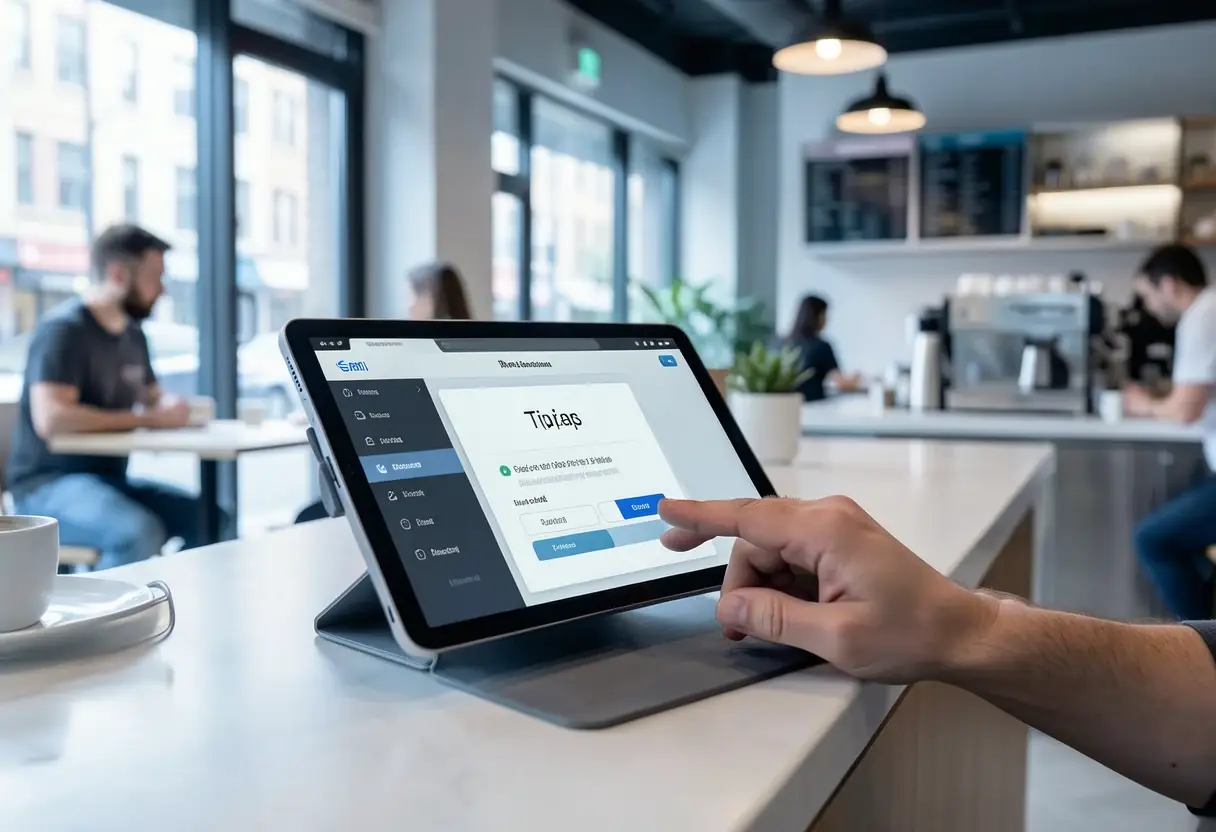
78% of Americans now describe expanding tipping prompts as a "ridiculous" racket, and 2 in 5 want tipping banned nationwide outright — numbers that should make any operator running counter-service tip screens sit up straight. The data, tracked by WalletHub, tracks a consumer revolt that's already changing where people spend.
Corey Anderson McCutcheon, a 44-year-old hair salon owner on Manhattan's Upper East Side, has stopped treating tips as mandatory. "If I'm at some random place, and the cashier's done absolutely nothing, no, I'm not tipping anymore," he said. His flashpoint: automated kiosks. "I'm automatically being asked to tip 18%, 20% or 25% at the dollar store and self-service stores at LaGuardia, where there are no humans in sight. Who the hell am I tipping if I'm doing all the work myself? It's crazy. I'm done."
He posted a video after skipping the tip on a $94 check at a French bistro following subpar service. Viewers cheered him on. He's not alone — 42% of Americans report no qualms about hitting "No tip" when staff are unfriendly or absent, and a growing chorus says they feel "harassed and extorted" by hidden surcharges stacked onto already-inflated bills.
What does this change for operators?
William Michael Lynn, a Cornell University professor who has studied tipping for 40 years, puts the trend bluntly: "People's attitudes towards tipping have gotten worse." He blames corporations for "fueling [consumer] dissatisfaction" with the practice.
The history matters for pricing strategy. Tipping took hold in the late 1800s as a way to supplement workers earning the legal minimum — now $17 an hour in New York City. What began as support for the lowest-paid hourly staff has become an expectation layered onto nearly every transaction.
Etiquette expert Jacqueline Whitmore, speaking after viral claims of tipping discrepancies at Shake Shack, drew the line where many customers now draw it: "If you're not having any contact, if somebody's not bagging up your food, if there's no one touching your food, no one cleaning your table, there's absolutely no reason to add any additional tip [or] any tip at all."
The spend consumers are pulling back
The opt-out is measurable. Brittany Robinson, a Manhattan real estate executive now in southwest Florida, used to spend $1,000 a month on grooming — acrylic gel manicures, faux hair extensions — before tipping demands pushed her out of salons and restaurants almost entirely. Her breaking point was medical: a Botox and filler bill of $1,000 with a prompt for a 20% tip — $200 more — and no "No tip" button. "I entered $0, proudly walked out and never went back," she said. She detailed her stance to roughly 200,000 TikTok viewers in a video titled "I'm Officially Not Tipping Anymore."
Will, a Brooklynite who withheld his last name, reached the same conclusion after European houseguests balked at a NYC bakery demanding a minimum 20% tip on a $7 croissant. His take on the labor argument: it's "an admission that the service economy exploits the precarity of workers and outsources an employer's duty to take care of their employees to the generosity of clients."
Labor quality is part of the equation
Ivy Marie, a 24-year-old Arizona brand strategist and former barista, used to refuse tips during her own coffeehouse shifts — she didn't think she deserved extra for doing her job. Her generation, she argues, is part of the problem: Gen Z makes up roughly 41% of today's service workforce, and she blames devices and social media for weaker interpersonal skills. "If you're not even going to say 'Hello' and smile while you take my order, what's the point in tipping you?" she told an audience of nearly 1 million. "It might as well be a robot taking my order — they're at least programmed to say 'Hi.'"
Dustin Anderson, a 44-year-old Utah comedian and father of four, told his 3.6 million online viewers: "I'm not tipping anymore. I'm done. I'm out… You don't get 25% because you did your job. And I'm not the bad guy here." His preferred fix is the one operators resist: "I'd rather these restaurants raise the prices of food than try to force me to tip." A restaurant influencer responded by telling millions of followers to give him terrible service.
Not everyone has closed the till. McCutcheon still tips when service genuinely delivers, and he trains his own hairstylists to earn it. "A tip is not mandatory. It's an extra 'Thank you' for going the extra mile," he said. "If you don't do that, don't expect anything extra in return." As tip fatigue hardens into outright refusal, that framing — service first, gratuity as earned gratitude — may be the model operators need to sell before regulators or consumers sell it for them.
More from Daniel Okafor
Show full bio
Correspondent covering companies, deals and strategy in Restaurant and hotel operations at The Pass Brief.
694 articles