Digital tipping reaches 10% of card payments in French restaurants
Gratuity-bearing digital payments at French restaurants more than doubled to nearly 10% by 2025, Lightspeed data shows, as operators split over card-reader tipping prompts and a 2028 tax exemption looms.
Digital transactions with an added customer gratuity rose from 4% in 2023 to nearly 10% in 2025 across 1,500 French restaurants using Lightspeed payment platforms — the sharpest quantitative signal yet that tipping prompts are taking hold in a market where a 15% service charge, service compris, already covers staff salaries.
The figures come from a June report by payment platform provider Lightspeed, which tracked tipping trends at 1,500 French restaurants from June 2023 to August 2025. The growth accelerated after a policy change: the French government made card-based tipping tax-exempt as of 2022. Until then, digital gratuities were taxed as part of restaurant revenue. Both digital and cash tips remain tax-free until the end of 2028.
What is driving the shift?
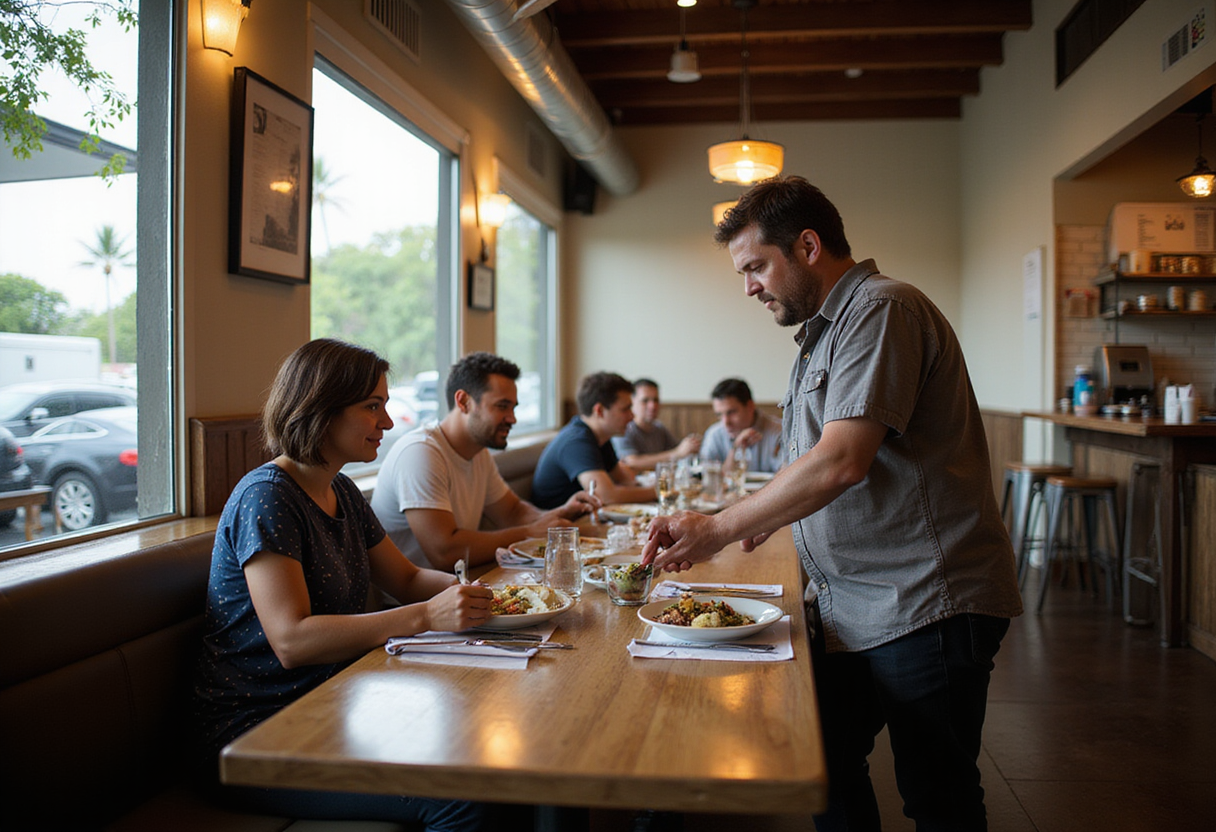
Card machines and QR-code payment systems now routinely prompt French customers for 5% to 20% gratuities — on restaurant bills, fast-food takeout and coffees to go. Tip jars sit beside cash registers. Servers often hover with the payment terminal while diners decide.
The mechanics matter. In France, servers earn minimum wage, and the 15% service charge on every bill funds payroll. The French word for tip, pourboire, literally means "to drink" — traditionally loose change left on the table.
"In France, tip is traditionally the change you have in your pocket and that you leave on the table for staff to buy themselves a drink later," said Elisabeth Debourse, editor-in-chief of the restaurant guide Le Fooding for France and Belgium.
French journalist Frédéric Martel, writing for Radio France, called digital tipping abusive, misleading and "theft" given that service is already included, and proposed a 5% cap. "In the age of digital payments, it is high time to regulate abusive restaurant practices to reassure customers and remain faithful to the French spirit of service being included," Martel wrote.
How are operators responding?
Split verdicts are emerging among restaurateurs — and some are pulling the feature entirely.
Christophe Souques, who operates seven cafes and pubs across Toulouse, Cannes and Nice — best known for the Ma Nolan's Irish pubs — has eliminated the tipping option at all his locations. As president of the Union of Hospitality Trades and Industries for the Nice-area chapter, he also worries digitized gratuities will make a future government tax grab easier once the 2028 exemption lapses.
"Tipping is supposed to be at the customer's discretion. But forcing customers to choose from amounts displayed on a card machine violates their privacy and their right to decide," Souques said. "It feels aggressive and it's shocking … It breaks the rapport between the server and customer."
Chef Priscilla Quang, who runs two Paris restaurants — Trâm 130, a French- and Asian-influenced neo-bistro opened in 2024, and Trâmette, an American-deli-inspired counter opened in July — banned tipping prompts at Trâm 130, citing its higher average check. At Trâmette she tests the option selectively: two out of three times, staff manually skip the prompt before presenting the card reader. About 20% of her customers tip, mostly at dinner, leaving €2 to €5 ($2.30 to $5.80).
"It's not an automatic reflex at all for the French," Quang said. "We still don't have that ingrained habit of tipping at all."
What else is changing on the floor?
The tipping debate sits inside a broader import of North American dining habits. New Paris openings including Red Sauce, an American-style Italian-American diner, Bittikesu and both Trâm addresses now open for dinner as early as 6:30 p.m. — well ahead of the traditional 8 p.m. peak.
At Bittikesu, Canadian chef Jules St-Cyr's 15-course, 2.5-hour tasting-menu counter, the 6:30 p.m. seating is largely logistics and labor economics. The second seating runs at 9 p.m., each capped at 10 guests. "I don't want our staff and our team to finish very late. It's not worth it in the long term," St-Cyr said.
The two-hour French lunch is compressing too, and Quang declined to open her gastronomic restaurant for lunch: the French are drinking less at midday — and alcohol is the most profitable part of a restaurant business. "The business lunch is disappearing," she said.
With the tax exemption set to expire at the end of 2028, and regulators openly debating caps, France's tipping-prompt economy faces both political and cultural tests in the next two years.
More from Marcus Bennett
Show full bio
Market editor covering media and advertising at The Pass Brief.
243 articles