64% of Americans Now Follow a Diet, and Thanksgiving Hosts Pay the Price
64% of Americans now follow a specific diet, and CDC data show 6.7% of adults have a diagnosed food allergy. Here is how one Thanksgiving table absorbs all of it.
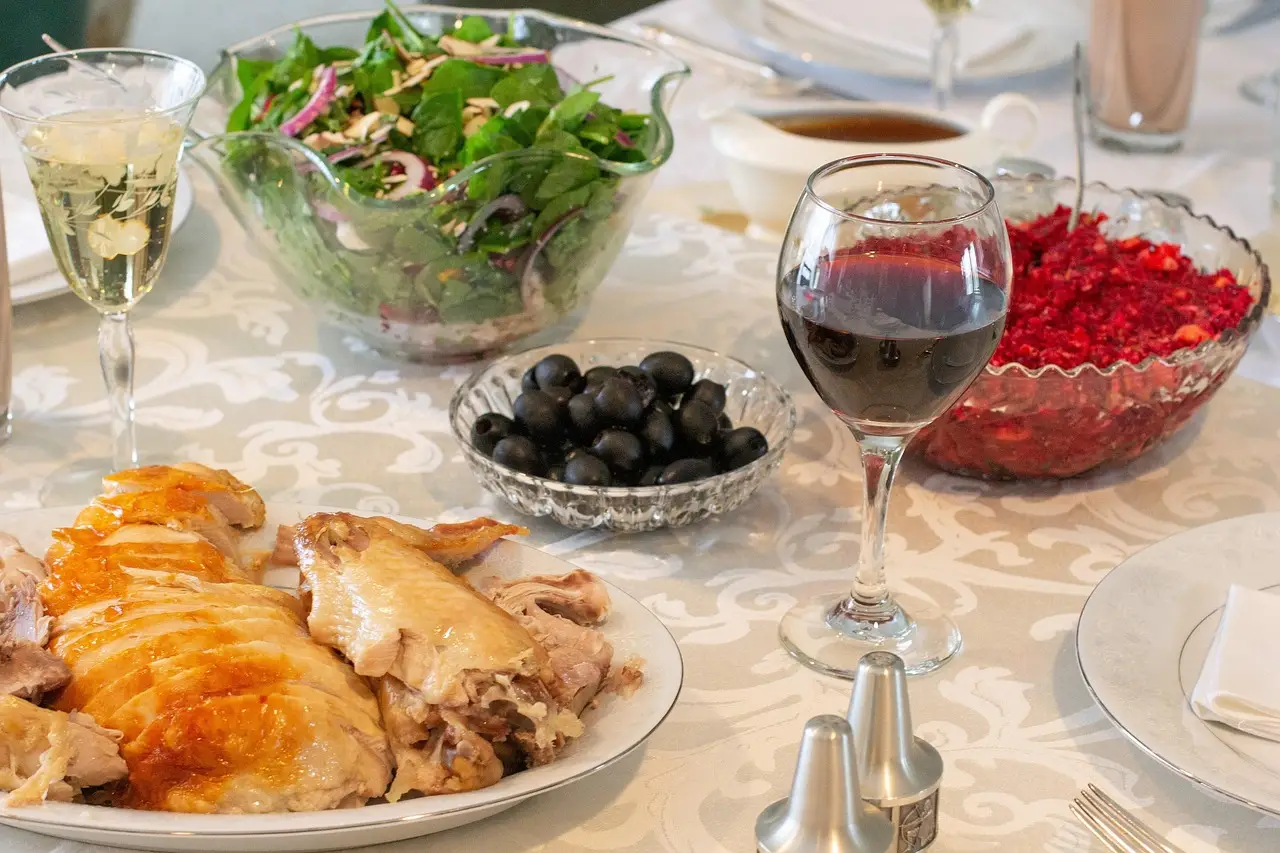
Sixty-four percent of Americans followed at least one specific eating pattern or diet in the past year, up from 57% in 2025, according to the 2026 IFIC Food & Health Survey. For the person roasting the turkey this month, that statistic lands at the dining room table: one guest is vegetarian, another avoids dairy, someone has celiac disease and a cousin has a food allergy.
The scale of the accommodation problem is measurable. CDC data released in January 2026 show that 6.7% of U.S. adults and 5.3% of children had a diagnosed food allergy in 2024. Federal labeling rules identify nine major allergens, but the FDA notes that more than 160 foods have been reported to cause allergic reactions.
The turkey itself is rarely the problem. The puzzle sits in everything around it.
What does a multi-diet menu actually cost the host?
Traditional stuffing may contain meat broth. Mashed potatoes often include butter and milk. Bacon turns up in vegetables, flour thickens gravy, marshmallows may contain gelatin, and pie can carry several common allergens at once. Even a salad becomes off-limits when cheese, nuts and dressing are mixed in before serving.
Each dish turns into a small decision tree. Can the vegetarian eat it? Is it dairy-free? Does it contain gluten? Could a shared ingredient, pan or spoon create a risk for someone with a food allergy?
Solving those questions after the groceries are purchased is the expensive route: the host ends up replacing ingredients, revising recipes and preparing separate versions of dishes already planned. Asking guests about their needs before the menu is set is the cheaper path to one meal with plenty of overlap.
Why 'can't eat that' means different things
A guest who says "I can't eat that" may be describing a food allergy, celiac disease, an intolerance, a religious practice or a lifestyle choice. All deserve respect, but they do not require the same preparation.
Food allergies raise the stakes because even a small amount of an allergen may cause a serious reaction. Alpha-gal syndrome shows why the nine-item federal allergen list does not tell the whole story. The tick-bite-triggered allergy makes mammalian ingredients — beef, pork, dairy, gelatin — unsafe for the person who has it.
The practical questions, per the source, replace guesswork without asking guests to defend their plates:
- What do you avoid?
- Is cross-contact a concern?
- Do you need separate cookware or serving utensils?
- Can you eat packaged foods if you check the label?
- Is there a trusted dish you would like to bring?
Where the menu engineering happens
The goal is not a parade of labeled special plates. It is a menu built around dishes several people can share. Vegetable broth makes stuffing work for vegetarians and guests avoiding mammalian ingredients. Olive oil and plant-based milk make mashed potatoes dairy-free. Roasted vegetables, cranberry sauce, salads and grain-based sides stay flexible when toppings and dressings are served separately.
That last step is the cheapest accommodation available. Bacon, cheese, nuts and marshmallows do not need to be baked into an otherwise adaptable dish. Serving them on the side lets each guest finish a plate to suit their needs — and spares the host from making three nearly identical casseroles.
Substitutions have limits. A dairy-free or vegan swap does not automatically make a dish safe for everyone; a plant-based product may contain soy, nuts, wheat or another ingredient someone needs to avoid. The most useful label, the piece argues, is not "safe for everyone" but an accurate list of what went into the food.
What changes at the serving table?
A recipe made without an allergen can pick one up from a cutting board, baking dish, shared spoon or serving utensil. Thanksgiving guidance from Allergy & Asthma Network recommends discussing allergies and ingredients before the meal, keeping the packaging from store-bought foods so guests can check labels, and giving each dish its own serving utensil. A safe recipe still creates a problem if its spoon lands in a neighboring casserole.
Packaged ingredients deserve the same scrutiny as the main recipe. Broth, seasoning blends, gravy mixes, baking mixes and meat products may contain unexpected ingredients. When a product or preparation method is uncertain, the guest should have the final say.
Honesty beats reassurance. If the same cutting board was used, the ingredient label is gone, or the casserole came from another kitchen, say so. Calling a dish allergy-free does not make it safe when the details are unknown.
Who pays for the accommodation?
The work should not be another invisible job handed to the person roasting the turkey. A guest with a food allergy may prefer to bring a trusted dish. Someone else can own a substantial vegetarian side; another can handle a dessert that meets multiple needs. Assigning guests a course or category, rather than asking everyone to bring something, prevents a buffet with five desserts, no filling vegetarian option and three casseroles whose ingredients are anyone's guess.
Clear communication also prevents well-intended surprises. A guest who changes a recipe, adds a garnish or transfers food into a different container should tell the host. When ingredients matter, a little something extra is not always an upgrade.
A successful Thanksgiving does not require every guest to eat every dish. It requires that everyone can build a satisfying plate, nobody is surprised by an ingredient, and the host sits down while the potatoes are still warm — an outcome that starts with a conversation, not a shopping list.
More from Elena Vasquez
Show full bio
News editor covering people, launches and day-to-day practice in Restaurant and hotel operations at The Pass Brief.
722 articles