YOTEL Plans to Triple 24-Hotel Portfolio, Betting Big on Asia Pacific
YOTEL aims to triple its 24-hotel portfolio with Asia Pacific at the core, leveraging an exclusive Select by Hilton deal and new openings in Bangkok and Kuala Lumpur.
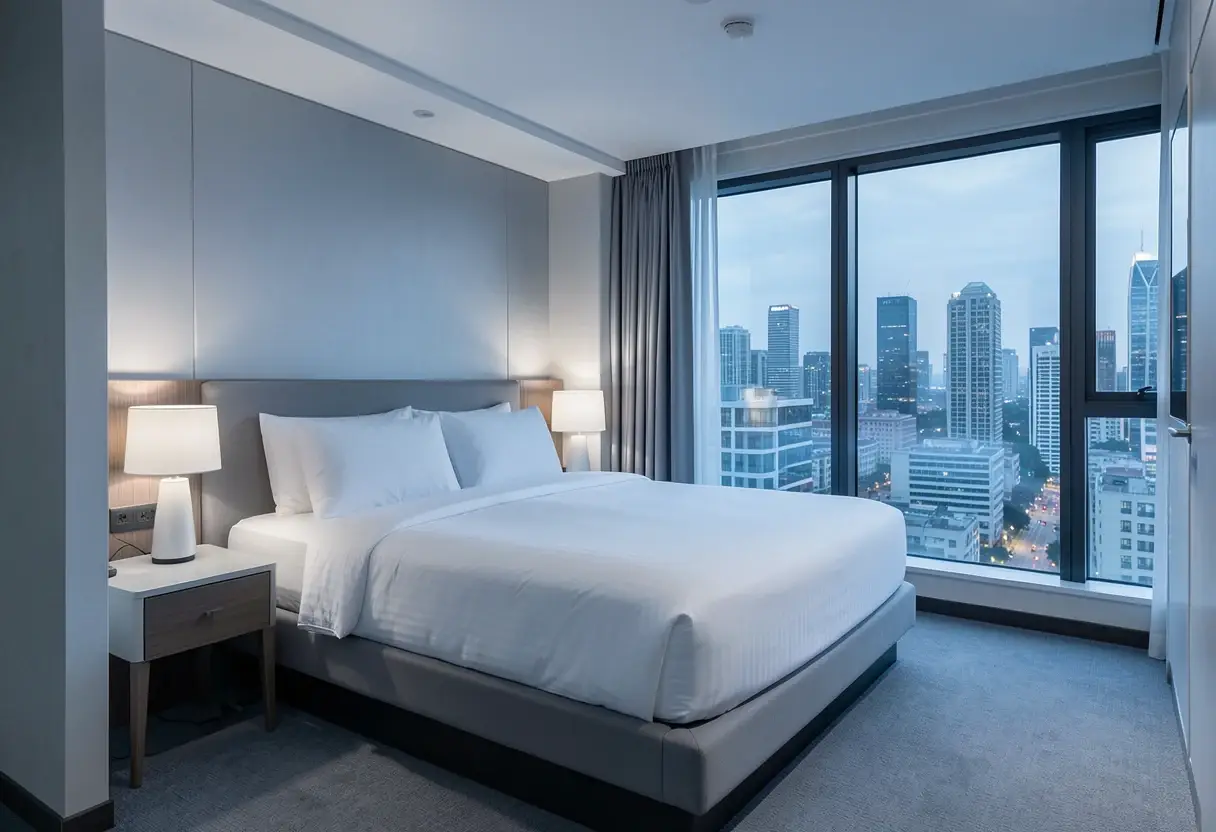
YOTEL operates 24 hotels today, and the London-headquartered group says that number could triple under a global expansion strategy that puts Asia Pacific at its center. The plan runs on two engines: new city openings in Bangkok and Kuala Lumpur, and a March 2026 exclusive agreement with Hilton that plugs the independent brand into Hilton Honors and Hilton's distribution network.
The rollout is already moving. YOTEL made its Thailand debut with YOTEL Bangkok Sukhumvit, which opened in October 2026 and becomes the brand's fourth Asian property. YOTEL Kuala Lumpur City Centre follows in early 2027, the fifth. They join YOTEL Tokyo Ginza, YOTEL Singapore Orchard Road and YOTELAIR Singapore Changi Airport.
YOTEL became, in March 2026, the first brand in the newly established Select by Hilton category. The structure matters to anyone watching the independent-brand economy: YOTEL keeps independent ownership, operations and brand identity while participating properties gain access to Hilton Honors and Hilton's global distribution. Eleven hotels have completed integration onto Hilton's platforms so far — including YOTEL Bangkok Sukhumvit — with more expected on Hilton's channels by year's end.
What does the Hilton deal change for operators?
For a 24-property independent group, loyalty scale and booking distribution are the two levers it cannot build alone. CEO Phil Andreopoulos framed the partnership in exactly those terms: "our new agreement with Hilton brings unmatched global distribution and loyalty scale to our brand and business." The collaboration is being watched as a template for independent lifestyle brands that want global-hotelier reach without selling the brand.
Three brands, three development paths
Across Asia Pacific, the company sees potential for ground-up builds, hotel conversions and adaptive re-use across all three of its brands:
- YOTEL — city centre hotels pairing modern design with smart tech
- YOTELPAD — longer-stay product for urban areas and resorts
- YOTELAIR — airport hotels aimed at early flyers and late landers, already operating at Singapore Changi, Paris Charles de Gaulle, Amsterdam Schiphol, Istanbul and London Gatwick
The airport portfolio, five strong, is a differentiator most lifestyle competitors lack. The city-centre fleet spans New York, Washington DC, San Francisco, Amsterdam, Edinburgh, Istanbul, Tokyo, Singapore and Bangkok, with the group founded in London in 2007.
Room economics built on the footprint
YOTEL's design language comes from first-class airline cabins, and the operator's margin logic follows: smart room design maximizes functionality per square meter using space-saving furniture and technology. Every room carries a reclining SmartBed that converts from couch to bed at the touch of a button, black-out blinds, mood lighting, a rain shower, Urban Jungle amenities, a Smart TV with personal-device streaming, and multiple power and USB points. Intelligent heating, lighting and cooling systems support sustainability, and the group targets LEED Gold certification on all new-build projects.
The sleep positioning is more than marketing. In YOTEL's own 2025 research, one in three guests said they choose the brand for the quality of sleep during their stay — a demand signal the company has engineered the room product around.
Labor design is part of the model too. Robots handle luggage, like YOBOT at YOTEL New York, and deliver amenities to rooms, like Yoshi and Yolanda at YOTEL Singapore Orchard Road, freeing staff for guest-facing work.
F&B as the social anchor
Rather than treating food and beverage as an amenity, YOTEL has built three concepts to drive lobby dwell time and revenue: Komyuniti, a multi-functional hub space found across Asia; Vela, a casual full-service restaurant serving local fare and global flavors; and Deck, an outdoor space, often rooftop or waterside.
Why Asia Pacific, why now
Andreopoulos points to structural tailwinds: the rise of low-cost airlines and simplified visa rules has driven a surge in intra-Asian travel, building momentum for short-stay trips. "The success of our properties in Singapore and Tokyo — and early indications from Bangkok — show that YOTEL's vision of smart, lifestyle-focused hospitality is resounding with the region's travellers," he said.
The group's published pipeline extends well beyond Asia: Bangkok (2026), Kuala Lumpur (2026), Athens (2027), Belfast (2028) and NEOM (2029), with major shareholders including the Talal Jassim Al-Bahar Group, United Investment Portugal and Kuwait Real Estate Company (AQARAT). If the tripling target holds, Kuala Lumpur is only the next stop, not the last.
More from Daniel Okafor
Show full bio
Correspondent covering companies, deals and strategy in Restaurant and hotel operations at The Pass Brief.
559 articles