Tri-Tip, Red Oak and a $1.25 Plate: Inside Santa Maria BBQ's Economics
A 150-year-old California tradition, trademarked by the local chamber, runs on red oak, pinquito beans and a cheap cut: tri-tip took over in the late 1960s.
In 1931, the Santa Maria Club charged $1.25 plus tax for a plate of red-oak-grilled beef at its monthly stag barbecue — a pricing model built on one region, one wood and, eventually, one budget-friendly cut. That tradition, more than 150 years old, still runs the menus at operations like Shaw's Famous Steakhouse in Santa Maria and the Hitching Post in Casmalia, and it's now legally protected: the Santa Maria Valley Chamber of Commerce holds a trademark on "Santa Maria Barbecue" to keep nearby imitators off the name.
What does the plate look like today?
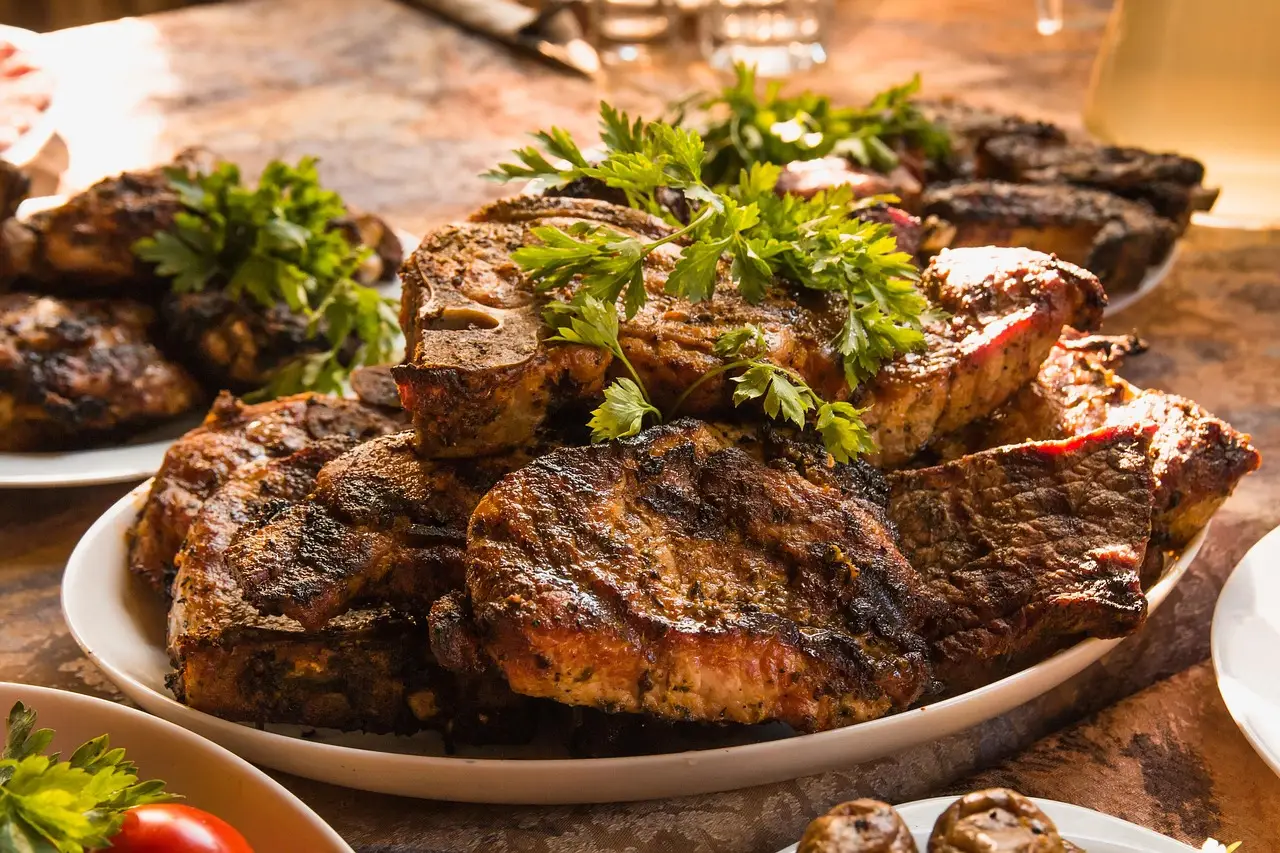
The format is fixed. Red-oak-grilled top sirloin or tri-tip arrives with pinquito beans — a miniature cousin of the pink bean grown only in the Santa Maria Valley — plus macaroni and cheese, a green salad, toasted French bread and salsa. No barbecue sauce. It's dry rub all the way.
The equipment defines the style. The grate lifts and lowers on a crank or pulley, so the cook manages heat by changing the distance from the red oak coals — closer to sear, higher to cook through. There's no lid. Nicholas Priedite, the Los Alamos pitmaster behind Priedite Barbecue, calls it neither grilling nor smoking but something in between.
How the style was built
The supply chain came first. In the 1830s and '40s, when what's now California belonged to Mexico, the government granted settlers huge cattle ranches and released even more land when it broke up the missions in 1833. Ranchers raised cattle mainly for hides and tallow, so beef was plentiful and cheap at the source.
According to R.H. Tesene's book Santa Maria Style Barbecue, cooks at roundups and fiestas dug pits, burned locally abundant red oak down to coals, and hung beef strung on willow branches over the heat. Red oak grows easily in the coastal climate and carries a mellow smoke — fuel that cost the operator essentially nothing.
By the 1920s the method anchored community gatherings. In 1920, Ed Craig, a founder of the Santa Maria Club — a social club for local businessmen — built a large pit for group service, Tesene records. The club's $1.25 monthly plates followed in 1931.
The menu engineering shifted with input costs. Prime rib came first, then thick top sirloin suited to skewers and rods. Lompoc butcher Bruce Nix dates the turn to tri-tip to the late 1960s, when cooks moved to metal screens and a smaller, cheaper cut took off. Tri-tip's rise is, at bottom, a cost-of-goods story: same wood, same fire, lower-priced protein.
Who's carrying it forward?
A new generation of small operators is working the pits. At the Santa Maria BBQ & Music Fest in September, several ran their own spins on the format:
- Angel Ibarra, Santa Maria Grill Masters — leads longtime friends who've competed in local barbecue contests for 20 years; uses a family dry rub of garlic, pepper, onion and salt and lets the fire do the rest.
- Jesse Carlon, Oakie Smokie BBQ, Santa Maria — runs a microenterprise home kitchen operation (MEHKO), serving thinly sliced tri-tip in a Philly cheesesteak-style sandwich; his key to tenderness is holding temperature consistent through the cook.
- Nicholas Priedite, Priedite Barbecue — a truck operation in Los Alamos serving brisket, pork shoulder and ribs with pinquito beans on the side.
For Priedite, the business case runs deeper than margins. "I feel like I can help carry the culture a little bit," he said. With a trademarked name, a protected bean supply and a cut that keeps plate costs workable, the style looks positioned to keep spreading beyond the valley — one crank-operated pit at a time.
More from Daniel Okafor
Show full bio
Correspondent covering companies, deals and strategy in Restaurant and hotel operations at The Pass Brief.
694 articles