Starbucks Buying Chipotle? Restaurant Business Calls It a Long Shot
Could Starbucks buy Chipotle? Restaurant Business calls it a long shot, and the structural math — valuation, dayparts, antitrust — backs that up for now.
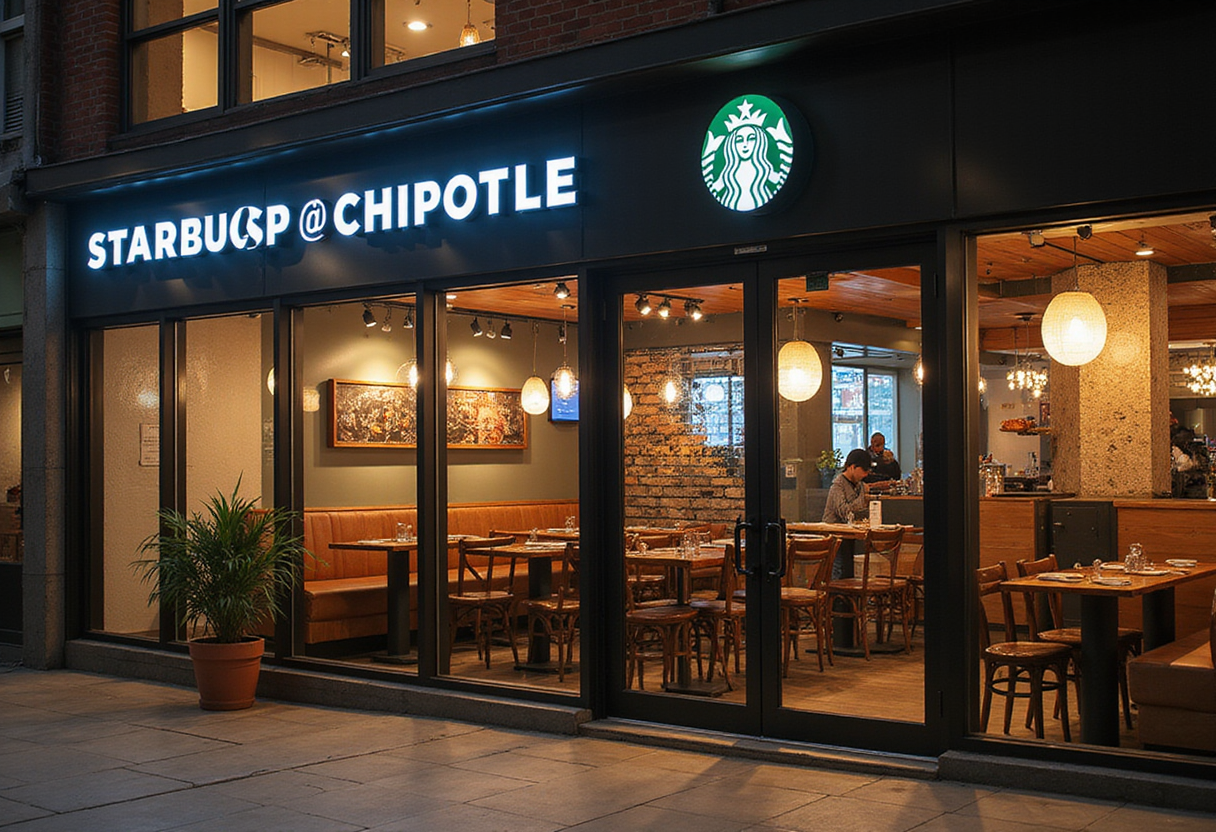
A takeover question is making the rounds again: could Starbucks buy Chipotle? Restaurant Business Magazine tackled the scenario directly this week and reached a blunt verdict — it's a long shot.
That's the whole story in three words, but the question itself is worth unpacking. Both chains sit at the top of their categories, both run enormous national footprints, and both trade at premium valuations. On paper, that's what makes the idea fun to imagine. It's also exactly what makes it improbable.
Why would anyone pair a coffee chain with a burrito chain?
The logic people reach for is scale. Starbucks and Chipotle each operate thousands of locations, each has a digitized ordering and rewards infrastructure, and each commands real pricing power with a younger customer base. A combined company would, in theory, share data, real estate muscle and technology spend across two of the country's highest-volume formats.
But shared customers aren't the same as a shared business. Coffee purchases cluster in the morning; Chipotle's business peaks at lunch and dinner. The two chains don't buy the same commodities, don't run the same kitchens and don't face the same labor model. A merger wouldn't obviously trim costs in either restaurant — it would mostly add a second, unrelated operating culture to manage.
What does this change for operators?
In practice, nothing yet. This is a scenario piece, not a deal. Restaurant Business framed the acquisition as unlikely, and there's no indication that either company has approached the other or that any process exists.
For industry watchers, the useful takeaway is what the speculation reveals. Investors and analysts keep circling big-brand consolidation because organic growth is getting harder to find at scale. When the market starts asking whether two category leaders should merge, it's usually a signal that people believe standalone expansion has slowed.
What would make it a long shot?
Restaurant Business didn't lay out a formal case in its framing, but the structural obstacles are familiar to anyone who follows M&A in restaurants. Chipotle isn't a distressed asset looking for a buyer — it's one of the best-performing names in the sector, which means any acquirer would pay a full, likely punishing price. Starbucks, meanwhile, has its own agenda, focused on turning around its core U.S. business rather than digesting a multi-billion-dollar acquisition.
Deals of that size also draw immediate antitrust attention, integration risk and shareholder pushback. Historically, restaurant megamergers across unrelated dayparts have a mixed record at best. That history is doing a lot of the work behind the "long shot" label.
For now, the story stays where it started: a headline question, an analyst's shrug and no deal on the table. If either company signals otherwise — a stake, a comment, a banker retained — that's when this moves from barstool speculation to something operators should actually price in.
More from Olivia Hart
Show full bio
Staff writer covering regulation, policy and their impact on Restaurant and hotel operations at The Pass Brief.
344 articles