Robots Can Save Hotels Money — Until Something Goes Wrong
A 500-participant study finds robot-delivered compensation fails to restore guest trust, while immediate problem resolution outranks both money and staffing type.
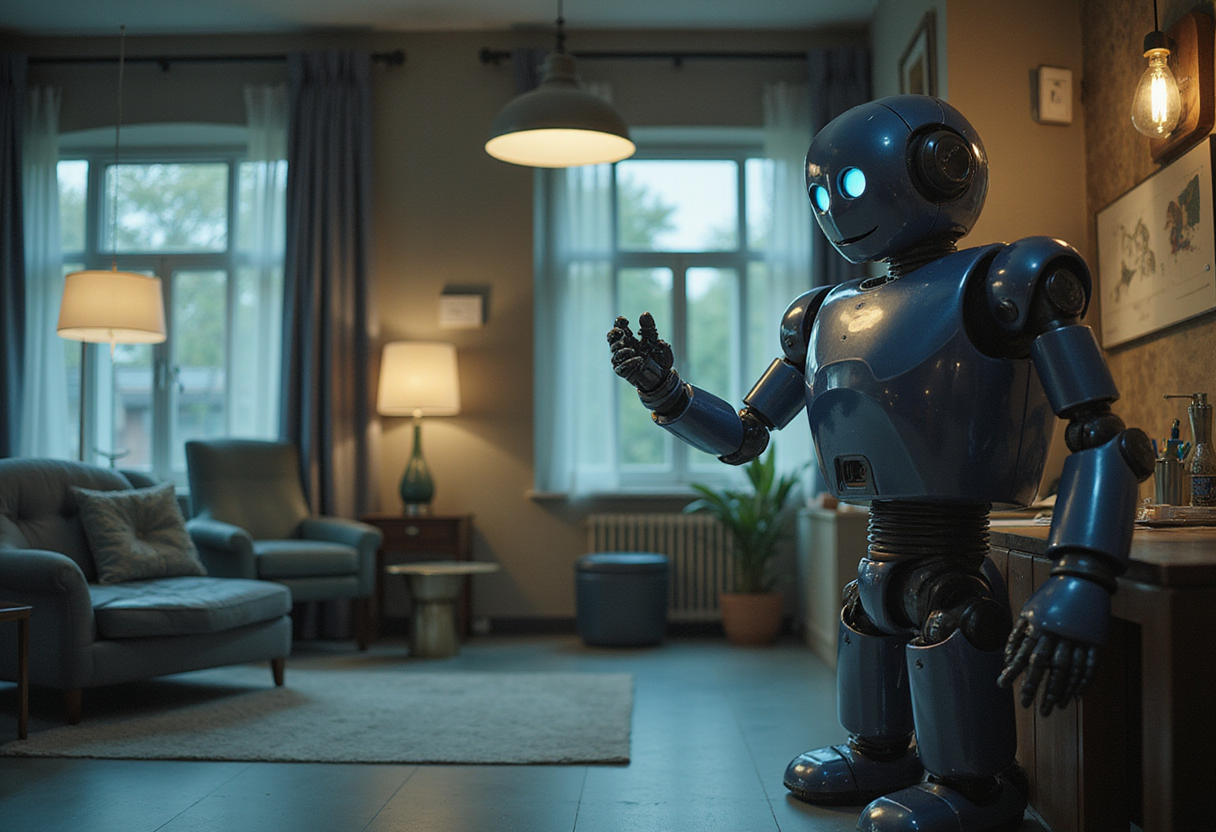
More than 500 study participants have produced the first hard evidence on a question hotel operators now face daily: what happens when a robot — not a person — handles your service failure?
The answer carries direct implications for labor allocation at the front desk. Compensation offered by a robot does not increase guest forgiveness, while the same compensation offered by a human employee does. And when a complaint is resolved immediately, compensation becomes almost irrelevant — timeliness, not staffing type, drives the outcome.
Professors Janelle Chan and YooHee Hwang of the SHTM conducted the research, published in the Asia Pacific Journal of Tourism Research (Vol. 30, No. 10, pp. 1401–1414) as "Trust and Forgiveness in Service: Effects of Single and Double Deviations with Human and Robot Staff." It arrives as hotels across many markets expand robotic staffing well beyond check-in kiosks, driven by cost pressure and what the authors describe as a still-severe post-pandemic labor shortage.
How the experiments worked
Participants watched a video of a hypothetical hotel check-in assisted by either a human or a robot front desk agent. The scenario then introduced a dirty room. Upon complaining, some participants were offered late checkout as compensation; others received nothing. All rated their forgiveness of the hotel and their trust in its service quality afterward.
The second experiment added a delay variable: some "guests" had their rooms cleaned immediately, while others waited — a scenario the researchers call "double deviation," where the original lapse compounds with slow recovery.
What the numbers showed
The first experiment produced a sharp split. When the front-desk employee was human, forgiveness was higher with compensation than without. When the employee was a robot, compensation produced no improvement in forgiveness at all. Trust followed the same pattern: the mediating effect of forgiveness on trust was significant for human employees but not for robots.
The timeliness experiment refined the picture. Under delayed recovery, compensation from humans raised forgiveness while compensation from robots again did nothing. But with immediate resolution, the robot-versus-human distinction vanished — forgiveness showed no meaningful difference across compensation conditions for either employee type.
"Timeliness in rectifying service failure," the authors conclude, "is a more crucial factor than the humanlike appearance of a robot."
The finding undercuts a purely economic reading of guest behavior. Social exchange theory assumes customers weigh losses against benefits in an interaction, but the results show guests process a robot's compensation offer differently than a human's. "Customers' appraisement," the authors surmise, "is not as rationalistic as social exchange theory presumes." Guests do not simply net out gains and losses — they distinguish emotionally between who is making the offer.
Why the robot question is now operational, not theoretical
Robot deployment has accelerated since COVID-19, and the integration of AI software into physical hardware has made service robots increasingly anthropomorphic. The researchers cite the Mandarin Oriental in Las Vegas, which has deployed Pepper, a humanoid robot providing interpersonal interactions. As real-time communication capabilities push automated workers beyond gimmick status, guest acceptance becomes a measurable business variable rather than a novelty question.
The theoretical grounding comes from the recently developed service robot acceptance model, which holds that customer acceptance depends on both functionality and social-emotional elements. This study supplies some of the first empirical data on the emotional half of that equation in failure scenarios — precisely the situations where a hotel's recovery protocol determines whether a guest returns.
The operational playbook
The authors draw two direct conclusions for managers. First, deploying robot employees is risky precisely when timely response to a service failure is unlikely, because "monetary compensation is effective in double deviation by human employees only." Second, "businesses that deploy robot employees should minimise the use of compensation in retaining customer trust" — spending money on gestures that the data shows will not move the needle.
For properties already committed to automation, the design recommendation is integration rather than retrofit: "operational managers should work closely with robotic engineers in designing service robots with features to match their role in a specific service setting." A robot built for check-in throughput should not be the same robot fielding complaints about a dirty room.
The larger takeaway for hotel operators is a sequencing rule: solve the problem fast, and the question of who solved it barely registers. Let it linger, and only a human with the authority to compensate can repair the relationship. As labor shortages keep pushing robots toward the front desk, the study suggests the highest-value staffing position to protect with human labor may be the recovery moment — not the transaction.
More from Olivia Hart
Show full bio
Staff writer covering marketplaces and e-commerce at The Pass Brief.
41 articles