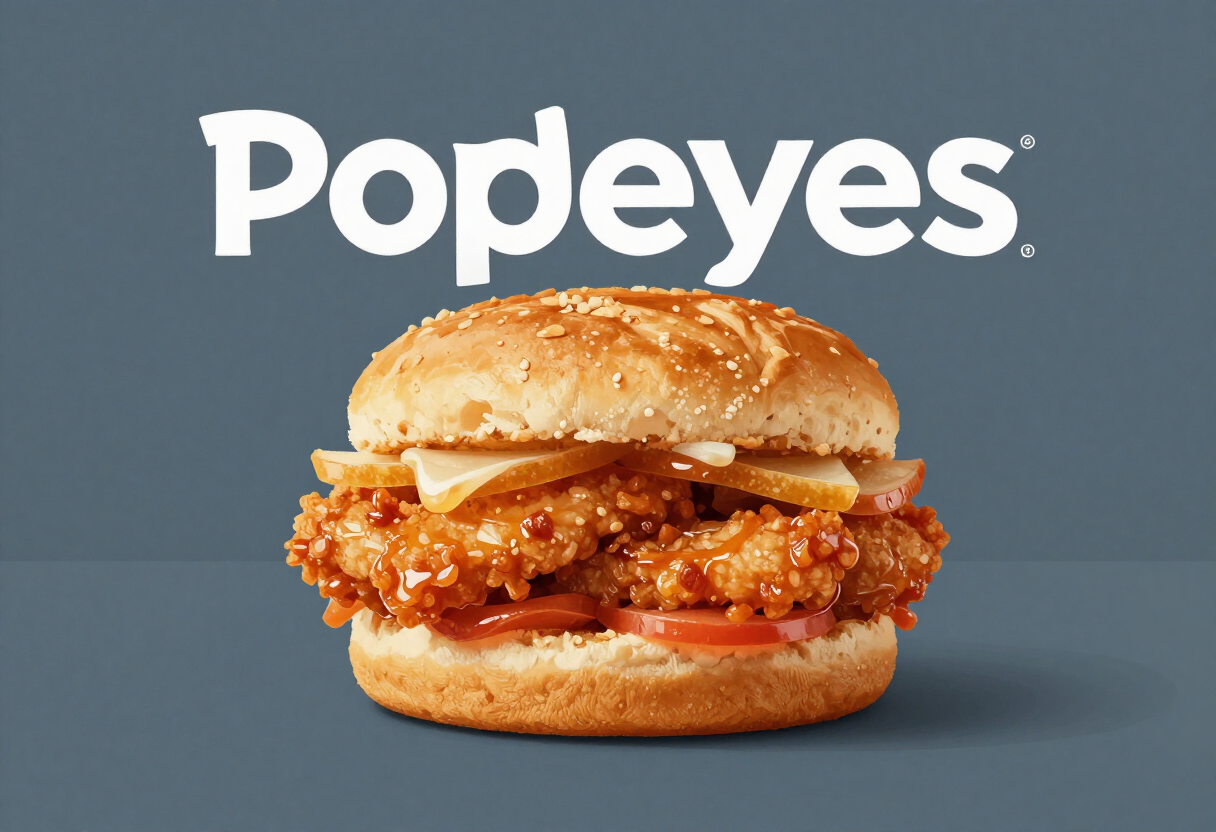
Popeyes Launches Honey Chicken Biscuit, Hints at Breakfast Test
Popeyes introduced a Honey Chicken Biscuit that the chain says is 'designed for all dayparts,' with source framing suggesting a breakfast-window test. Menu price, regional scope, and operator-level economics remain undisclosed in the source release.

Popeyes introduced a Honey Chicken Biscuit that the chain says is "designed for all dayparts," in a release that immediately raised operator questions about a deliberate breakfast test.
The accompanying source framing describes the item as "built for a time outside the chain's usual occasions." No menu price, regional test scope, or unit-level economics appeared in the source material.
What did Popeyes introduce?
The Honey Chicken Biscuit enters a menu best known for chicken sandwiches and bone-in fried chicken sold through non-breakfast windows. The chain's own framing of the item as "designed for all dayparts" signals an operator-facing message: the SKU can move through breakfast, lunch, and dinner without a separate platform extension.
That has daypart-economics implications. A biscuit-format build intended to clear three dayparts must hold against a different set of biscuit-staling, sauce-bleed, and steam-table pressures than a single-window item. Source reporting does not include build specifications, sauce components, or holding instructions — the operating data a franchisee would need before stocking the line.
Why does 'all dayparts' matter to daypart strategy?
Daypart extension is the principal unit-economic lever available to a QSR operator seeking traffic without new unit growth. Each daypart carries its own labor curve, check-average band, and food-cost envelope. A breakfast-positioned biscuit must clear a smaller ticket average and a tighter food-cost window than the chain's lunch-and-dinner mix typically requires.
The source framing — "outside the chain's usual occasions" — points operators to read the launch as a breakfast-adjacent test rather than a routine menu refresh. Breakfast carries the lowest competitive gravity for the brand and would offer a clean read on incremental traffic, if the SKU clears economic thresholds.
Menu-engineering questions follow. At what price does a chicken biscuit clear a breakfast transaction? At what food-cost percentage? The source release discloses neither the bill of materials nor the planned retail price.
What does the source leave unanswered?
Several operator-relevant data points are absent. Menu price is not stated. Regional test scope is not identified. Forecast unit volumes, marketing spend, and any chain-wide rollout timeline do not appear in the source.
Without those disclosures, breakfast positioning remains an interpretation rather than a confirmed test. The chain's language could equally describe a regional soft launch, a limited-time offer, or a permanent menu addition — each carrying different labor scheduling, food-cost, and marketing implications.
Whether the Honey Chicken Biscuit becomes a sustained breakfast platform or a one-off merchandising test will depend on disclosures the chain has not yet shared publicly.
More from Marcus Bennett
Show full bio
Market editor covering media and advertising at The Pass Brief.
243 articles