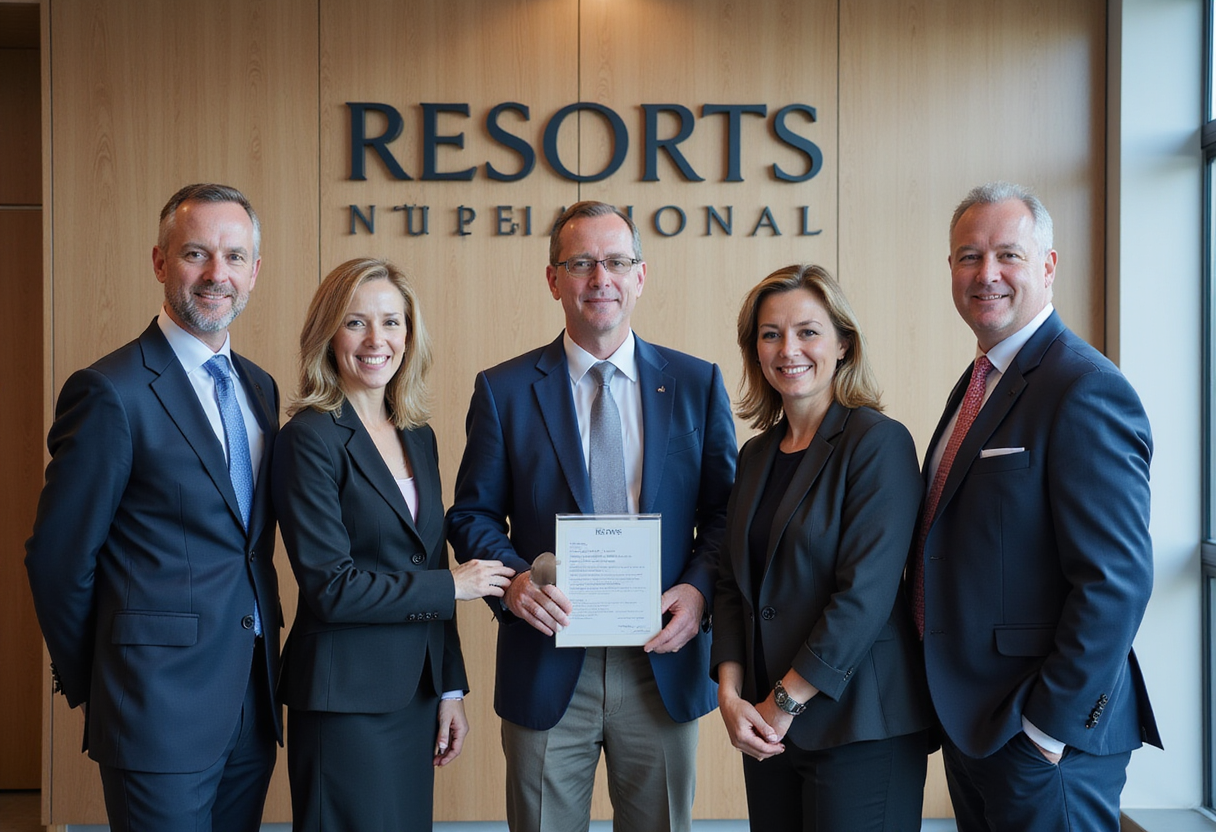
People Inc. Walks Away, MGM Resorts Stays Standalone
People Inc., Barry Diller's holding company, dropped its bid for MGM Resorts, leaving the casino operator standalone after talks fell short of hopes.
MGM Resorts International will remain a standalone company after People Inc., the holding company controlled by media and travel billionaire Barry Diller, dropped its acquisition bid following negotiations that, in Diller's own words, didn't play out "the way we had hoped."
That single quote, from People Inc.'s owner, closes the chapter on what had been one of the more intriguing corporate courtships in the gaming and hospitality sector. It also leaves MGM exactly where it started: independent, publicly traded, and answerable only to its own shareholders.
For an industry that has watched consolidation reshape the casino-resort landscape over the past decade, a dead deal is its own kind of news. Mergers in this space tend to ripple outward — into hotel operations, into food and beverage programming across resort portfolios, into convention business in Las Vegas and regional markets alike. A bid that dissolves before signing leaves none of those ripples. The status quo holds.
What does this change for MGM operators?
In practical terms, very little, and that's the point. MGM's properties, its corporate structure, and its strategic decisions stay in the hands of the existing leadership team. There's no new parent company setting priorities, no integration roadmap, no rebranding committees. For the operators running MGM's resorts and casino floors day to day, the collapse of the bid means continuity rather than disruption.
That continuity cuts both ways, of course. Acquirers often bring capital for renovations, new concepts, and technology upgrades. A standalone MGM will have to fund any such investment from its own balance sheet and its own strategic plan — as it has been doing.
Why the quote matters
Diller's phrasing — that talks didn't unfold the way People Inc. had hoped — is deliberately spare. It signals the deal failed on terms, on valuation, or on structure, without assigning blame. In merger negotiations, that kind of language usually means the two sides couldn't bridge a gap on price or control, not that either party found fundamental fault with the other's business.
For MGM, being deemed worth pursuing — even if the pursuit ended without a deal — reads as an external validation of the company's direction. For People Inc., the walked-away bid is an option that expired unused, a familiar outcome for a holding company that evaluates targets across media, travel, and now, apparently, gaming-adjacent hospitality.
What comes next
MGM's board and management now return to the ordinary work of running a standalone public company: quarterly earnings, capital allocation, property-level strategy. People Inc., for its part, retains the flexibility to pursue other targets or to revisit its interest should circumstances shift.
The market will be watching MGM's next earnings report for any signal of how leadership responds — whether the company leans into independence with fresh investment plans, or whether another suitor, emboldened by the confirmation that MGM was in play, steps forward where Diller's group stepped back.
More from Daniel Okafor
Show full bio
Correspondent covering companies, deals and strategy in Restaurant and hotel operations at The Pass Brief.
336 articles