Papa Johns Bets on Quality Push and Franchisee Margin Givebacks
Papa Johns' 'Unbox Better' plan cuts its national marketing fee to 5% and caps commissary margin at 4%, handing franchisees 125 basis points after an 8.3% Q3 sales drop.

Papa Johns reported an 8.3% same-store sales decline in North America for Q3, and on Thursday it answered with a new strategy it calls "Unbox Better." The plan pairs a quality and consistency campaign with concrete fee cuts for franchisees, including a national marketing fee reduction from 6% to 5% and a tech fee cut from 1.75% to 1.5%.
CEO Todd Penegor framed the move as a response to a decade of erosion in the QSR pizza segment. Delivery aggregators stripped chains of their delivery advantage. The pandemic removed group occasions. Inflation weakened demand. And nontraditional competitors multiplied.
"Just think about gas stations and c-stores. A lot of nontraditional locations have really popped up, so the consumer can get great pizza at an affordable price in many different locales," Penegor said.
What does the strategy actually change?
Penegor said Papa Johns holds a quality perception it has failed to explain or deliver consistently. "We've got a lot of quality ingredients that go into pizza that delivers better; people give us credit for better, but they can't tell us why. So we start from a good spot. We're going to amplify the 'why' on why we're truly better," he said.
The gap, by his own admission, is execution. Customers praise one restaurant and refuse to return to another. Competitors execute more consistently despite a lower quality ceiling, Penegor conceded. To close that gap, the chain is:
- Retraining workers through a more regional training system, letting support teams visit more restaurants more often
- Increasing intervention in underperforming units
- Testing heat retention during delivery, cheese melt points and taste profiles, and dough handling
"Pizza is a game played nationally, but won locally, and we've been missing that win locally," Penegor said.
Where does the money move?
The fee restructuring is the hard economics of the plan. Papa Johns is reinstating local marketing co-operatives it abandoned in 2023 and 2024 under previous leadership, funded by a 2% local marketing contribution. The national fee drops one point to 5%. Net effect: higher total marketing spend with more local flexibility.
Penegor said the co-ops let local markets "amplify and complement a national message, or work to localize and offset some of the national message to connect to the communities that they serve."
The offset for franchisees is explicit:
- Commissary margin, set to rise to 8% next year, is capped at 4%, worth 100 basis points of margin to franchisees
- The tech fee cut adds another 25 basis points
"Our franchise community is really going to need the fuel to fight to really help us bring Unbox Better to life," Penegor said.
The context matters. Domino's has stated in recent quarters that it intends to pressure Papa Johns' and Pizza Hut's unit margins to accelerate store closures and take share. A marketing offensive plus defensive margin support could blunt that strategy and fund value promotions.
How does the consumer fit in?
Papa Johns is not exiting discounting. Penegor called sector-wide discounting "a bit of a race to the bottom" but said the chain will keep a barbell strategy: specialty pizzas anchor the top of the price range, while discounts and limited-time offers drive traffic at the bottom.
"The consumer wants quality, and they want to be not disappointed when they spend their hard-earned dollars," he said.
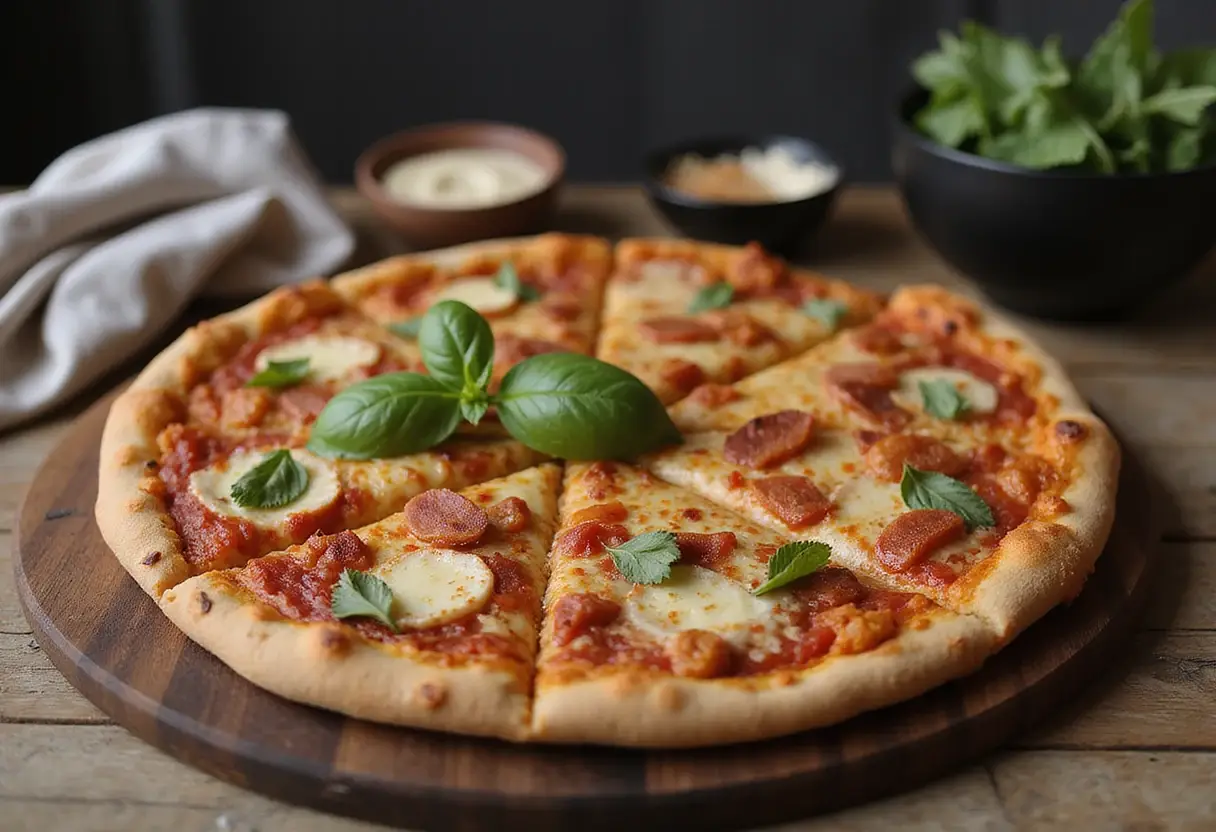
Next week the chain adds a "Bounce Back Offer" with a secondary research function. Customers who spend $15, photograph their pizza, and submit the image receive a free pizza on a next purchase with a $5 minimum order. An artificial intelligence agent will analyze the images and feedback to assess heat retention, cheese quality, sauce levels and dough tweaks. Restaurants will receive the photos directly.
"We'll probably come back to this Bounce Back Offer during the course of 2027 a few times to continually get this feedback from the consumer to make sure they feel like they're part of the solution," Penegor said.
What is the timeline?
Penegor expects the better part of a year before the changes show up in sequential sales. Early success will be measured through customer service metrics, which the company says it will share. Whether a 125-basis-point margin package can fund both retraining and a marketing escalation — against a competitor openly targeting those margins — is the question the next four quarters of same-store sales will answer.
More from Marcus Bennett
Show full bio
Market editor covering technology and product news in Restaurant and hotel operations at The Pass Brief.
640 articles