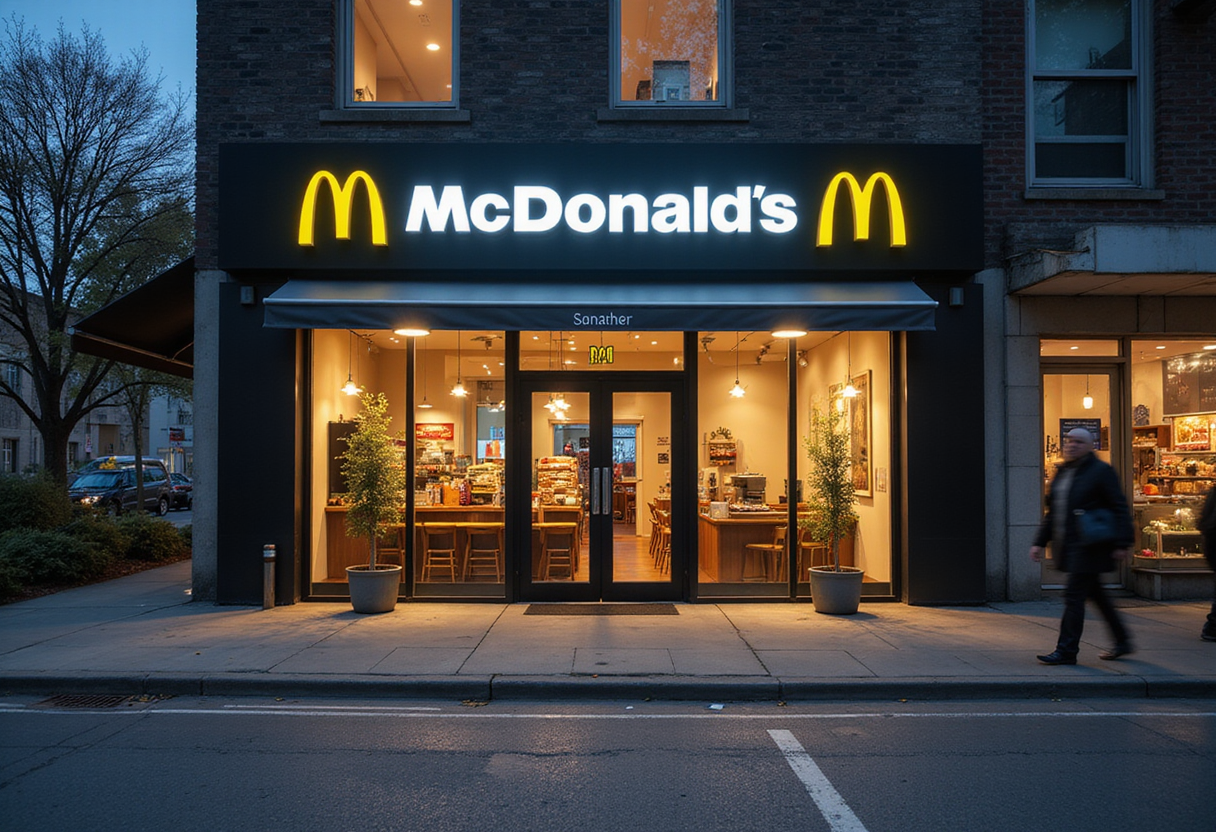
McDonald's Faces Class Action Over Menu Prices at 14,000 US Restaurants
A class action targets McDonald's over menu prices at roughly 14,000 US restaurants, raising hard questions about franchisee pricing autonomy and who sets the menu board.

A class action lawsuit now targets McDonald's over menu prices across roughly 14,000 US restaurants. The figure covers the US system at the center of the complaint. The suit, reported by PPC Land, frames the dispute as a broad consumer protection matter rather than a single-store grievance.
The scale matters. Roughly 95% of McDonald's US locations operate under franchise agreements. That structure raises the central legal question: who actually sets the prices on the menu board, and who bears liability when those prices are challenged.
What does the lawsuit allege?
The complaint concerns menu pricing at the named restaurants. Reported details remain thin. The public record does not yet state:
- The filing court or the filing date
- The named plaintiffs or the proposed class definition
- The specific statutes invoked
- The damages sought
This absence limits what any operator can conclude today. What is clear is the number: 14,000 restaurants sit inside the alleged scope. That is nearly the entire US footprint of the chain.
Why does franchise structure complicate the case?
McDonald's does not directly control most menu boards in the country. Franchisees set their own prices under their agreements with the company. A class action that sweeps in 14,000 restaurants must therefore sort out corporate pricing guidance from local franchisee decisions.
Courts have historically wrestled with this line. A case against a franchisor over prices set by franchisees faces an immediate structural defense. McDonald's can argue it lacks control over the conduct at issue. Plaintiffs will need to show otherwise.
The comparison is instructive. Other quick-service chains have faced pricing litigation and regulatory scrutiny in recent years, and franchisors have repeatedly pointed to franchisee autonomy as a shield. Whether that shield holds here depends on facts not yet public.
What is at stake for operators?
Menu pricing has drawn political and legal attention as food-away-from-home inflation outpaced grocery inflation through recent years. Chains have leaned on pricing to protect margins against elevated cost of goods and labor. That strategy now carries legal exposure, at least for the largest operator in the segment.
Franchisees should watch the class definition. If the court certifies a class spanning 14,000 restaurants, the liability theory reaches effectively every menu in the system. If the court narrows the class, the case shrinks to isolated conduct.
The complaint's survival past a motion to dismiss is the first real test. Most pricing class actions at this scale do not survive that stage intact.
What comes next?
The case will move through pleadings before any class certification decision. McDonald's has not publicly commented on the suit, based on the available report. No court dates, agency involvement, or settlement talks appear in the public record yet. Operators and franchisees should expect the franchisee-autonomy defense to surface early, and should treat early headlines with caution until the complaint itself is on the docket.
More from Marcus Bennett
Show full bio
Market editor covering technology and product news in Restaurant and hotel operations at The Pass Brief.
352 articles