McDonald's Commits $8.5 Billion to 'Next' Overhaul Through 2036
McDonald's will commit $8.5 billion through 2036, targeting 250 bps of store-level productivity gains worth about $100,000 per franchise unit, plus ArchIQ AI and menu expansion.
McDonald's will commit $8.5 billion in partner support through 2036 under its newly unveiled Next strategy, including roughly $5 billion in rent relief and capital support by 2030, the company announced at its first investor day since 2023.
The plan carries a hard financial target: 250 basis points of improvement in gross store-level productivity in the U.S., roughly equivalent to a $100,000 per-store gain in franchisee cash flow. Those efficiency gains will be backed by major investments in equipment and restaurant processes, aimed at a system that is overwhelmingly franchised and whose operators bear the cost of remodels and new kitchen hardware.
The capital will fund three broad workstreams: restaurant modernization, technology deployments, and operational improvements.
On the technology side, McDonald's will roll out ArchIQ, an artificial intelligence platform designed to power restaurant operations across the system. ArchIQ will apply AI to drive-thru service, inventory management, and order accuracy — back-of-house and throughput functions that directly affect labor productivity and food cost, rather than consumer-facing novelties. The rollout is a core component of the Next strategy.
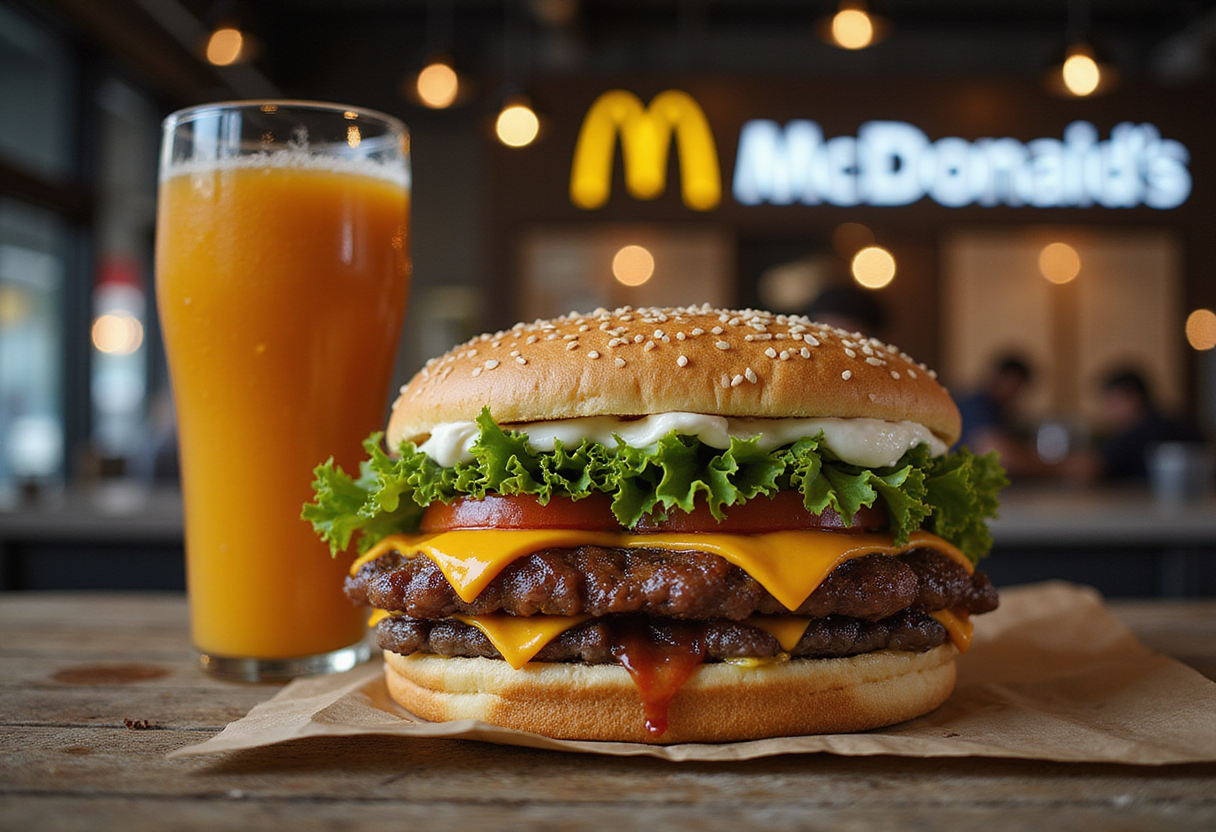
Menu development is equally specific. McDonald's plans bigger burgers, chicken bowls, and new beverages as it works to increase market share in chicken and beverages while doubling down on beef. That sequencing points to menu engineering aimed at higher-margin, growth categories rather than core-platform change.
The company is also reworking its loyalty economics. McDonald's aims to reactivate 150 million infrequent loyalty guests by adding rewards tiers, tie-ups with other major brands, and increased personalization to its loyalty system — a shift from a single program to a tiered structure that can price incentives more precisely against visit frequency.
In marketing, McDonald's is piloting a media network with the goal of building a $1 billion advertising business, entering a retail-media-style monetization arena already occupied by other large consumer brands.
Wall Street reaction was measured but broadly positive. Deutsche Bank analysts said they expect the chain to return to outperformance through efforts focused on food taste and quality, innovation in beverage and chicken, stronger marketing, and improvements to the customer experience.
Credit analysts focused on the capital allocation question — whether $8.5 billion directed at the restaurant system beats returning cash to shareholders.
"It remains to be seen whether [McDonald's] will meet its lofty goals. But we believe investing in the restaurants, the dining experience, value, and execution is a good use of capital," Carol Levenson, Gimme Credit's director of research, said in a report emailed to Restaurant Dive. "From a bond investor's perspective, it is a far more agreeable financial policy than returning more cash to shareholders."
The stakes for the franchise system are direct. The $5 billion tranche of rent relief and capital support arriving by 2030 addresses the operator-level P&L pressure that precedes any willingness to fund remodels and equipment upgrades — meaning the 250-basis-point productivity target depends on franchisees seeing cash-flow improvement early enough to keep investing through the back half of the decade.
More from Olivia Hart
Show full bio
Staff writer covering marketplaces and e-commerce at The Pass Brief.
45 articles