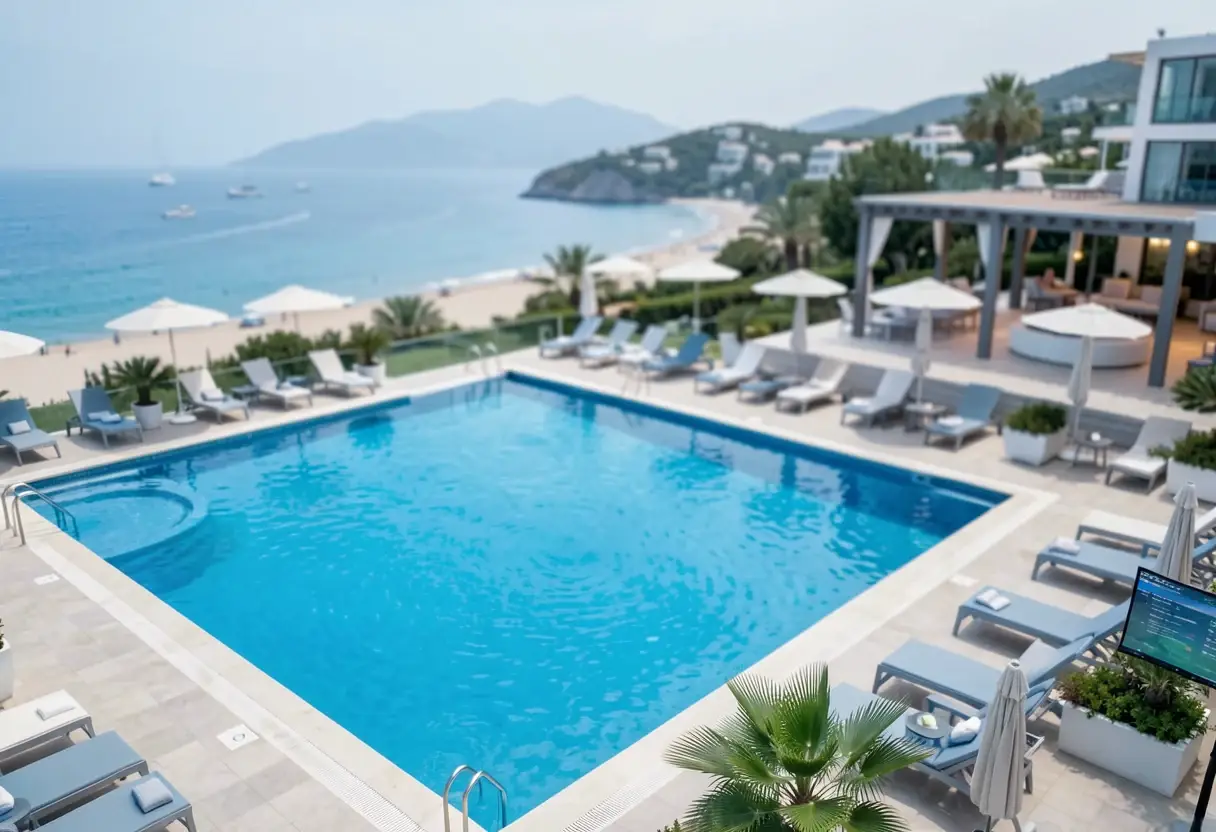
Kos Pushes Five-Star Rooms From 600 to 11,000 as Value Shift Takes Hold
Kos holds 297 hotels and 28,300 rooms, with five-star stock up from 600 rooms in 2005 to 11,000. TRevPAR hit an index of 232 as institutional capital buys legacy resorts.

Kos counted 297 hotels and roughly 28,300 rooms in 2025, and the number that matters most is inside that stock: 51 five-star properties holding about 11,000 rooms, up from two properties and 600 rooms in 2005. That twenty-year shift, laid out in the HVS Kos Market Pulse 2026, defines the island's current phase. Growth here now means upgrading existing resorts, not adding units.
The demand base is mature and largely static. Kos recorded approximately 1.4 million hotel arrivals and 8.8 million bednights in 2025. Between 2019 and 2025, arrivals grew at a compound annual rate of just 1.0 percent, and bednights at 0.5 percent. Volume is proven. The question is what operators extract from it.
How concentrated is the supply?
Heavily. Five-star and four-star hotels made up roughly 40 percent of hotel units in 2025 but about 74 percent of total rooms. Five-star properties alone held approximately 17 percent of units and 39 percent of rooms. The scale gap is stark: five-star hotels averaged around 216 rooms each, four-star around 150, while three-star averaged 55 and one- and two-star properties combined averaged about 34 rooms per hotel.
One- and two-star hotels still represented roughly 40 percent of all units. They supplied only about 14 percent of rooms. The market has structurally tilted toward large, professionally run resort assets. Over 2005–25, hotel counts rose 19.3 percent while room supply expanded 59.4 percent — properties got bigger, not more numerous.
Access data supports the volume story. Kos International Airport handled about 1.6 million passengers in 2025, a 3.5 percent compound annual increase since 2019. Seaport traffic reached approximately 389,000 passengers, up 3.4 percent annually over the same period, mostly ferry and island-hopping flows rather than inbound leisure.
What does the revenue data show?
The performance analysis tracked a sample of 42 four- and five-star hotels, indexed to 2014. Room supply in the sample rose from an index of 100 in 2014 to 162 in 2025. TRevPAR — total revenue per available room — rose faster. It climbed to 154 by 2019, collapsed to 75 in 2020, rebounded to 194 in 2021 and reached 232 in 2025, the highest level in the reviewed period.
Read plainly: upper-tier hotels absorbed added capacity and still grew revenue per room faster than supply grew. The report attributes this to resilient leisure demand, improved pricing power and product upgrading — not to international luxury branding, which remains largely absent from the island.
Who is buying, and what are they building?
Ownership is changing hands. H.I.G. Capital has acquired the five Kipriotis hotels in Psalidi, totaling 1,522 rooms, with a renovation of the 709-room Kipriotis Village Resort planned. Brook Lane Capital bought the Paterakis family's Porto Bello Royal (five-star, 418 rooms) and Porto Bello Beach (four-star, 326 rooms) in Kardamena. Both deals move long-standing family-owned resorts into institutional ownership, with repositioning expected to follow.
New product is arriving in focused doses:
- Mosay All Suite Hotel opened in 2025 in Lambi: 127 suites, beachfront, six pools, spa and fitness.
- ARATO by E-GEO, a five-star adults-only property in Lambi, opened in early July 2026 and was inaugurated on 25 July 2026, with swim-up and private-pool rooms.
- Grecotel LUX ME Kos reopened 25 April 2026 after a major renovation within its 100,000 m² Psalidi grounds, adding redesigned family suites with private pools and a lagoon complex with a lazy river. No new room count — a premium relaunch of existing stock.
- KOIA All-Suite Wellbeing Resort, adults-only (16+) near Agios Fokas, added 27 sea-view rooms — 19 with private pools — plus a two-bedroom villa in 2026, lifting inventory from 51 to roughly 79 keys, per property management.
The largest pipeline item is Casa Coa S.A.'s planned five-star resort at Limnara, Marmari: approximately 410 rooms and 1,200 beds on a 10.9-hectare private site. Originally licensed in 2023 as a smaller four-star hotel, the scheme was enlarged and upgraded, with environmental terms approved in early 2026 after pre-approval of the building permit. No construction start, operator or opening date has been announced. The absence of a signed operator is a gap worth noting before calling it a done addition.
Where does the margin story sit?
The report is explicit that the lever is operational, not demand-side: renovating ageing stock, refining the all-inclusive model, controlling energy and labor costs, and growing ancillary revenue from on-site food and beverage, spa and leisure. Many of the island's large resorts are all-inclusive and independently owned, so performance depends on how existing assets are managed rather than on new entrants. The report does not publish margin, labor-percentage or cost-of-goods figures — those would test the pricing-power claim more rigorously than an index can.
What the data does establish is direction. TRevPAR at 232 against a supply index of 162 means Kos hotels are capturing more spend per guest, not merely filling more beds. If Casa Coa secures an operator and the H.I.G. and Brook Lane renovations execute on plan, the island's upper-tier concentration deepens further; if not, the market still grows through asset-by-asset upgrading of what already stands.
More from Marcus Bennett
Show full bio
Market editor covering technology and product news in Restaurant and hotel operations at The Pass Brief.
798 articles