Israeli Event Catering Locks Down on Forward Bookings
The Jerusalem Post reports that Israel's event catering sector has stalled, with operators refusing to commit to new contracts and forward bookings evaporating across weddings and corporate events.
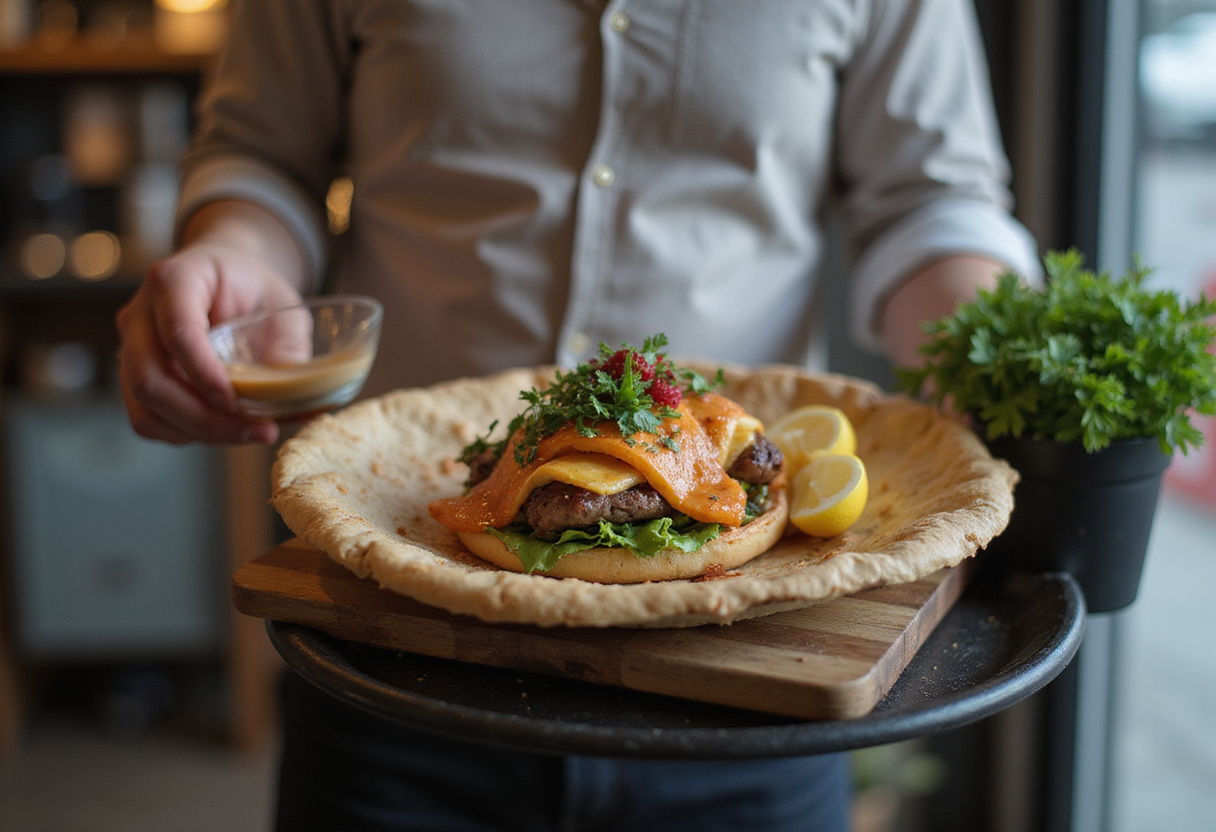
The Jerusalem Post reports a hard stop across Israel's event catering trade, where operators say no one will commit to forward bookings. The publication's headline: "No one is willing to take a risk."
That single line captures the state of a sector built on committed contracts (catering agreements for weddings, corporate functions, and private celebrations). Event catering runs on forward bookings — advance reservations for future events, typically 12-24 months ahead — secured by deposits (non-refundable payments that underwrite ingredient and staff purchases). When risk appetite (the willingness to commit capital against uncertain future demand) collapses, the entire pipeline freezes. The trade cannot pause or pre-commit beyond the locked window; it runs only on contracted volume.
How event catering differs from restaurant work
Restaurant operators sell meals one cover at a time (per-seat service for walk-in or reserved guests), absorbing demand variability (the natural fluctuation in customer count) within a single service period. Event caterers sell the entire room at once — the contract covers 200 covers, or 500, or 1,000, with no walk-in fallback. A single cancellation wipes a full day's revenue. A cluster of cancellations wipes a quarter.
What changed in event bookings?
The sector traditionally operates on locked-in volume: weddings, bar mitzvahs, corporate conferences, and private functions. Operators price per-head (a fixed charge per guest covering food, service, and rentals) and staff against contracted headcount. A drop in forward bookings compresses revenue 12-18 months out, well before any current-quarter impact shows on the books.
The trade's working assumption — that someone, somewhere, will commit to a date — has broken. Operators report event hosts delay, cancel, or downsize. The freeze cascades: a wedding cancellation becomes a venue cancellation becomes a catering cancellation, leaving kitchens idle and staff without hours.
Why margins break fast
Catering margins (the spread between per-head revenue and food-and-labor cost) compress quickly when bookings drop. Fixed costs (salaried executive chefs, refrigerated trucks, deposit outlays on linen and rentals) don't flex with volume. Variable costs (food ingredients, hourly labor) scale down only after a lag, since perishable inventory is ordered days before the event. The arithmetic is unforgiving: meaningful booking drops wipe margin before operators can adjust.
What operators are doing about it
The standard playbook: staff down (cut scheduled labor hours), defer capex (delay purchases of new vehicles, equipment), and renegotiate supplier terms (request extended payment windows from food distributors). Some operators pivot to drop-off catering (pre-packaged meals delivered, no on-site service) at lower margins. Others exit the segment entirely, redeploying staff to institutional accounts (school meal programs, corporate cafeterias).
The labor market has shifted in parallel. Banquet captains, lead cooks, and dishwashers — scarce in normal conditions — now compete for fewer hours. Those with cash on hand may pick up talent cheaply. Those under strain lose it to supermarkets and institutional kitchens paying steadier salaries. The trade-off is brutal, and entirely typical of contracting sectors: the operators who cut deepest on labor save the quarter but lose the recovery.
Suppliers face the same arithmetic. Food distributors extend payment terms (the number of days a buyer has to pay after delivery) where they can; they cut off where they can't. Linen and china rental houses, dependent on a handful of large operators, feel the freeze most acutely. The whole supply chain contracts together.
What's next for the trade
The freeze thaws only when risk appetite returns. Operators expect another difficult 12 months. Recovery depends on booking confidence — and confidence, the trade now concedes, is the scarcest ingredient in the kitchen.
By Rebecca Stone, Senior Hospitality Editor
More from Rebecca Stone
Show full bio
Senior reporter covering technology and product news in Restaurant and hotel operations at The Pass Brief.
332 articles