House-Made Syrup Becomes the New Litmus Test for Indie Coffee
Torani backlash on TikTok is pushing indie coffee shops toward house-made syrups, full-time prep staff and two-day recipes — and it's driving lines out the door.
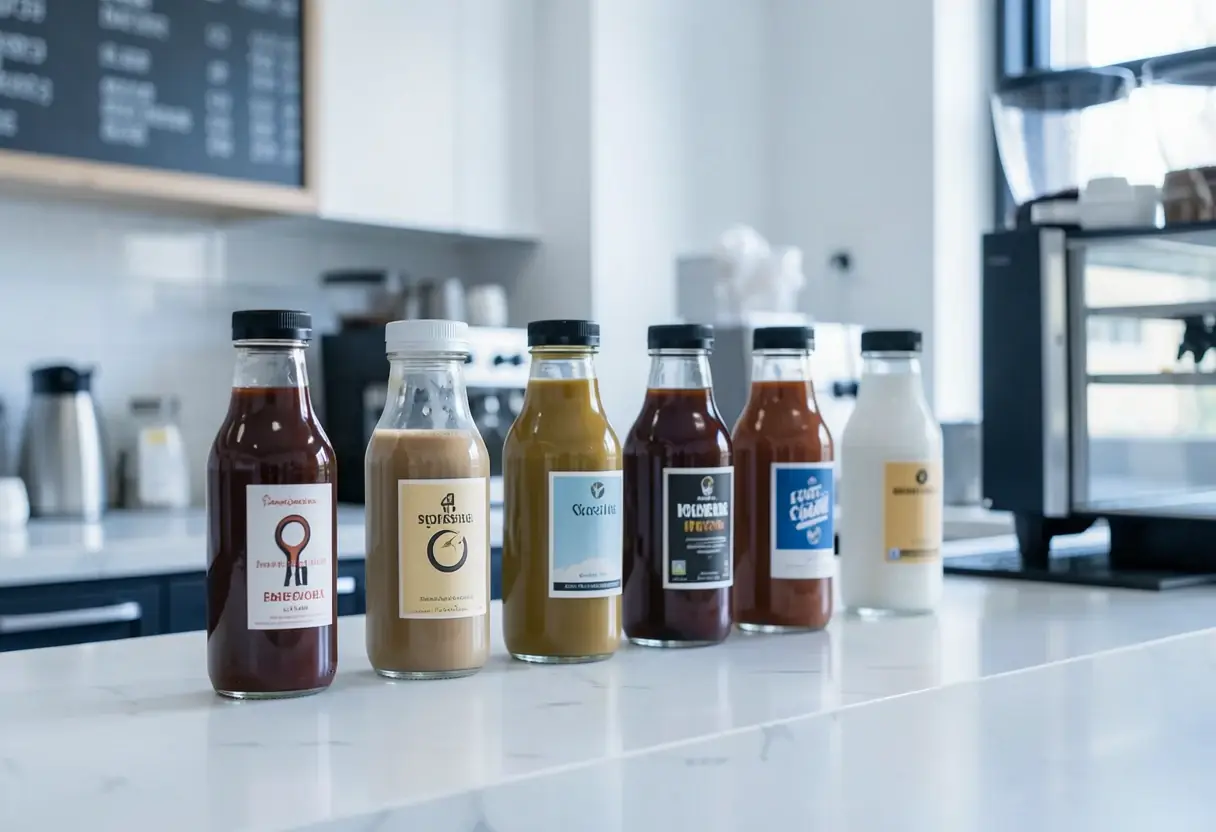
A TikTok video with more than 82,000 likes zooms in on three shelves of Torani syrup bottles at a Pennsylvania coffee shop — blueberry, brown-sugar cinnamon, English toffee, salted caramel. "I just know my latte isn't going to be good," the caption reads. That video, and dozens of posts like it, has turned mass-market syrup into the fastest-spreading red flag in specialty coffee.
The backlash isn't limited to Torani, though the brand catches most of the heat because of its market dominance. Competitor Monin draws the same criticism on Reddit and X, with users alleging it tastes "like chemicals." For a growing share of consumers, premade syrup signals corner-cutting: a shop charging $8 plus tip for a latte while pouring flavoring anyone can buy at retail. For independent operators, that same sentiment has opened a business opportunity.
What does the syrup shift look like in practice?
At Room Service in Ventura, California, owners Carrie and Dennis Medina planned the opposite of a syrup shop. Both had come up through Sightglass Coffee and imagined "very purist, with no syrups, no specialty drinks," Dennis says — eight pour-overs, single-origin emphasis, and a roastery behind it. "We said we're never gonna do cream tops; we're never gonna do these crazy drinks," Carrie says. Customers asked for them in the first week anyway.
Today Room Service runs 10 to 12 house-made syrups at any time, plus six cream tops, and a full-time prep person devoted entirely to in-house items. Its pumpkin spice latte starts with kabocha squash — roasted, spiced, and cooked down over two days. "I hear that question all the time: 'Hey, do you guys make your syrups in-house?'" Dennis says. A shop not making at least vanilla in-house, he argues, is "falling behind what the times are pushing for."
Michael Smith opened Trust Coffee Co. in Bay Village, Ohio, in 2025, taking over and rebranding an older shop that had used Monin. Bottled syrups "serve a purpose in the industry," he says, but he wanted menu control. Two full-time pastry chefs from his restaurant and catering businesses now oversee the syrups, in seasonal flavors like maple rosemary, caramelized banana, and strawberry rhubarb. The payoff is measurable in foot traffic: every time Trust's social media manager posts a new syrup, the line is out the door for a week.
Is going all-scratch actually worth the labor?
Not entirely, and one operator says so plainly. Sabrina Kaylor opened the first Bizarre Coffee in Canton, Georgia, in 2020 using bottled syrups, which "allowed us to hone our craft and learn what we were doing." She has since moved 90 percent of drinks to house-made syrups, but one bestseller still uses bottled product — her menu is extensive, and full scratch production would demand a significant labor investment.
"I think a lot of it is marketing, quite honestly," Kaylor says of the house-made conversation. The anti-Torani pile-on, she adds, is "part of consumer behavior," and it can be genuinely "discouraging" for small business owners.
The economics rhyme with the era of "hyperflavor" the New York Times has described: craft and precision have migrated from black pour-overs to dessert-style drinks, assembled more like pastries or cocktails. The purist is no longer coffee's north star; the maximalist is.
Can house-made syrup scale beyond one shop?
Minnesota's Little Joy thinks so. The shop posts its signature drink recipes in DIY videos, then sells scaled-up commercial versions through a membership program, complete with training videos and a Drink Finder map for participating shops. Owner Cody Larson frames it as solidarity. "The big coffee chains, they're never gonna do house-made syrups, so I think that's where independent shops can get a leg up," he said. "If independent shops can, in any way possible, raise the bar across the board, that's good for all independent shops, including us."
Smith reads his own customer base the same way: former Starbucks loyalists who want the elaborate, customizable drinks that app-ordering and social media "hack" culture mainstreamed — but local, and higher quality. As prices rise, intentionality becomes the sell: customers paying luxury prices want to know every component was made carefully, and not sourced from bottles they could buy themselves.
More from Olivia Hart
Show full bio
Staff writer covering regulation, policy and their impact on Restaurant and hotel operations at The Pass Brief.
641 articles