Hotels’ AI Gap: 84% of Managers, 15% of Frontline Staff
A Nov. 4 report finds 84% of managers report AI gains, versus 15% for frontline work, exposing a service-layer investment gap across hotel properties.
By Olivia Hart
84% of surveyed hotel managers said AI improved their own work, while only 15% of frontline staff said it improved their work—a 69-percentage-point divide across the same hotels and the same technology. A report released Nov. 4 at The Hospitality Show found that 90% of respondents saw routine work getting done faster.
Hours per occupied room ticked down a few points in the first half of the year, and operational efficiency ranked above revenue as the top source of value. The report did not disclose its sample size, and some data came from a vendor, so the findings are directional rather than definitive.
Even so, the allocation pattern matters because it shows where AI investment and employee preparation differ. It also shows the risk of treating aggregate efficiency as proof that a hotel’s guest proposition has improved.
What does this divide change for hotels?
The near-term return is clearest in management work. Reporting, forecasting and back-office routines produce measurable output, which helps hotels see savings on operating results. But efficiency there can improve overhead without strengthening the interaction that earns loyalty.
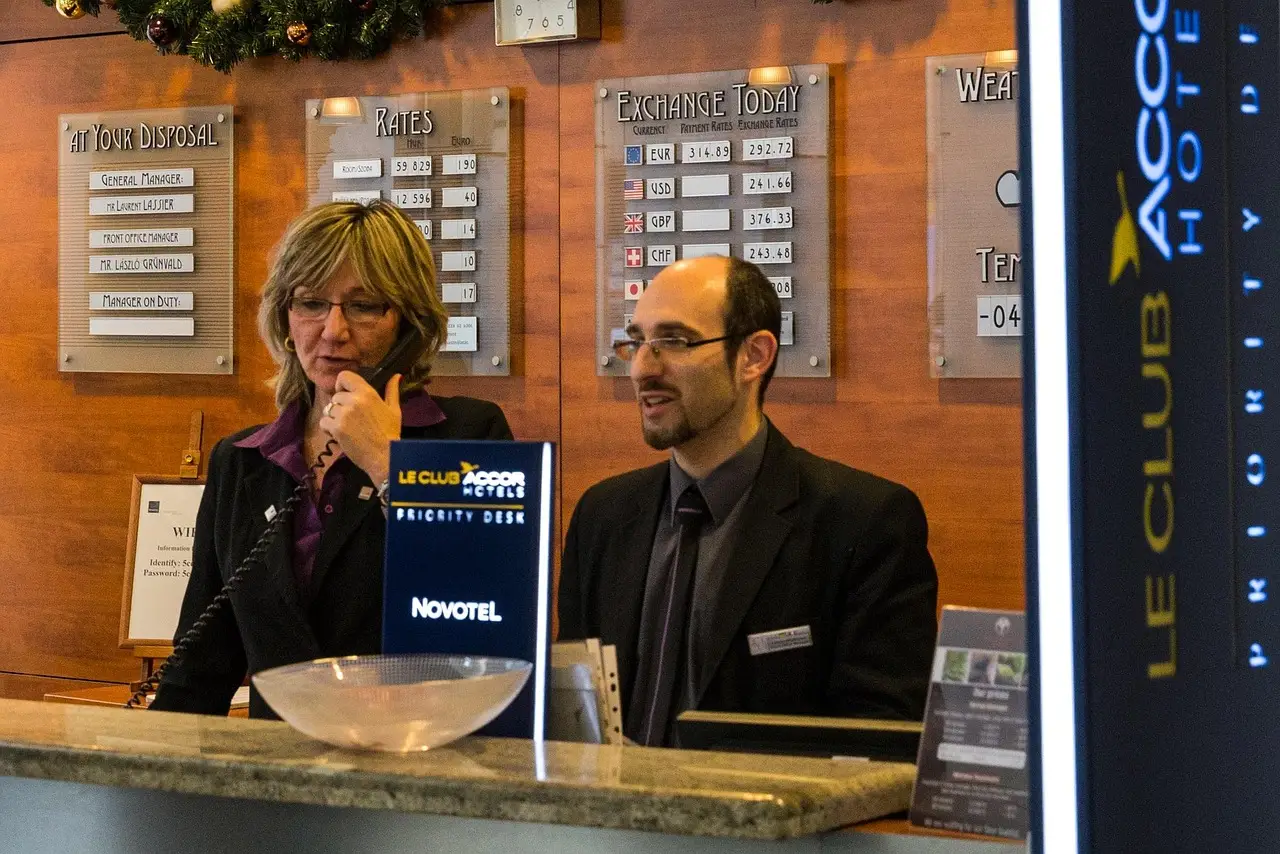
That interaction sits at the front desk, in housekeeping and in guest services—the service layer an online travel agency or AI booking platform cannot reproduce. The analysis describes frontline turnover running above 5% in a single month, making a rollout perceived to favor managers a potential morale and retention problem.
AI can widen the service gap
Hart’s warning is pointed: “The dashboards improve. The lobby does not.” Her larger diagnosis is equally direct: “AI did not hollow out the hotel. The way the hotel rolled it out did.”
The projected sequence runs from disengagement and turnover to thinner service, fewer repeat bookings and more guest defections to Booking.com, another chain or Airbnb with a responsive host. That outcome remains a risk in the analysis, not a measured result from the survey.
If a hotel then adds kiosks or other automation to cover a weakened front line, it replaces human support it failed to provide. Management can call that substitution an efficiency gain, but the guest receives a smaller service promise.
Why back-office AI wins the budget
Hotels tend to fund uses whose returns they can count quickly. Management efficiency appears immediately in operating results, while loyalty, direct bookings and the value of a human welcome are harder to place in a spreadsheet.
That incentive pushes investment toward managers even though the frontline moment is the part platforms cannot broker. Skills and readiness create another constraint. Hart argues that decades of hiring for low wages and training narrowly for service left many hotels without the technical foundation or skill base needed to put AI into the hands of housekeepers and front-desk agents.
A practical way to close the gap
The alternative is a limited rollout. Hart recommends one real workflow in each department, chosen with the team, with the employee reviewing AI output before a guest sees it. Human judgment stays at the center, and the employee retains authority over the result.
For operators, the change is concrete: front-desk, housekeeping and guest-services staff become users and reviewers of AI, not the last workers left to absorb a rollout designed above them. Each department gets a bounded starting point, while readiness and skills develop around work people already perform.
That approach redirects AI toward the service layer that creates loyalty, direct bookings and guest moments a platform cannot reproduce. Hart calls this the highest-leverage AI move available to a hotel because it compounds in the layer that differentiates the property. The distinction is whether a hotel merely adds AI or gets better because of it.
For hotels watching the 84%-to-15% divide, the next AI budget decisions will show whether the technology reaches the lobby or remains a management tool. Guests’ choices between a hotel, Booking.com, a chain or Airbnb will increasingly turn on that answer.
More from Olivia Hart
Show full bio
Staff writer covering regulation, policy and their impact on Restaurant and hotel operations at The Pass Brief.
645 articles