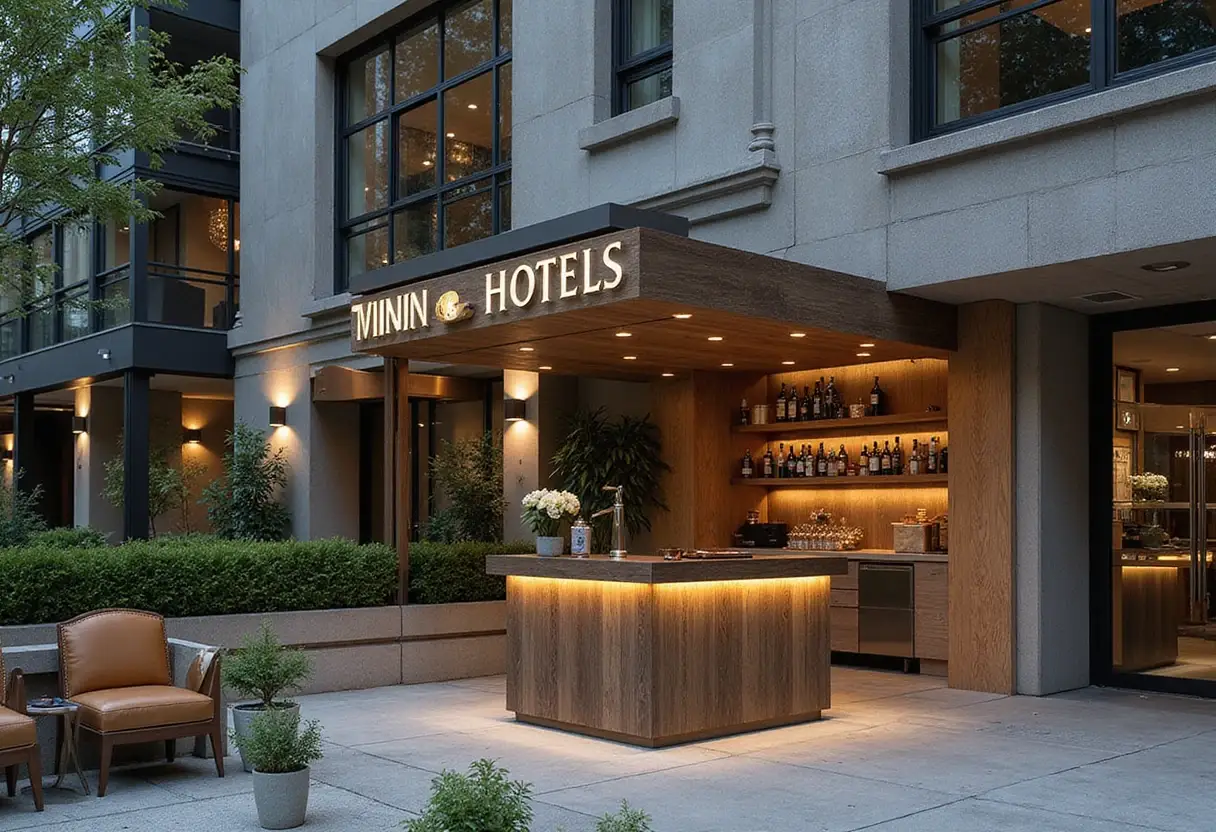
Guild Hotels launches in London with £20m+ and three properties
Guild Hotels launched in London with three properties backed by an investment exceeding £20 million, Premier Construction News reported, signaling a portfolio-style entry to the UK capital's hotel market.

Guild Hotels launched in London with three properties backed by an investment exceeding £20 million, Premier Construction News reported. The commitment signals a portfolio-style market entry rather than a single-flagship opening.
The brand name — Guild — evokes the City's historic trade guilds and livery companies, a positioning cue operators in London's boutique and upper-mid segments have used before to differentiate from international chain inventory.
Operators in the segment have leaned on heritage references as a soft-brand differentiator against the chain majors. Whether Guild Hotels will adopt a hard brand standard, soft brand affiliation or independent collection model remains undisclosed.
What the £20m+ funds
The capital commitment typically covers property acquisition, hard and soft refurbishment costs, pre-opening payroll, technology platforms and working capital for the first operating year across three sites.
The figure also signals the operator's appetite for a brand-led, multi-property launch rather than an independent-by-property model. Brand-led entries typically carry higher pre-opening marketing costs but lower per-key operating costs once stabilized, since group-level distribution agreements replace property-by-property revenue management setups.
Mid-market London conversions commonly run £150,000 to £300,000 per key. That range would put the three-property portfolio at roughly 70 to 130 rooms, though Guild Hotels has not disclosed individual property sizes, locations, acquisition dates or asset classes.
The breakdown between acquisition and refurbishment will determine the operator's eventual debt exposure. London leasehold acquisitions typically trade at higher multiples of revenue than freehold or management-contract entries, and the capital structure behind the brand has not been made public.
Why three units at launch
Launching with multiple properties spreads fixed overhead — central reservations, revenue management, brand marketing, procurement contracts — across more keys from day one.
For an independent operator, a three-property debut lowers the per-unit cost of building the brand platforms a single-site launch would have to absorb. The portfolio approach also lets the operator negotiate master supply agreements and group-level staffing terms before any single property opens.
The strategy differs from the single-flagship debuts several London entrants have favored in recent years. A portfolio launch concentrates pre-opening losses across more revenue-generating units once the first property trades, smoothing the cash-flow curve for investors who backed the £20m+ commitment.
What remains unclear
The operator has not named managing directors, design partners, brand standards or opening dates for any of the three properties. Pricing positioning, target segments and the split between company-operated and franchised units are also undisclosed.
That leaves the reader's practical question — what does this change for London's hotel market — answerable only at the margin. Industry observers will watch two data points: the average daily rate the first property commands in its opening quarter, and the timing gap between the first and second openings.
The shorter that gap, the more efficiently the operator is converting the £20m+ commitment into trading inventory, and the benchmark against which any cost overruns or expansion announcements will now be measured.
More from Elena Vasquez
Show full bio
News editor covering people, launches and day-to-day practice in Restaurant and hotel operations at The Pass Brief.
494 articles