Flat 45-Dirham Pricing Leaves Operators Little Room to Sell
ATM’s wraps, salads, pastas and sandwiches all cost 45 dirhams. The flat menu cuts decision friction but may surrender trade-ups, price anchors and demand signals.

By Rebecca Stone
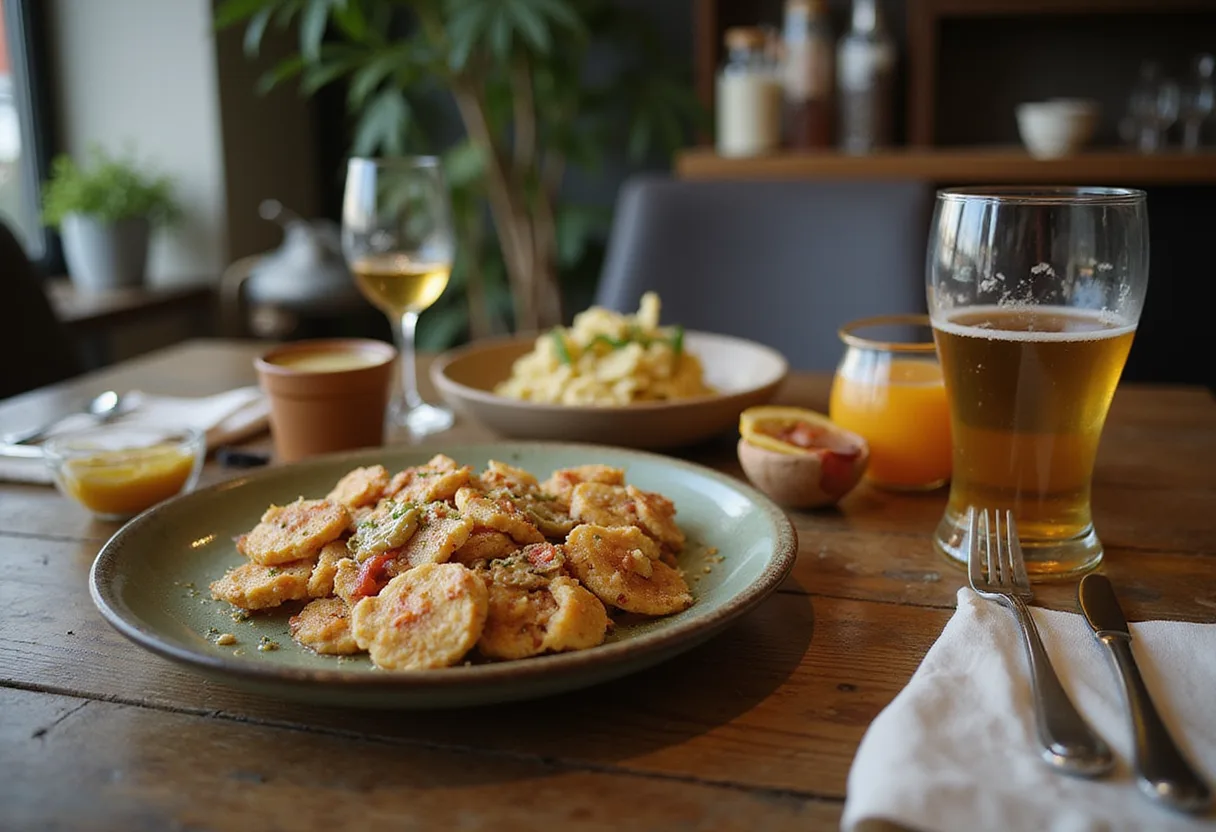
At the ATM restaurant, three wraps, three salads, three pastas and three sandwiches all carried the same 45-dirham price.
Fabi, who made the observation during a recent visit, uses it as a decision paradox, a thought experiment that tests whether flat pricing makes choosing easier. His early conversations drew a belittling smile and the unsettling thought that customers might have forgotten what they like.
His written reaction was: “Price had become irrelevant. And there i am standing wondering: what do I fancy?”
For an operator, that is not a small change. It removes one signal from the menu and asks the rest of the menu to work harder.
What does a 45-dirham menu remove?
Restaurant teams typically frame price as the outcome of a calculation. Four questions drive the number:
- What can we charge?
- What is demand doing?
- What are competitors charging?
- What is the customer's willingness to pay?
Fabi makes a second point: Price also communicates. Customers may seek something cheap and quick, pay more when an item looks better, or choose a premium option.
A 30-dirham sandwich beside a 45-dirham wrap and a 60-dirham pasta creates a hierarchy before customers read the descriptions. It supplies reference points. It lets buyers trade up or down, depending on what they value at that moment.
Under flat pricing, those anchors disappear. Description, ingredients, photography, familiarity, dietary preference or simple visual appeal must do the work instead.
That may make ordering simpler. Commercially, it also surrenders a powerful tool for influencing choice and capturing willingness to pay.
Where flat pricing leaves money behind
Fabi's economic argument starts with two hypothetical customers. One would happily pay 45 dirhams for a sandwich but might pay 55 or 60 for a pasta with better ingredients and stronger perceived value. A uniform 45-dirham price takes 10 or 15 dirhams off that premium case.
Another might pay 35 dirhams for a simple wrap but reject it at 45 as poor value and buy nothing. The same menu therefore forgoes an upsell, or higher-value purchase, in one case and a sale in the other.
That is the cost of treating every item as if every customer has the same willingness to pay, or the maximum price each person considers acceptable.
No check average, unit sales or margin data accompanies the example. The point is directional, not an accounting finding.
Can price architecture make choosing easier?
Supermarkets provide Fabi's clearest example. A wine shelf priced at 25, 45 and 80 dirhams gives shoppers three positions: inexpensive, sensible and a treat.
The 45-dirham bottle becomes meaningful because shoppers can compare it with lower and higher reference points. The operator still permits selection; the display simply shapes the environment around it. That is choice architecture, the use of presentation to influence a decision.
Hotels make comparable mistakes, in Fabi's view. They create room categories with small price differences, price upgrades without matching the perceived jump in value, and sell ancillary products, or hotel add-ons, using cost-plus logic, which marks up from cost, rather than willingness to pay.
Simplicity can flatten differences that would otherwise help customers sort themselves. A useful ladder offers an attractive entry option, a strong middle and a credible premium. Good. Better. Best.
Customers disclose what they value by choosing. The ladder does not push everyone toward the top price. It gives different customers a plausible place to land.
Operators often remove friction from the customer journey, and Fabi accepts that logic. Simplicity does not require sameness. A well-designed pricing ladder can make a decision easier by showing customers where each option belongs.
A 12-item menu at one price asks every product to win on personality alone. A truffle pasta and chicken wrap must compete through description, ingredients and appeal. Price no longer enters the contest.
Is operational simplicity worth the lost choice?
Fabi concedes that flat pricing may simplify operations and may even work commercially. Without sales data, that concession cannot establish profitability. He supplies no transaction totals, food-cost figures or labor percentages, so the argument remains conceptual.
His final test is still useful: What is the operator using to influence the purchase when price cannot? If the answer is nothing, the operator has not managed willingness to pay; it has merely applied a single number.
His verdict was sharper: Uniform pricing becomes lazy pricing when it gives up both anchoring and customer segmentation. Tidy menus are easy to run. Better pricing can be easier to choose and more revealing to sell.
Fabi wrote: “If the answer is nothing, you're not really managing willingness to pay.”
That remains the issue. Flat pricing can remove friction. It should not also remove the operator's ability to read, and earn from, demand.
More from Rebecca Stone
Show full bio
Senior reporter covering technology and product news in Restaurant and hotel operations at The Pass Brief.
556 articles