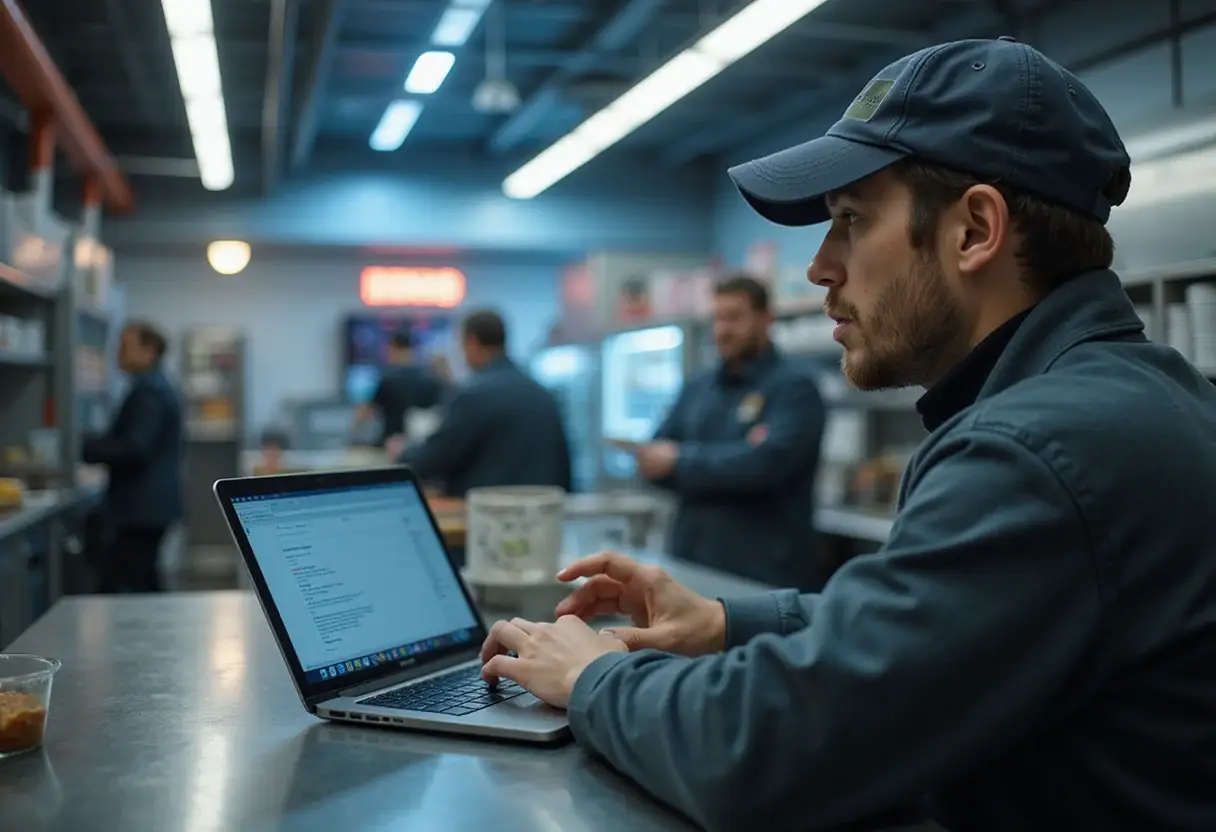
FBI warns grocers as cyberattacks expose cold-chain risks
The FBI warns grocers and cold-storage operators about exposed refrigeration controllers after temperature hacks in four European countries and failures at six U.S. military commissaries.
By Marcus Bennett
Six U.S. military base commissaries suffered freezer failures that ruined food in August, as the FBI warned that malicious cyber activity targets industrial refrigeration and cold-chain monitoring systems worldwide.
The known U.S. impact is narrower than the European wave: six military sites versus supermarkets in four countries. That comparison offers limited comfort. The FBI has not announced a confirmed cyberattack against a U.S. supermarket. It also has not disclosed how many domestic supermarkets use internet-reachable controllers.
What happened in Europe and at U.S. military bases?
In the grocery cyberattack wave reported last week, supermarkets in Sweden, Belgium, Luxembourg and Estonia experienced unintended freezer and refrigerator temperature increases initiated by remote hackers. Some stores discarded spoiled food.
In August, freezer malfunctions ruined food at six U.S. military base commissaries. Investigators are treating the failures as a suspected hack, not yet a confirmed breach.
The Army Criminal Investigation Division’s Cyber Field Office, Defense Commissary Agency and Defense Criminal Investigative Service are working with French law enforcement to determine whether any connection exists between the U.S. commissary failures and the European grocery problems. All three agencies operate under the United States Department of Defense.
What did the FBI tell grocers and cold-storage operators to do?
“The FBI and our partners are seeing malicious cyber activity targeting industrial refrigeration and cold-chain monitoring systems around the world,” the FBI Cyber Branch account said in a public warning on X. The agency directed the warning to grocers and authorities at cold-storage facilities.
The FBI said these systems keep food, medicine and other products at safe temperatures. They also serve critical infrastructure sectors, including healthcare, food and agriculture.
Attackers have used electronic temperature and refrigeration controllers at grocery stores and cold-storage facilities, including refrigeration components at three foreign blood-service facilities. The FBI said an attack was unsuccessful because proper alert mechanisms were in place.
The agency warned that security weaknesses in unpatched or internet-accessible controllers can allow attackers to change system settings. The stated consequences are inventory loss and equipment damage, neither of which the FBI quantified.
The FBI’s published advisory gives U.S. operators six actions:
- Take controllers off the public web.
- Use a firewall for access.
- Change default passwords.
- Learn how vendors configure devices.
- Set safe temperature limits.
- Make sure alerts reach the proper contacts.
In an accompanying video message, FBI Cyber Division Assistant Director Brett Leatherman said attackers enter through controllers that are unpatched, reachable from the internet or still using manufacturer-listed default passwords. He said these systems protect food and medicine across healthcare, food, agriculture and other critical sectors in the United States.
What does this mean for store-level economics?
For grocers, the immediate exposure is physical inventory. The FBI identified spoiled food in Europe and warned that controller manipulation can cause inventory loss and equipment damage. Those are the warning’s stated economic consequences.
The warning supplied no estimate for discarded food or potential equipment damage. It also gave no count of vulnerable U.S. supermarkets. Operators cannot calculate a total loss or margin effect from the available information.
Remote monitoring remains an operating convenience, but only if the connection cannot be abused to alter temperature settings or interfere with essential refrigeration equipment.
Sean Tufts, field chief technology officer of cybersecurity firm Claroty, told Newsweek: “The same types of refrigeration controllers are used across the food retail industry, and many use remote connections so technicians can monitor equipment and make repairs without visiting every store.”
Tufts said insecure connections give attackers a path into systems that grocery stores depend on daily. He said U.S. supermarkets should pay close attention to Europe and that any organization handling temperature-sensitive goods faces risk.
Adequate information and proper prevention can make a material difference, Tufts said. He defined cyber resilience as identifying exposure before attackers do and called action taken after food waste accumulates too late for the food supply chain.
Could the same tactic reach U.S. supermarkets?
Former FBI Special Agent Nicole Parker told Fox News Digital that the pattern now seen in Europe and elsewhere could also happen in the United States. She described temperature manipulation as a possible form of psychological warfare, which is her assessment rather than an FBI finding.
Public reaction mixed urgency with disbelief. One commenter welcomed attention to what they called a rarely discussed security gap and hoped it came before conditions worsened. Another objected to internet-connected refrigerators. A third said they never expected to live long enough to see refrigerators hacked.
The U.S. investigation remains preliminary. The FBI warning establishes a credible pathway through exposed controllers, but it does not establish whether the six commissary failures and European grocery incidents share a cause. Nor does the available information show how many grocery stores could be exposed.
The immediate test for grocers is whether they can remove public exposure, change credentials and prove that alerts work before another inventory loss occurs. Until investigators quantify exposed systems and confirm the cause of the six U.S. failures, the threat to U.S. supermarkets remains credible but unmeasured.
More from Marcus Bennett
Show full bio
Market editor covering technology and product news in Restaurant and hotel operations at The Pass Brief.
657 articles