Downtown Dallas Hotels Face Soft Occupancy Until 2030 Convention Center Reopening
HVS data on 65 Downtown Dallas hotels shows occupancy in the low 60s as the $3.8B KBHCCD overhaul cuts citywide events, with recovery pegged for 2031.
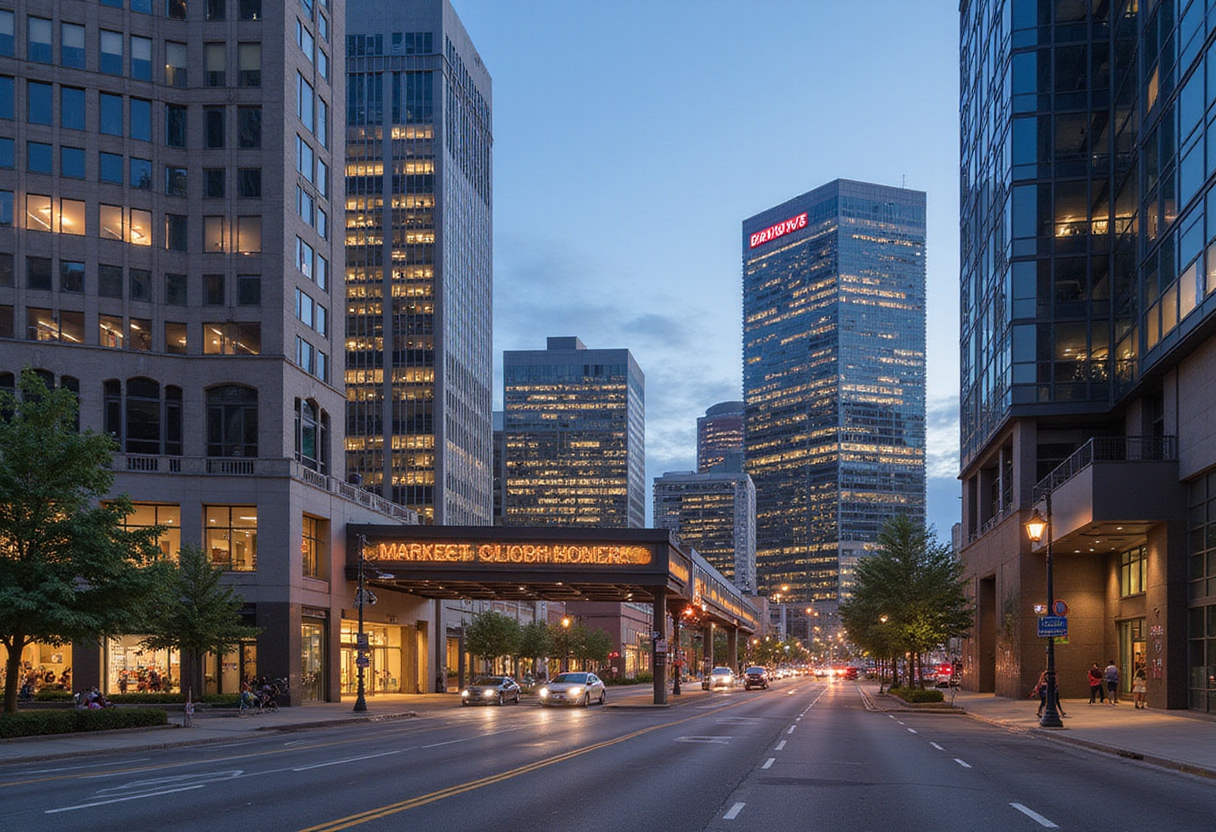
Downtown Dallas hotels will absorb soft occupancy through 2030 while the $3.8-billion Kay Bailey Hutchison Convention Center Dallas (KBHCCD) undergoes its phased renovation and expansion, with recovery expected to push occupancy back into the mid-to-high 60s only in 2031.
That is the central finding of an HVS review of CoStar data covering 65 hotels and roughly 18,100 rooms across Downtown Dallas submarkets — the CBD, Uptown, Market Center and Love Field — all of upscale tier or above. The set includes three 1,000-plus-room convention hotels that rely heavily on the convention center for weekday occupancy.
What happened to occupancy in 2025?
Occupancy for the tracked set ran in the high 60s from 2014 through 2019, settled in the mid-60s after the pandemic, and slid to the low 60s in 2025. Reduced KBHCCD operations produced fewer citywide events and stripped out the compression that major conventions typically generate. The report notes this subset "endured the brunt of the reduction of group room demand" compared with the broader Dallas market.
ADR held positive overall in 2025 despite monthly contractions. In 2026, ADR eroded in the first four months, stabilized in May, then jumped roughly 25% in each of June and July as dynamic pricing around FIFA World Cup match days took hold. DFW hosted nine matches, including a semi-final, at AT&T Stadium in Arlington, while KBHCCD served as an International Broadcast Center. The June-July surge will carry the set to positive year-end ADR for 2026.
Who is leaving Downtown — and who is arriving?
The corporate segment, which fuels commercial demand, is thinning in the core. AT&T and Fifth Third Bancorp are expected to move headquarters operations out of the city's core by the end of 2028. The resulting office vacancy is already triggering conversions:
- Comerica Bank Tower: planned conversion primarily to residential and hotel space, eliminating more than half of the office space.
- Bank of America Plaza: slated for reconfiguration into a mixed-use hub, with several office floors converted into a luxury hotel.
New corporate development is concentrating in Uptown. Goldman Sachs is building a $500-million campus in Victory Park/North End, scheduled to open in 2028. Morgan Stanley picked Dallas for a major U.S. operational hub — an estimated $1.33-billion high-rise at 2401 McKinney Avenue. The Texas Stock Exchange launched in July 2026, anchoring the district now dubbed "Y'all Street."
On the leisure side, American Airlines Center gains the Dallas Wings in 2027 and has long been a reliable generator of room nights. But the Dallas Mavericks and Stars both plan to leave the 25-year-old arena for new, separate facilities elsewhere in the city, clouding the venue's future. The Neiman Marcus flagship closed permanently at the end of September 2026. Leisure demand nonetheless remains strong in the Arts District, Uptown and Turtle Creek, supported by the Klyde Warren Park expansion, which extends the park nearly two acres west over the Woodall Rodgers Freeway.
What new hotel supply is coming?
Two large-scale projects target the market. Developer Ray Washburne has proposed an $800-million, 30-story convention hotel of about 1,000 rooms near KBHCCD. Austria-based Therme Group has proposed an $850-million spa and waterpark wellness resort on 24 acres along the Trinity River — its first U.S. location, targeting a 2031 opening. Uptown has simultaneously drawn multiple new luxury hotel and residential projects, including brands such as Four Seasons, Proper Hotel and EDITION.
What supports the recovery thesis?
Beyond the 2030 KBHCCD debut, the report cites infrastructure spending as a base for longer-term demand: DFW Airport's $9-billion DFW Forward expansion and Dallas Love Field's $2.5-billion Love Field Expansion Airport Program (LEAP). Large one-time events, such as the Republican Midterm Convention held in September 2026, continue to deliver incremental room nights during the transition.
HVS expects occupancy growth to remain slow through 2030 given the scarcity of large citywide events, then accelerate once the expanded convention center reopens. The market, the analysis concludes, is positioned to emerge from this period as a more diversified and resilient lodging market.
More from Rebecca Stone
Show full bio
Senior reporter covering media and advertising at The Pass Brief.
225 articles