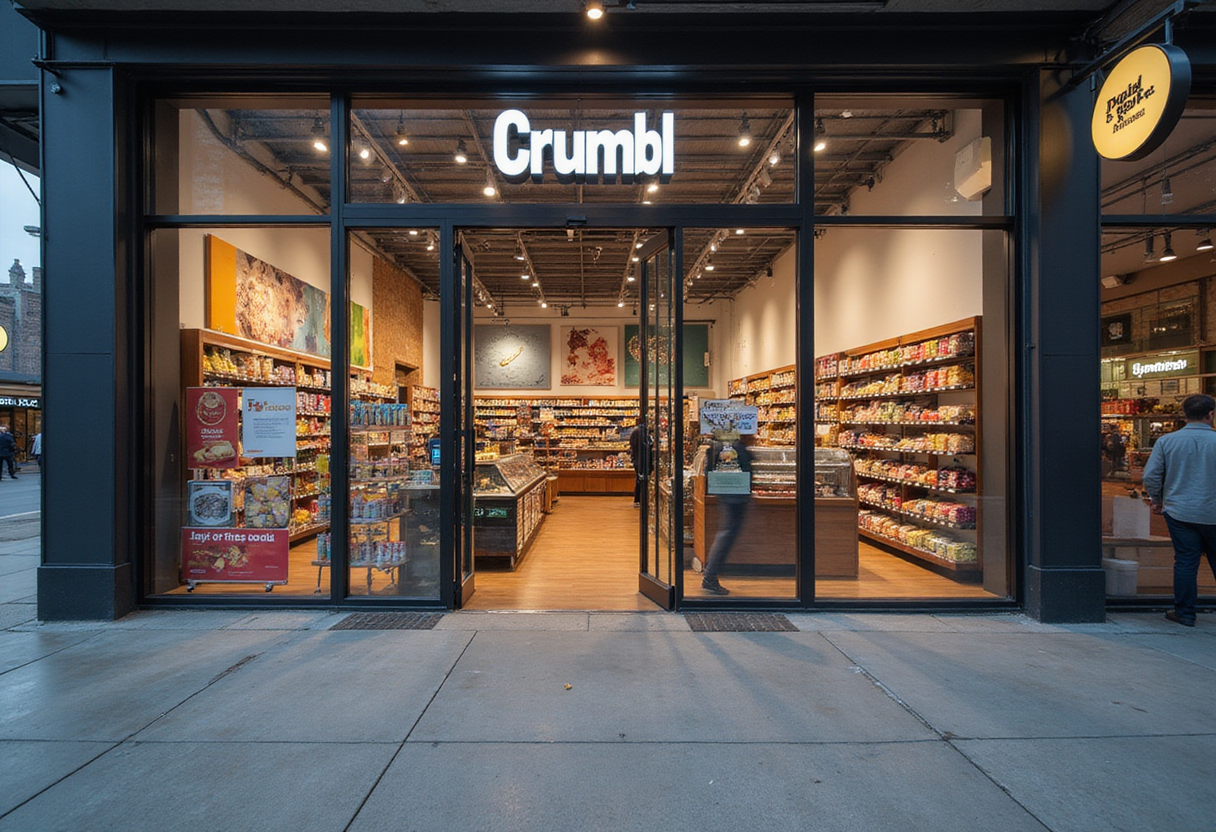
Crumbl CEO Breaks Silence on Store Closures Across Chain
Crumbl's chief executive has acknowledged the cookie chain faces challenges following store closures, the company's most direct admission that its rapid expansion model has hit friction.
Crumbl's chief executive has publicly acknowledged the chain is facing challenges following a wave of store closures at the cookie brand, marking the most direct admission yet from the company's leadership that its rapid growth model has hit friction.
The CEO's comments came after closures of Crumbl locations drew attention across the chain's footprint. While the company did not disclose a precise unit count for the shutdowns in the statement, the acknowledgment itself signals a shift in tone from a brand that has otherwise emphasized expansion.
What did the CEO say?
The executive conceded that the business is working through difficulties tied to the closures, framing the situation as a challenge the company must confront rather than a routine portfolio adjustment. The admission follows sustained attention on the brand's footprint, where individual locations have shuttered in multiple markets.
For a chain built on a franchise-heavy model, closures carry particular weight. When franchised units close, the parent company loses royalty streams while the local franchisee absorbs the direct losses — equipment, build-out costs and lease obligations. CEO-level acknowledgment of "challenges" typically indicates the issue has grown beyond isolated operator failures.
Why do the closures matter for the model?
Crumbl's growth story has rested on rapid unit expansion and a rotating weekly menu designed to drive repeat visits and social media engagement. That model depends on each new location reaching sales levels that cover labor, ingredients and real estate costs.
Closures suggest some markets could not sustain that math. In cookie retail, where ticket sizes are modest and product has a short shelf life, underperforming units can drain franchisee capital quickly. Menu engineering — the rotating flavor schedule — helps drive traffic but also complicates inventory planning and labor scheduling at the store level.
The CEO's decision to speak publicly also matters for prospective franchisees. Acknowledgment of challenges ahead of continued development signals the company may tighten unit-level support, revisit site selection criteria or adjust growth targets rather than push expansion at the previous pace.
What comes next for the chain?
The company did not lay out a specific turnaround plan in the statement. But the CEO's openness about the difficulty gives operators and franchise candidates a clearer picture of where the brand stands: growth has produced casualties, and leadership is no longer framing closures as background noise.
The practical questions ahead are whether Crumbl will disclose closure figures relative to total units, whether remaining markets can support current sales volumes, and whether the company adjusts franchise economics to stabilize its operator base.
More from Daniel Okafor
Show full bio
Correspondent covering consumer brands and retail at The Pass Brief.
237 articles