Cruise Lines Lean Into Experiential Dining, Seatrade F&B Report Finds
Seatrade Cruise News' latest F&B report puts experiential dining at the top of this year's findings. Here's what the shift means for onboard economics, sourcing and shoreside operators watching the segment.
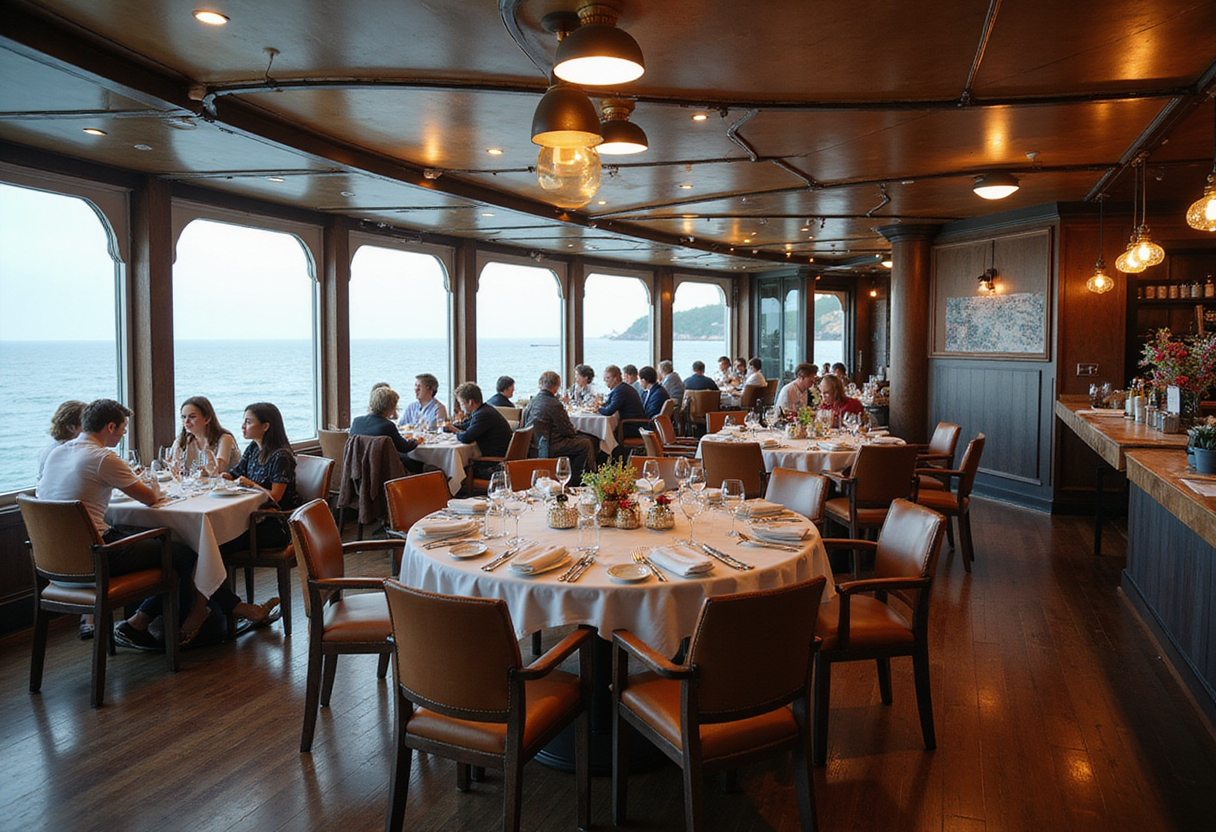
Seatrade Cruise News has published its latest F&B report, and experiential dining sits at the top of this year's findings. The headline takeaway aligns with what major cruise operators have telegraphed for three sailing seasons through capital projects, shipboard renovations and itinerary rollouts.
The report covers main dining rooms, specialty venues and private-island concepts. While Seatrade's full findings sit behind a subscriber wall, the framing — experiential dining trends — fits what cruise lines have already been building into their newest ships.
Cruise lines have historically treated F&B as a sunk cost of the ticket price, with main dining rooms subsidized by the bar and the casino. The current pivot treats the dining room as a retention asset — something that earns repeat bookings and lifts onboard spend per passenger day rather than just feeding people between ports.
What "experiential" means on a cruise ship
In cruise F&B, experiential usually translates to one of three formats:
- Chef-driven specialty venues with named chefs attached
- Destination-tied menus that change by port of call
- Interactive concepts where guests finish or assemble part of the dish themselves
Each format carries a different unit economics story, and each one tests a different piece of the operating model.
Why the math works on ships
For cruise lines, the economics are simpler than for a single restaurant on land. They already control room nights, the captive audience and the galley infrastructure.
Adding a teppanyaki table, a chef's table tasting menu or a pasta-from-scratch counter costs incremental labor hours and equipment. That lifts per-passenger F&B revenue on the same cover. Check averages don't shift the way they would at a Michelin-level independent.
But occupancy and seat turns are guaranteed by the ship's manifest. That's the unit-economics advantage no street-side operator can replicate.
The sourcing angle operators should watch
Cruise lines buy in tonnage, not pounds, and they can lock multi-port supply contracts for proteins, cheese and wine in ways a single-city operator can't.
That gives experiential menus a cost-of-goods advantage when the concept is built around a hero ingredient — Norwegian salmon on a Norwegian coastal sailing, Iberian ham on a Mediterranean itinerary — rather than a chef's whim. On the beverage side, regional wine lists can be sourced port-by-port with limited cellar turnover.
Where the labor constraint bites
Cruise culinary teams rotate on six- or eight-month contracts, which pressures the menu toward concepts that train fast and run repeatable. Build-your-own formats and show-cooking stations fit that profile.
Sixteen-course tasting menus do not. The trend tracks the industry's labor model as much as its marketing strategy, and that limits how far any single concept can scale across a fleet.
What does this change for shoreside operators?
The practical question for restaurant groups watching the cruise segment: is the experiential lift portable? Partially.
Cruise F&B borrows visual cues — open kitchens, tableside flambé, chef appearances — that any high-volume operator can copy. What it can't easily export is the captive-demand floor and the bundled pricing.
On land, a $95 tasting menu still has to be sold one guest at a time, and that's the math cruise operators get to skip.
Forward look
Seatrade's annual F&B report has become a reference point for shipboard operators and the suppliers that sell into the segment, including galley equipment makers, beverage partners and provisions distributors.
Expect cruise lines to keep layering specialty concepts and rotating regional menus onto existing galley footprints over the next sailing seasons — favoring retrofit over ground-up construction in a capital environment that still rewards efficiency.
More from Olivia Hart
Show full bio
Staff writer covering regulation, policy and their impact on Restaurant and hotel operations at The Pass Brief.
342 articles