Conversion vs. New Build: Hotel Brands Rewrite the 'On Brand' Rule
Hotel brands are redrawing the rulebook for what counts as a brand-aligned property, weighing the cost and timeline economics of conversions against ground-up builds for every new market entry.
Hotel franchisors are raising the bar on what counts as a "brand-aligned" property, weighing renovation-heavy conversions against ground-up construction for every new market entry, according to trade outlet Everything Experiential.
The framing, set out in a piece titled "Conversion Vs New Build: Why Hotel Brands Are Rethinking What Makes A Property 'On Brand'," recasts a familiar development question in sharper economic terms: the trade-off between capital deployed per key and the speed at which a flag can hang over a market.
What changed in the calculus
For two decades, the industry's preference leaned toward new builds. A shell designed around the brand's standards delivered predictable operating economics, consistent guest-room configurations and a single depreciation cycle. Conversions, by contrast, absorbed whatever the existing building offered — column spacing, floor plates, mechanical systems — and forced the brand to absorb the cost of bending standards to fit.
Brands are now applying a different test. That test focuses less on construction method and more on three numbers: total project cost per available key, time from deal signing to revenue, and the residual capital required to keep the property competitive through the next brand refresh.
What conversions now offer
A conversion typically delivers three advantages operators can price: lower land cost, faster permitting in municipalities accustomed to adaptive reuse, and an existing revenue base during construction. The downside — uneven guest-room dimensions, legacy FF&E, mid-life mechanical systems — has narrowed as renovation materials and modular bathroom programs have compressed build times.
The offsetting expense lives in the property improvement plan, or PIP. A PIP's scope, rather than the construction method itself, increasingly determines whether a conversion clears the brand's underwriting hurdle.
What new builds now require
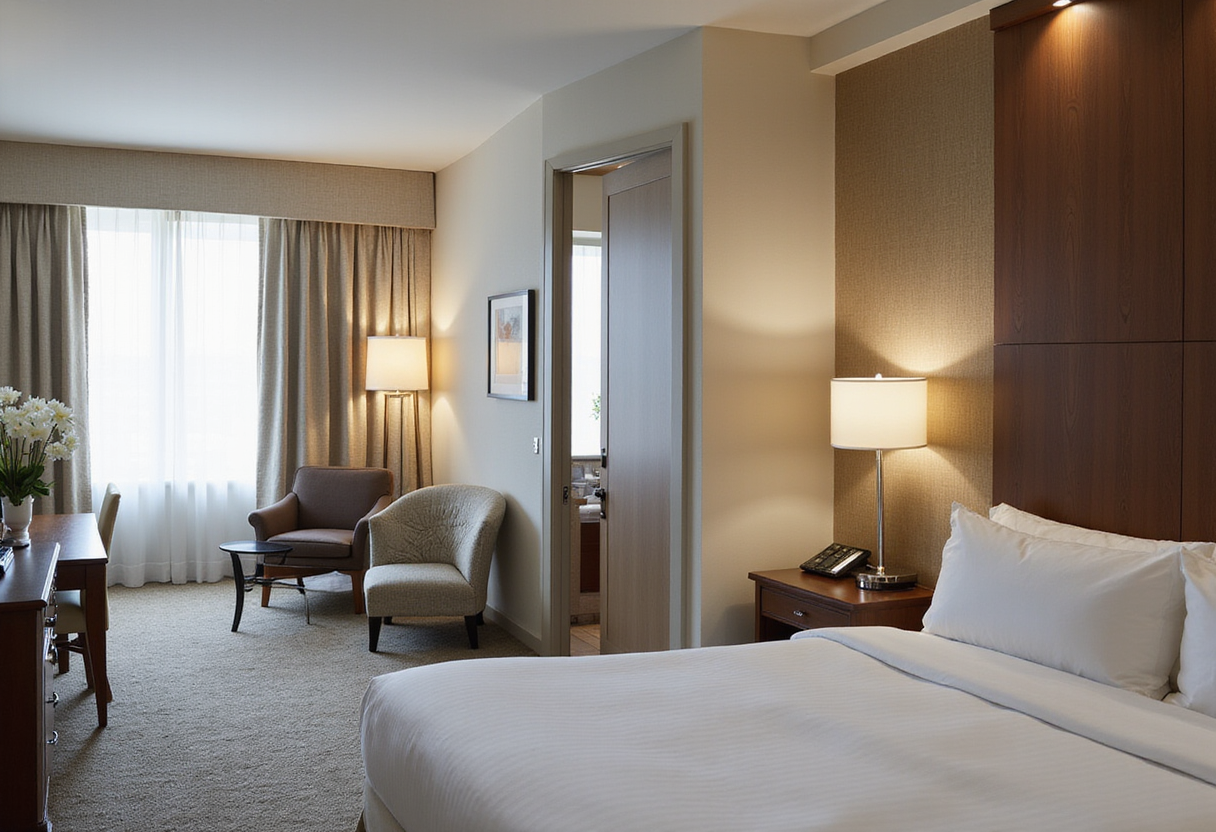
New construction still produces the cleanest brand execution: a guestroom corridor engineered to the brand's standard, food-and-beverage outlets sized to current revenue-management assumptions, and back-of-house flows mapped to the operator's labor model. What it demands is more capital up front, longer exposure to construction-cost inflation and a longer wait for the first occupied night.
Brands evaluating ground-up projects are tightening required returns and pushing for higher early-year occupancy premiums to justify the capital timeline.
What does this change for owners and operators?
The practical question for a developer weighing a flag is no longer "is this conversion or new build?" but "what does the post-refresh PIP look like, and what year does the property break even?" Brand standards teams are being asked to quantify trade-offs they previously expressed as design preferences.
For multi-unit operators, the shift rewards groups with renovation pipeline experience and disciplined PIP negotiation over those whose model depends on greenfield supply chains.
The forward signal
The next twelve months of hotel deal flow will test whether the industry's brand-alignment test survives contact with higher interest rates and softer RevPAR. Brands that cannot translate "on brand" into a per-key cost figure will likely find owners defaulting to whichever developer delivers the earliest breakeven — regardless of construction method.
More from Elena Vasquez
Show full bio
News editor covering people, launches and day-to-day practice in Restaurant and hotel operations at The Pass Brief.
347 articles