Chick-fil-A's CEO Rejects Drive-Thru AI, Citing Hospitality
Chick-fil-A CEO Andrew Cathy ruled out drive-thru AI, citing human hospitality, while McDonald's pursues 50 hours of weekly labor savings and Burger King dials back its own pilot.
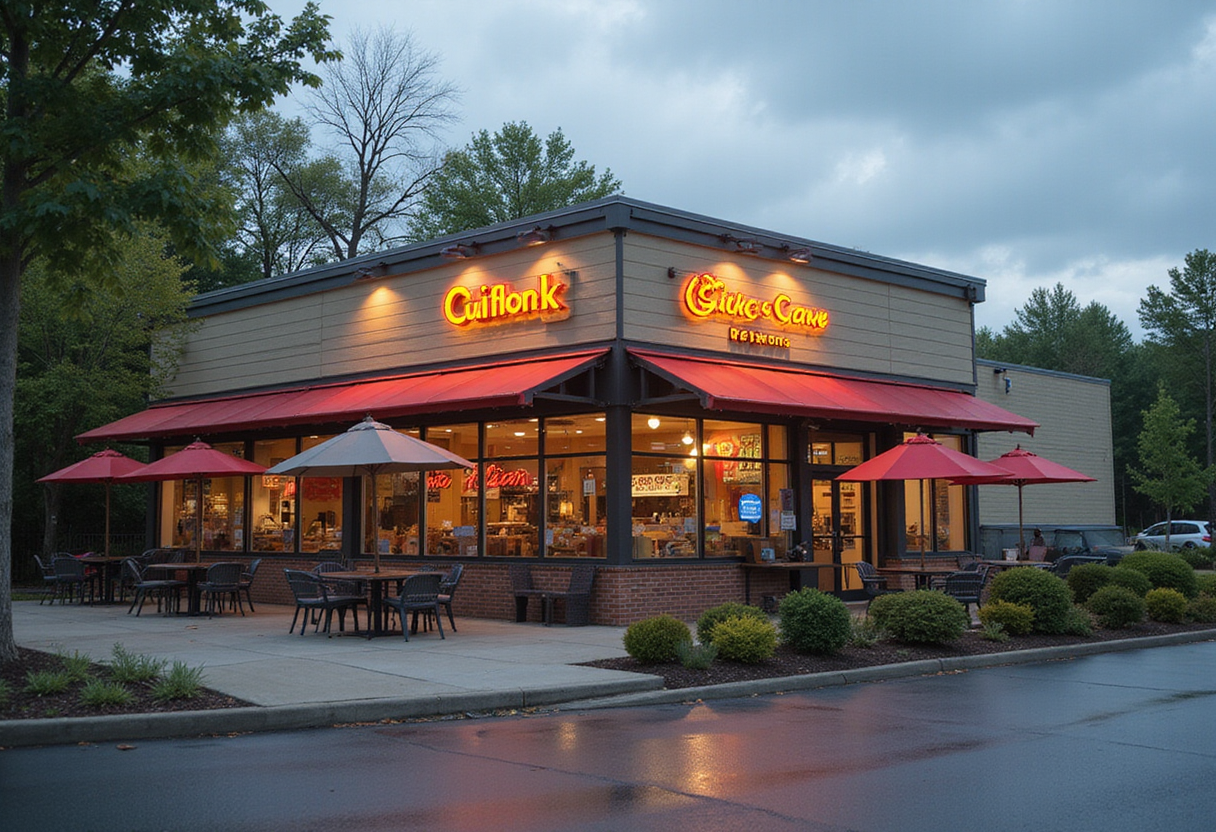
Chick-fil-A will not deploy artificial intelligence in its drive-thrus, CEO Andrew Cathy told CNBC. The decision puts the chicken-sandwich chain at odds with McDonald's and Taco Bell, two of the four largest U.S. fast-food brands still pursuing the technology.
"From our experience," Cathy said, "we really want that hospitality to be human to human."
The stance aligns with Chick-fil-A's long-running hospitality playbook. It is built on warm greetings, scripted phrases like "my pleasure," and stand-alone stores that average more than $9 million in annual sales per unit. Only Portillo's posts higher average-unit volumes in the fast-food sector.
What is driving chains toward drive-thru AI?
Labor savings are the primary economic case. McDonald's has tied the technology to its "Next" growth strategy and publicly estimated the system could save roughly 50 labor hours per restaurant per week. Burger King told the FSTEC conference it is dialing back its drive-thru AI pilot, citing consumer feedback.
That labor math explains why most chains still chase the goal. Restaurant companies rarely state the substitution plainly. They prefer language about AI "allowing workers to spend more time with customers." Order-taking is customer interaction, and removing it carries a public-relations cost the industry does not need.
What do consumers think?
Technomic data, drawn from Restaurant Business's sibling research firm, shows drive-thru AI ranks among the least accepted technologies in the channel:
- 38% of consumers say AI-voiced and AI-powered menu boards would make them visit a restaurant less often
- 16% say they would visit more often
- The remaining share is neutral or undecided
The negative skew matters because the U.S. fast-food market is saturated. Supply already exceeds demand, so chains that introduce robot order-takers risk steering guests to competitors with human staff. Those include Culver's, 7 Brew, and Dutch Bros.
Why does the math favor Chick-fil-A's position?
A chain averaging more than $9 million in per-unit sales has little incentive to swap a functioning system for a marginal labor play. Throughput, ticket size, and reorder frequency already drive operator-level economics. Replacing the order taker adds technology costs, integration expense, and the risk of alienating a customer base that rewards hospitality.
Cathy framed the decision as a brand principle rather than a technology rejection. The principle is that human-led service is a moat Chick-fil-A's franchisees and corporate operators have built deliberately, and that moat shows up in same-store sales.
The broader implication for operators: drive-thru AI is not a question of capability but of fit. Brands with weaker hospitality positioning and thinner per-unit economics may have more to gain from labor substitution. Chains with strong unit economics and brand-coded service may find the trade-off unfavorable.
Whether McDonald's 50-hour savings estimate, if it holds, changes the math for those brands will determine how many drive-thrus greet customers with a speaker and a screen rather than a worker.
More from Marcus Bennett
Show full bio
Market editor covering media and advertising at The Pass Brief.
243 articles