Bangkok Floods Wipe Out 80% of Restaurant Sales, Triggering Cash-Flow Crisis
Flooding in Bangkok has wiped out 80% of restaurant sales, The Straits Times reports, pushing operators into a cash-flow crisis as fixed costs persist while revenue collapses.
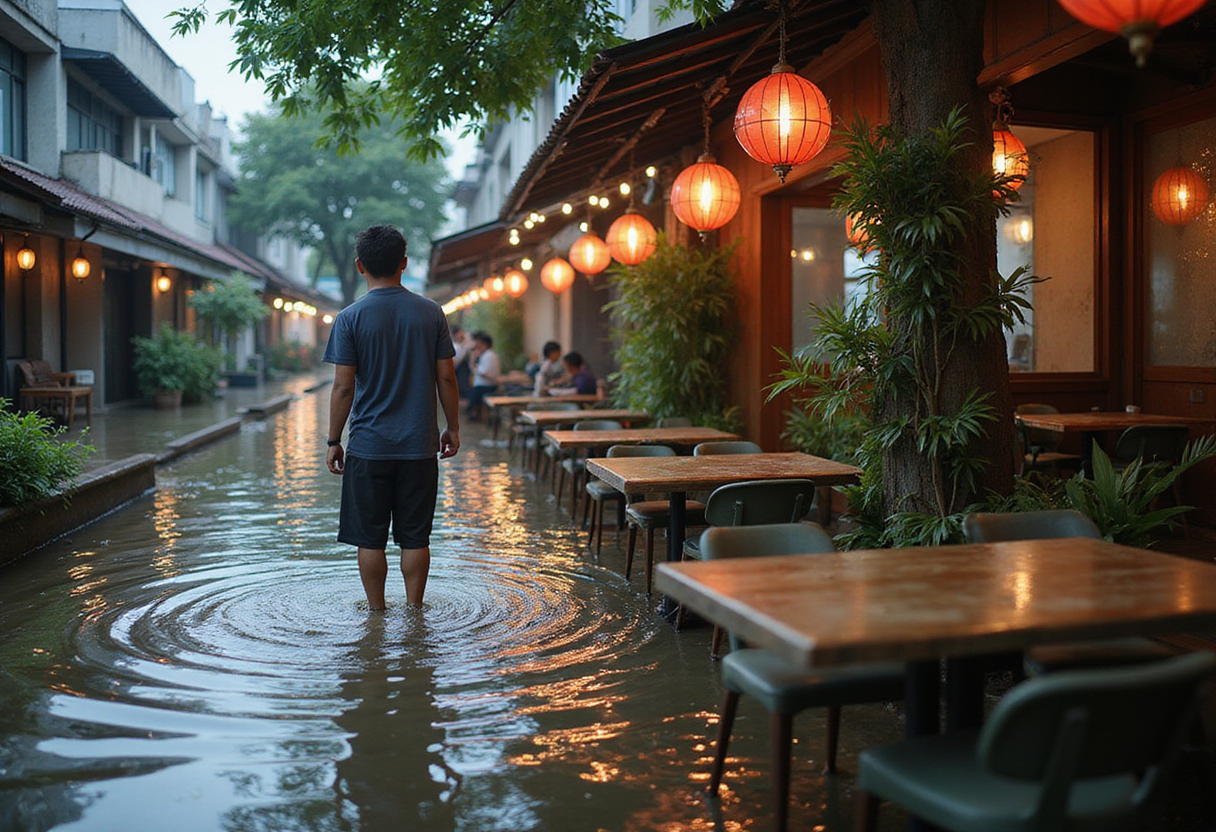
Flooding in Bangkok has wiped out 80% of restaurant sales, according to The Straits Times, pushing operators across the Thai capital into an acute cash-flow crisis.
The figure — an 80% collapse in sales — represents the sharpest quantified hit to Bangkok's food-service sector from the current flooding, and it lands on businesses already operating with thin liquidity buffers. For a full-service restaurant, a sales decline of that magnitude means revenue is falling far below the level needed to cover fixed obligations: rent, supplier payments and payroll. That is the arithmetic behind the cash-flow crisis the report describes. Restaurants typically carry enough working capital to absorb days of disruption, not weeks. When sales disappear while rent and staff costs persist, the gap closes only through loans, deferred supplier payments or closure.
The mechanics of the damage are straightforward. Floodwaters keep diners away and can make storefronts physically inaccessible. Delivery, the channel many operators lean on during disruptions, loses much of its value when riders cannot move through flooded streets and customers in affected districts are dealing with their own property damage. A restaurant that has shifted to takeaway and delivery can offset a fraction of lost dine-in revenue under normal circumstances; the Bangkok figures indicate even that partial offset has largely failed.
Cash-flow stress of this kind does not hit all operators equally. Large chains with corporate balance sheets can absorb a bad month, borrow against future revenue or renegotiate leases from a position of strength. Independent operators and small franchisees — who make up a large share of Thailand's restaurant base — generally hold weeks, not months, of runway. For them, an 80% sales collapse converts quickly into missed supplier payments, unpaid wages and, in the worst cases, permanent closure. The distinguishing factor in flood recovery is rarely the depth of the sales loss; it is the liquidity to survive until water recedes and customers return.
The situation also ripples upstream. When restaurants stop ordering or delay payments, suppliers, produce distributors and wholesale markets in and around Bangkok feel the shortfall within days. Fresh supply chains run on short payment cycles, so a restaurant-sector cash-flow crisis tends to propagate faster than the floodwater itself.
Thailand's capital has lived through severe urban flooding before, and each episode has exposed the same vulnerability in food service: high fixed costs, low margins and almost no liquidity cushion. Whether this round produces a wave of permanent closures will depend largely on how quickly the water recedes, how fast foot traffic returns to central districts, and whether landlords, suppliers and lenders extend payment flexibility while sales are effectively at zero for many operators. The report does not yet indicate how long the disruption is expected to last, and that timeline — more than any single sales figure — will determine how deep the sector's losses ultimately run.
More from Rebecca Stone
Show full bio
Senior reporter covering media and advertising at The Pass Brief.
56 articles