Adult Happy Meals Pull In Six-Figure Fast-Food Diners
Bloomberg reports Adult Happy Meals are attracting high-earning U.S. diners, giving quick-service chains a premium-priced novelty bundle that builds checks without discounting.
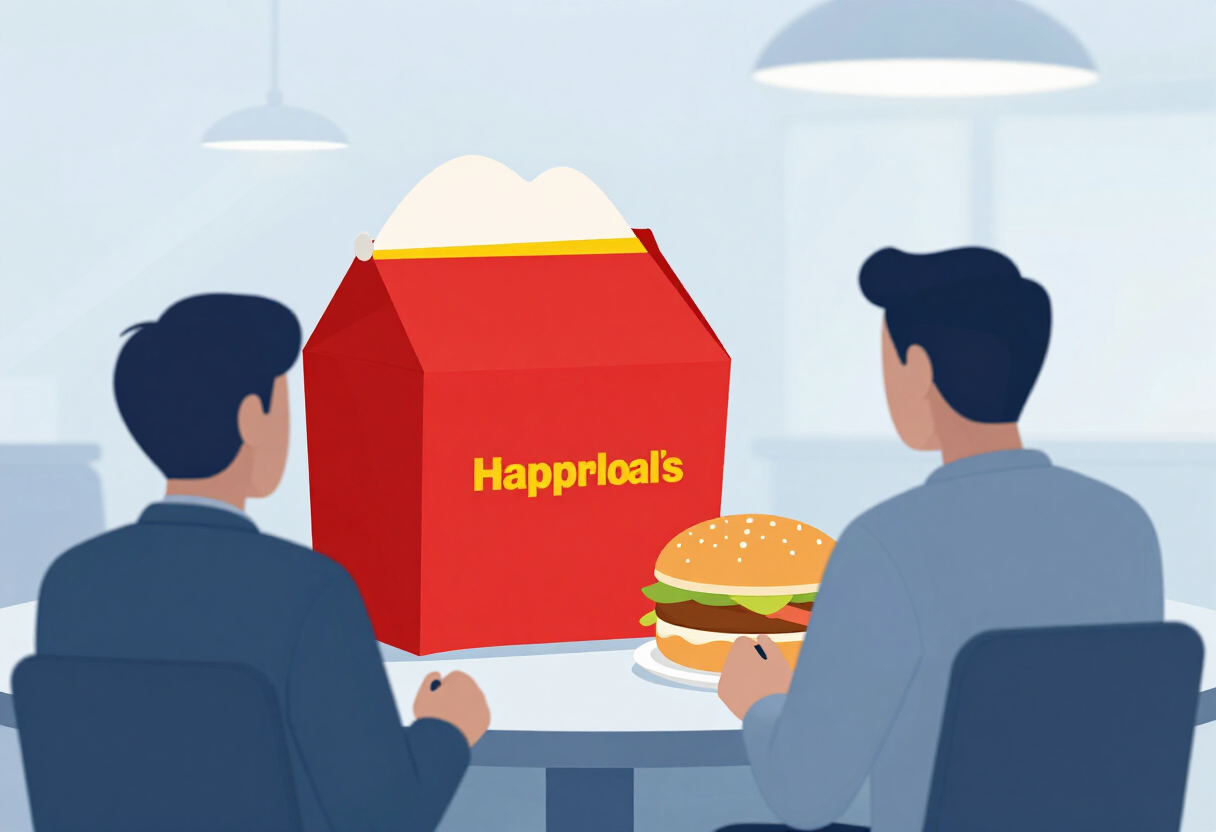
Adult Happy Meals are drawing a customer segment quick-service chains rarely court successfully: high-earning American diners.
That finding, reported by Bloomberg, signals that novelty packaging and collectible merchandising — long the domain of the kids' menu — can shift the demographics of who walks through the drive-thru. For operators, the implication is direct: a low-cost menu-format change can move the average check and pull in traffic that price promotions alone do not reach.
The economics explain why. An adult version of the boxed meal bundles familiar core items with a premium-priced wrapper: the collectible toy or branded packaging carries near-zero food cost but supports a higher price point than the à la carte equivalent. That mix protects margin in an environment where commodity and labor costs have compressed restaurant-level profitability across the fast-food sector.
It also serves a marketing function that traditional discounting cannot. Value menus train consumers to trade down; novelty bundles give them a reason to trade up without the operator discounting the underlying burger and fries. When the buyer earns enough that price is not the primary decision variable, the purchase driver shifts to novelty, nostalgia and the collectible itself — a lever that costs the chain licensing and packaging dollars rather than margin dollars.
The audience matters as much as the mechanism. High-income consumers have been the growth segment for fast food over the past two years, as inflation pushed middle- and lower-income diners to cut restaurant occasions. Chains that can convert affluent traffic into higher-check bundles rather than base-menu visits get revenue growth without relying on franchisee-funded discounting — a recurring point of tension in franchised systems, where the corporate owner captures brand upside while operators absorb promotion costs.
The collectible component also extends the campaign's life beyond the transaction. Secondary-market trading of toys and social sharing generate earned media that a standard limited-time offer rarely produces, lowering the effective customer-acquisition cost of the promotion.
For competitors, the pressure is to find equivalent formats that bundle existing inventory into premium-priced novelty without new kitchen equipment or additional labor minutes. Menu engineering of this kind — repricing and repackaging rather than reformulating — is the cheapest path to check growth available to a chain with a fixed core menu.
Whether the format sustains its pull or becomes a recurring promotional cadence like the McRib is the open question. But the early evidence that boxed novelty meals can recruit high-earning diners suggests operators will keep testing adult-targeted versions of childhood formats, particularly as chains look for check-building mechanisms that do not depend on discounting.
Watch for the next test of the thesis: whether follow-on adult Happy Meal editions hold the affluent traffic, or whether the format proves a one-time curiosity that chains must continually refresh with new collectibles to repeat.
More from Marcus Bennett
Show full bio
Market editor covering media and advertising at The Pass Brief.
25 articles