Fast Food Traffic Holds Even as Household Budgets Squeeze
New reporting says consumers are holding fast-food spending steady even as rent, groceries and insurance climb — putting pressure on chains to defend value pricing while franchisee margins tighten.
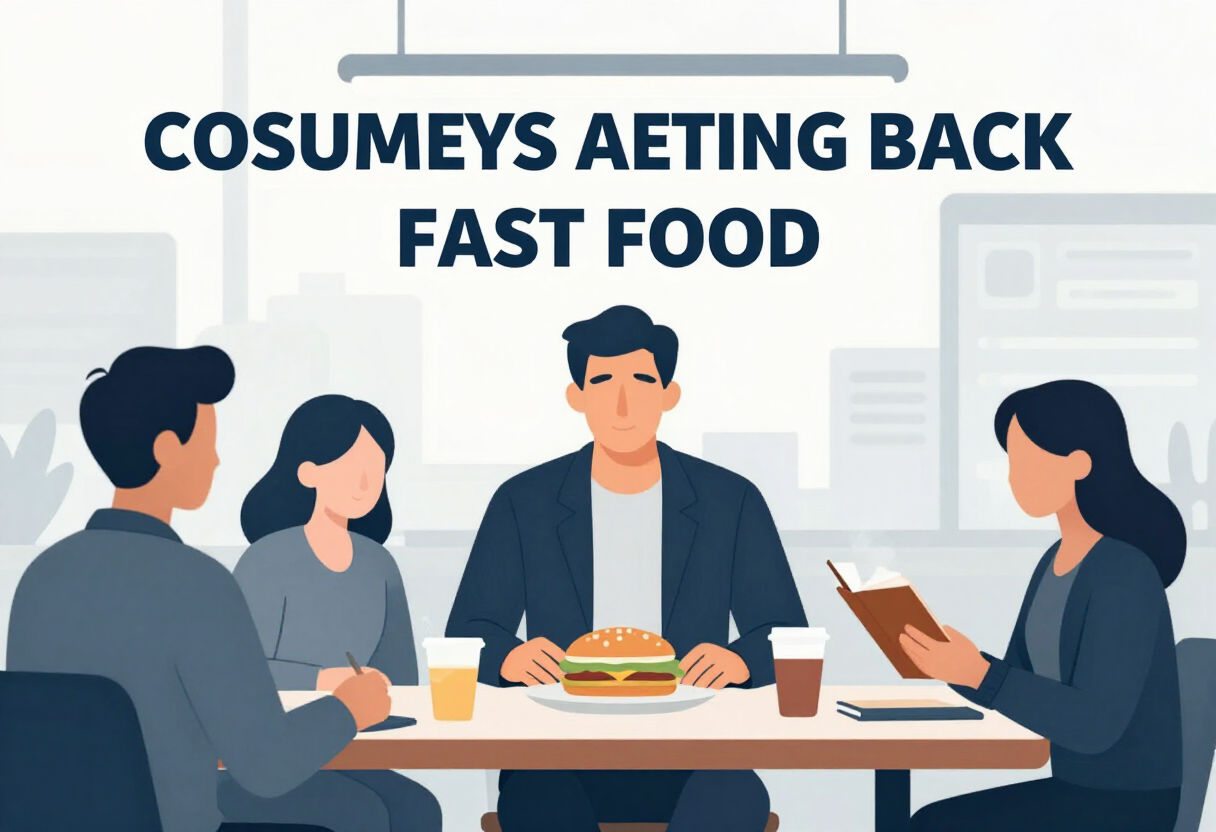
Consumers are not cutting back on fast food, even as other costs climb. That is the headline finding from new reporting by The New York Times, and it lands at a moment when the major burger and chicken chains are fighting their loudest price-value war in a decade.
The pattern matters for operators because it separates quick service from the rest of the restaurant industry. Full-service dining rooms have spent the past two years watching traffic erode as checks pushed past $30 and $40 per person. Fast food, by contrast, keeps its place in the household budget even when rent, insurance and groceries take a bigger bite.
The economics behind that resilience are structural. A fast-food meal still costs a fraction of a casual-dining entrée, and the convenience premium — speed, drive-thru access, app ordering — does not require the consumer to trade up. When budgets tighten, the trade happens inside the category rather than away from it: a customer drops from a $12 combo to a $5 value bundle, but the transaction still lands in the same POS.
Chains have spent the past 18 months engineering for exactly that behavior. McDonald's rebuilt its value architecture around a bundled meal deal and pushed it through its app, converting price-sensitive traffic into digital orders that carry lower service costs and richer data. Wendy's, Burger King and Taco Bell rolled out competing discount platforms, while Yum Brands leaned on loyalty programs to hold frequency among its most price-sensitive users. The playbook is menu engineering and pricing, not discounting across the board — protecting franchisee margins while keeping the entry point visible.
That franchisee margin is the constraint worth watching. Company-operated systems can absorb a value push; franchisees pay royalties, advertising fees and food costs out of the same check. When commodity inputs climb, a $5 bundle compresses the operator's contribution margin unless the chain engineers portioning, packaging or supplier contracts to offset it. Sustained value-menu traffic is only good news if the unit economics hold underneath it.
The reporting also cuts against a common narrative in the sector: that lower-income consumers — historically the core fast-food customer — would be the first to walk away as cumulative inflation strained their budgets. Instead, demand at the counter and the drive-thru window has held even as those consumers cut back in other spending categories. Fast food appears to function as an affordable constant, much as it did in previous downturns, when quick service outperformed the broader industry.
For operators, the strategic implication is straightforward. Traffic that holds under financial pressure is traffic worth defending with sharper entry-level pricing, tighter menu architecture and digital-only offers that steer guests toward higher-margin attachments. For investors and lenders evaluating franchise systems, the question is not whether demand will persist — the data says it will — but whether value-led volumes can coexist with rising labor and input costs at the unit level.
The next test comes as chains roll out their 2025 value platforms and summer promotional calendars. If traffic holds through another round of grocery inflation and higher housing costs, fast food's position as the last discretionary spend standing will look less like a cyclical fluke and more like a durable feature of the American consumer's budget.
More from Elena Vasquez
Show full bio
News editor covering industry trends and analytics at The Pass Brief.
12 articles