Zaxby's Hits $2.76 Billion, Opens First NYC Stores
Zaxby's finished 2025 with 1,005 units and $2.76 billion in sales, and its first New York City openings anchor a 'Grow to Win' push beyond the Southeast.
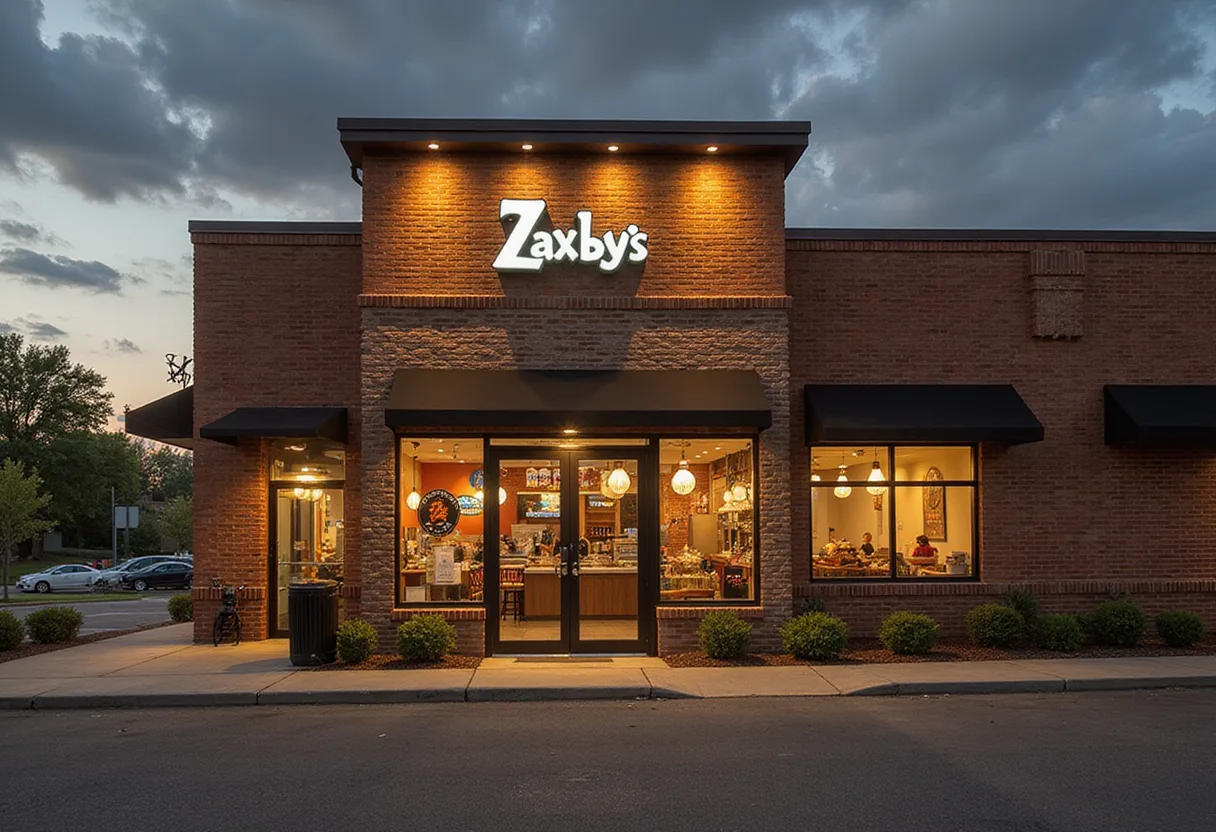
Zaxby's closed 2025 with 1,005 U.S. locations and $2.76 billion in sales, and it has just opened its first two restaurants in New York City. The Manhattan unit on the Upper East Side follows a store in the Bronx, marking the 36-year-old Atlanta chain's entry into CEO Bernard Acoca's hometown. Both openings advance the company's "Grow to Win" strategy, which centers on aggressive unit growth outside the brand's Southeast base.
The timing is pointed. The chicken category keeps getting more crowded, even as the broader chain restaurant industry struggles. Technomic's Top 500 data shows chain sales slowed again in 2025 as consumers pulled back on dining, yet chicken, along with coffee, beverages and snacks, remained a growth sector. Zaxby's is betting that crowded means contested, not closed.
Acoca marked the Manhattan ribbon-cutting beside Big Z, the brand's human-sized chicken mascot in gym shorts, in a company-provided photo. The smile was earned. New York is a market most Southeastern regional chains postpone indefinitely, and Zaxby's arrived with two units, not one.
What does 'Grow to Win' actually require?
Ahead of the opening, Acoca joined NRN editor in chief Sam Oches on the Take-Away podcast to lay out the strategy's operating logic. His arguments cluster around four points:
- Restaurants entering new markets must be tailored to the local customer, not transplanted wholesale from the home region.
- The brand must identify its differentiating characteristic and then, in Acoca's framing, shout it to the rooftops.
- New menu items should be developed with the intention of selling out, not merely filling slots.
- Unit growth fails without first acing the fundamentals of restaurant operations.
That last point is the least glamorous and probably the most expensive to skip, because expansion multiplies every operational weakness a chain carries into a new market.
Why new-market tailoring matters for unit economics
Acoca's framework ties growth to execution rather than momentum, and the sequence matters for operators watching Zaxby's from the sideline. A 1,005-unit chain opening in Manhattan, where real estate and labor costs run well above Southeastern averages, is effectively stress-testing whether its model holds at a different cost structure. The company has not disclosed unit-level economics for the New York locations.
The strategy also carries menu and marketing implications. Developing items meant to sell out is a form of menu engineering — building scarcity and velocity into limited-time offers rather than indefinite line extensions. Shouting a differentiator, meanwhile, is a positioning claim aimed squarely at a chicken category where rivals keep multiplying.
The company did not specify its next target markets, but Acoca framed the push as moving north and west of the Southeast, positioning New York as proof of concept rather than a terminus. With a crowded field and slowing industry traffic, Zaxby's next year of unit counts and sales will show whether "grow to win" is a strategy or a slogan.
More from Rebecca Stone
Show full bio
Senior reporter covering technology and product news in Restaurant and hotel operations at The Pass Brief.
437 articles