Thailand Targets $118 Billion Tourism Revenue by 2032, With No Budget Attached
Thailand's draft plan targets $118 billion by 2032, up 48%, while arrivals fall for a second year and the cruise terminals and marinas it calls for have no funding.
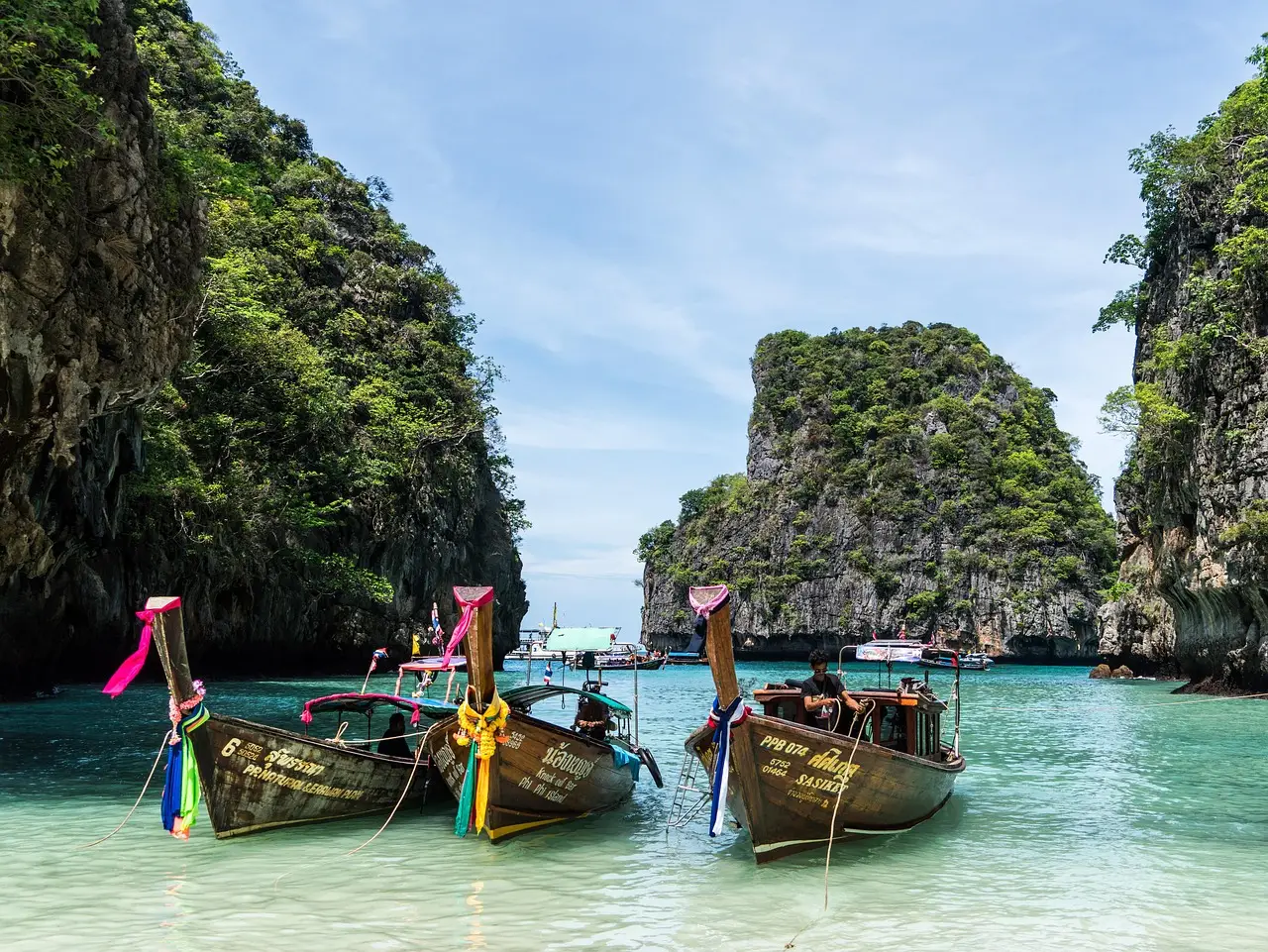
Thailand wants at least 4 trillion baht ($118 billion) in annual tourism revenue by 2032. That is roughly 48% above the 2.7 trillion baht the country earned in 2025, including domestic travel, and it requires about 5.8% annual growth at a moment when foreign arrivals are falling for a second consecutive year.
The target sits inside the draft Fourth National Tourism Development Plan. The document also aims to lift Thailand into the top 30 of the World Economic Forum's Travel & Tourism Development Index. Neither goal carries a budget, an arrivals assumption, or a spending-per-visitor figure. The plan asks for money and infrastructure. It does not say who provides either.
What do the arrival numbers show?
Foreign arrivals fell 7.2% to 32.9 million in 2025 and were down another 4.1% through October 17. The government has already cut its 2026 forecast to 33 million from 36.7 million. Volume has stalled near 33 million while the revenue target climbs. That gap defines the entire plan.
The strategy rests on four levers: cruise and yacht tourism, higher-spending source markets, events, and dispersal beyond Bangkok and the beaches. The government said cruise and yacht tourism are high-revenue segments where Thailand lacks capacity. "The country still needs more cruise terminals and yacht marinas to meet demand," it noted. The Tourism Authority of Thailand has been asked to draw up an infrastructure framework with other agencies. No funding. No timeline.
Is pricing power actually showing up?
Not yet, and the data cuts against the plan's premise. Phuket luxury and upscale occupancy slipped to 80% from 84.1%. Average daily rates there are down 4%. Thailand wants richer visitors while its premier resort market shows softening rate and occupancy at the top end. Higher rates are not the same as higher value, and the plan offers no mechanism to convert one into the other.
Entry-rule changes form the other half of the push:
- A 450-baht ($13) tourist fee, targeted for the first quarter of 2027
- Faster e-visa processing
- Shorter immigration waits at Suvarnabhumi airport
A fee adds friction, not yield. The government evidently disagrees, or has not modeled the tradeoff publicly.
Where does China fit?
The plan names Taiwan, Vietnam, Malaysia, Indonesia, and Singapore as priority short-haul markets. China is absent from the list. That is a deliberate omission with real weight: China remains Thailand's largest source market this year, but Chinese arrivals sit at 4.4 million in 2025 against 11 million in 2019. Meanwhile Vietnam and Malaysia are adding Chinese visitors of their own, competing for the same regional traveler Thailand wants to trade up.
Dropping your largest market from the priority list is a yield strategy, not a growth strategy. It works only if the named markets spend enough to replace lost Chinese volume. The plan does not present that arithmetic.
How credible is the revenue target?
Analysts quoted on the plan said a revenue target is easier to hit than an arrivals target in an inflationary period. Rising prices alone will lift revenue regardless of visitor behavior. That cuts both ways. Inflation delivers the headline number without delivering the marinas, terminals, trained guides, or community income distribution the plan says it wants. A target met by price increases is a target met by accident.
The Fourth National Tourism Development Plan emphasizes raising economic value, lifting service standards, winning higher-spending visitors, and spreading income to small businesses and communities. Those are outcomes, not policies. Each one depends on infrastructure the plan requests but does not fund.
The 2032 deadline gives Thailand seven years to build terminals, marinas, and airport capacity that have no financing today. Until the budget appears, the $118 billion figure is a revenue aspiration resting on inflation and a shrinking visitor base.
More from Marcus Bennett
Show full bio
Market editor covering technology and product news in Restaurant and hotel operations at The Pass Brief.
618 articles