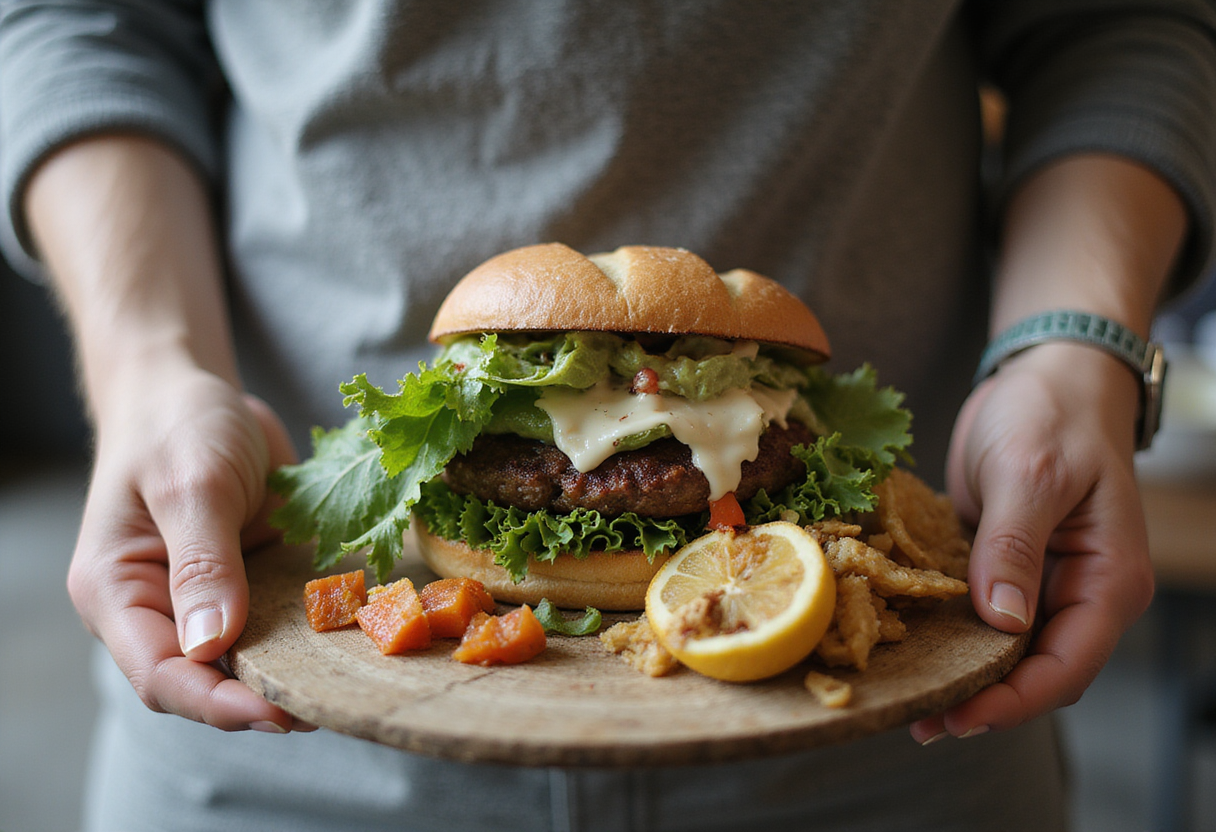
Sweetgreen Looks Past the Salad Bowl in Menu Pivot
Sweetgreen is repositioning beyond its salad-chain identity in a Yahoo Finance report, and the operating math behind the menu shift starts with labor, prep, and check average.
By Olivia Hart
Sweetgreen "doesn't want to be known for just salads anymore," according to a Yahoo Finance report that reframes the Los Angeles-based fast-casual chain around a broader category strategy. That sentence is the news. The rest is the operating math behind it.
The chain, founded in 2007 by three then-Georgetown students, has spent most of its 17-year history building brand equity around a tight menu of made-to-order grain bowls and leafy greens. The company has been publicly traded since 2021, listing on the New York Stock Exchange under the ticker SG.
For a public restaurant company, the way investors parse menu identity is mechanical. A "salad chain" is a category with a ceiling. A "fast-casual chain" is not.
What does the change mean at the line?
For operators, menu breadth isn't a creative exercise. It's a labor math problem. Sweetgreen's kitchen has historically run on a digital-first, build-to-order model with limited cooking. Adding heartier plates, hot proteins, and snackable items adds labor minutes, retraining time, and equipment cost per unit.
A new menu item that adds 20 seconds to every ticket is, at a busy store, a full labor hour per shift. A wider menu also complicates prep. A tight six-to-eight-item build lets a kitchen forecast pars with high accuracy and hold waste low.
A 12-to-14-item build broadens ingredient storage, increases prep labor, and tightens labor scheduling. The same-store-sales lift from menu expansion has to clear that labor and food-cost hurdle, or it doesn't lift margins at all.
How does the menu shift hit the check?
Sweetgreen's check average has historically sat in the high-teens, well above the fast-casual median. A broader menu gives the chain room to add lower-priced snackable items, which can pull the average ticket down, or to layer in premium proteins that push it up. Either move is a different story for the same-store-sales line.
The chain has also been building out its digital ecosystem, including a paid loyalty subscription that ties guests more tightly to the app. Menu breadth and digital frequency tend to compound each other: more items give loyalty members more reasons to return, and more return visits smooth labor scheduling across the day.
What does the shift signal for the category?
The play isn't new to fast-casual. Cava built its Mediterranean brand on bowls and has since layered in warm proteins, pitas, and grain plates. Chipotle's menu-engineering playbook has long included cyclical limited-time offers that pull incremental traffic.
The pure-category pitch tends to work at small scale. The diversified pitch tends to work at public-company scale. For independent operators, the read-through is straightforward. A single-category concept can build strong brand affinity and high per-ticket loyalty, but it often runs into a traffic ceiling as the addressable audience narrows.
Menu breadth is one of the few levers a mature fast-casual brand can pull for a same-store-sales lift without opening new units.
What should readers watch next?
The next proof point is the company's next earnings report, when management will likely outline the menu roadmap in language investors can underwrite. Until then, the shift is more narrative than numbers. But narrative moves stock, and stock drives capex, hiring, and unit growth at a public restaurant company.
For diners, the change will look like a longer menu behind the counter. For operators, the change is a reminder that menu discipline and menu growth pull in opposite directions, and the chains that survive public-market scrutiny are the ones that hold the balance.
More from Olivia Hart
Show full bio
Staff writer covering regulation, policy and their impact on Restaurant and hotel operations at The Pass Brief.
367 articles