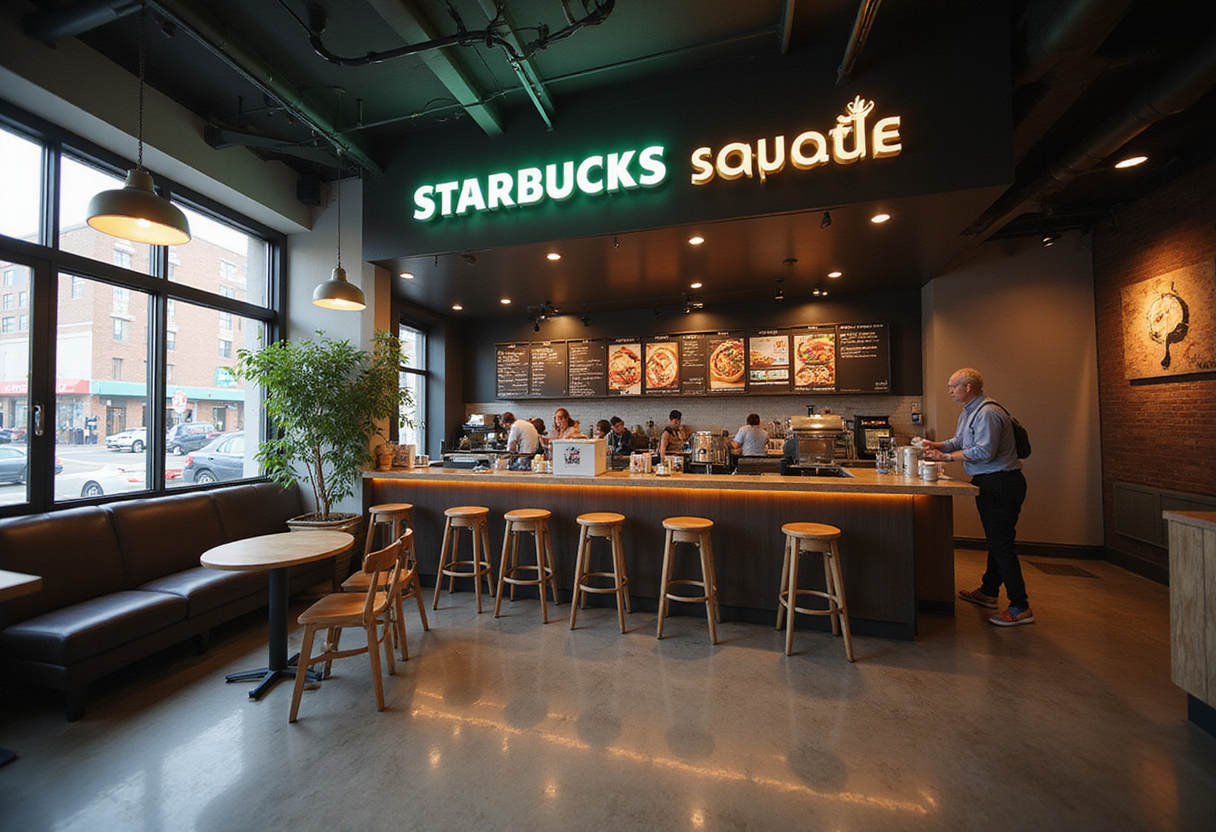
Restaurant Business Asks: How Serious Is a Starbucks-Chipotle Combo?
Restaurant Business Magazine published an analytical feature this week asking "How serious should we take a Starbucks-Chipotle combo?" and framing the pairing as a strategic question rather than a reported deal.
Restaurant Business Magazine published an analytical feature this week asking: "How serious should we take a Starbucks-Chipotle combo?" The piece runs in the publication's print and digital editions and reads as a strategic question, not a reported transaction.
What does the headline signal?
Restaurant Business, a trade publication for the U.S. restaurant industry, does not typically lead features on hypothetical brand pairings. A question-format headline on a Starbucks-Chipotle combination suggests the editorial team believes the idea has crossed from rumor to discussable strategy.
What is the operating context?
The article lands against a backdrop of operational divergence between the two brands. Starbucks has narrowed its menu, simplified mobile ordering and reduced promotional complexity. Chipotle has extended its menu at the margin and rebuilt its digital infrastructure. Restaurant Business treats the pairing as a question operators should weigh on its merits, not as a reported deal in motion.
What would a shared unit require?
A co-branded or merged store would face real estate and unit-economics constraints. The two brands run different store footprints, different kitchen ventilation requirements and different labor models. Any shared box would require re-engineering the back of house.
Capital costs on that re-engineering are costs operators typically recoup only across several years of unit-level margin. A dual-brand build also introduces complexity in zoning, signage and supply chain that a single-format operator does not carry.
Restaurant Business's analysis asks readers to consider whether shared corporate infrastructure could compress general and administrative costs enough to offset the brand-architecture risk and the capex drag of a re-engineered store.
How would investors price it?
Chipotle trades as a high-multiple QSR stock, with the market pricing the company for continued same-store sales growth on a single brand and single format. A combination with Starbucks would introduce a second brand into a portfolio that has historically operated on a focused-format thesis.
Starbucks has built scale on a single global brand and a coffee-forward identity. A second QSR brand under the same corporate parent would reset investor expectations on both sides of the ledger.
Restaurant Business does not cite any transaction in progress. The feature reads as a thought exercise for operators, franchisees and investors weighing what such a combination would require to pencil out at the unit level and at the corporate level.
What is the next signal?
The next signal is calendar-driven. Both companies report quarterly results in the coming weeks. Any reference to "portfolio strategy," "multi-brand" or "format extension" in management commentary would move the question from analytical to reportorial.
Investors and franchisees will watch prepared remarks for any softening or hardening of the multi-brand language. Until then, the Starbucks-Chipotle question sits where Restaurant Business placed it: a question worth taking seriously, but not yet a deal.
More from Elena Vasquez
Show full bio
News editor covering industry trends and analytics at The Pass Brief.
257 articles